Prep: 10 min Cook: 35 min Total: 45 min Servings: 4 sandwiches Difficulty: Easy
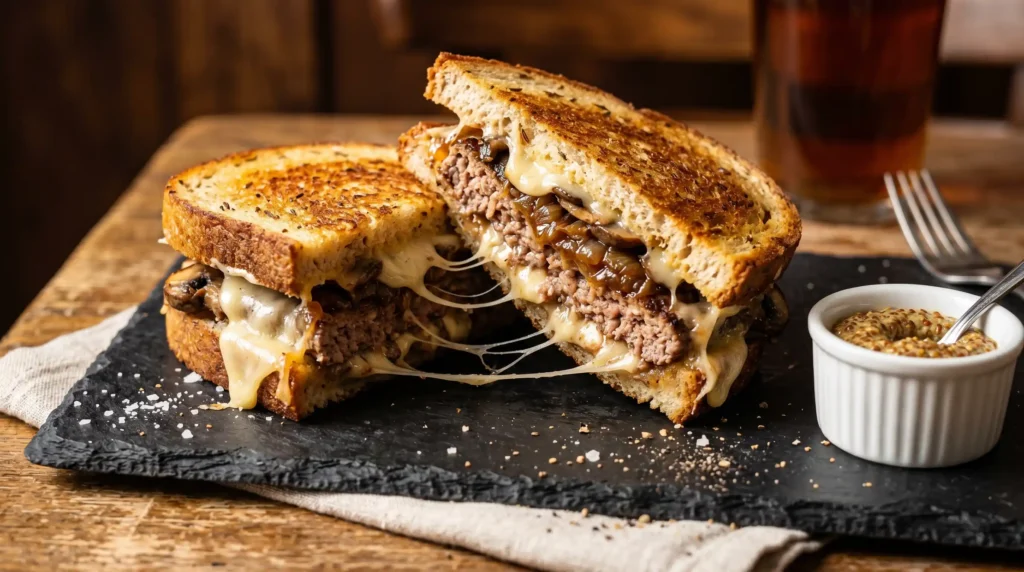
The patty melt does not get the respect it deserves. It sits quietly in the shadow of the classic burger, wearing rye bread instead of a bun, asking for nothing. But take one proper bite of a Mushroom Swiss Patty Melt — with the mushrooms, the caramelised onions, the melted Swiss — and you start questioning every lunch decision you have ever made.
I started making these at home after ordering one at a diner that charged sixteen dollars for something I could clearly do better in my own kitchen. I was right. The homemade version uses better ingredients, takes 45 minutes, and costs a fraction of the price. It has been a regular weekend meal ever since.
Have you ever had a sandwich that felt genuinely luxurious without being complicated? This is exactly that. Let us make it properly.
What Makes a Patty Melt Different From a Burger
A burger and a patty melt share the same essential idea — beef, cheese, bread — but they deliver completely different eating experiences. The patty melt uses rye bread instead of a bun, which adds a slightly sour, earthy note that complements the richness of the beef and cheese in a way a plain bun simply cannot. The bread also gets toasted directly in butter in the skillet, which creates a crunchy, golden crust on the outside that holds everything together without collapsing.
The mushrooms in this version replace the usual raw onion topping you find on a standard burger. Sautéed mushrooms release their moisture during cooking and concentrate into a deeply savoury, almost meaty addition that doubles down on the richness of the beef patty rather than cutting through it. Combined with slow-caramelised onions, the result tastes genuinely restaurant-level without any complicated technique.
IMO, the patty melt format also makes eating tidier than a burger. The flat toasted bread keeps everything in place from the first bite to the last, which means none of the fillings end up in your lap. That practical advantage over a burger is embarrassingly underrated. 🙂
Everything You Need
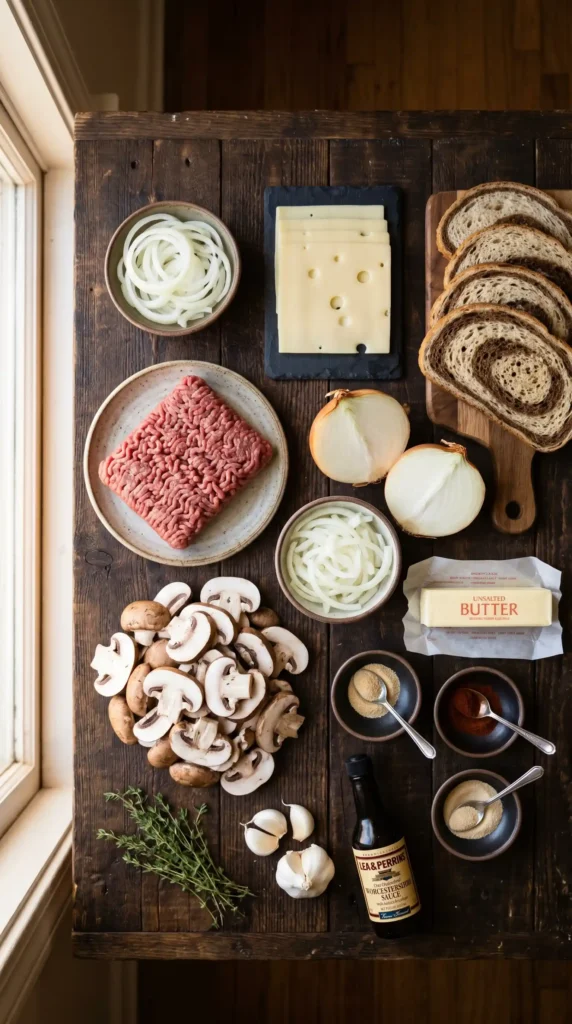
Simple, quality ingredients. The beef makes up the backbone of this sandwich, so choose wisely. An 80/20 ground beef blend — 80 percent lean, 20 percent fat — gives you the best flavour and juiciness. Leaner beef dries out during the high-heat smashing step and produces a less satisfying patty.
For the Beef Patties
- 450g (1 lb) 80/20 ground beef, divided into 4 equal portions
- 1 teaspoon garlic powder
- 1 teaspoon onion powder
- 1/2 teaspoon smoked paprika
- 1 teaspoon Worcestershire sauce
- Salt and freshly cracked black pepper to season just before cooking
For the Sautéed Mushrooms
- 300g (about 10oz) cremini or baby bella mushrooms, cleaned and sliced 5mm thick
- 2 tablespoons unsalted butter
- 1 tablespoon olive oil
- 2 garlic cloves, finely minced
- 1 teaspoon fresh thyme leaves (or 1/2 teaspoon dried)
- 1 tablespoon soy sauce or Worcestershire sauce (for depth)
- Salt and black pepper to taste
Now For the Caramelised Onions
- 2 large yellow onions, peeled and thinly sliced into half-moons
- 2 tablespoons unsalted butter
- 1 tablespoon olive oil
- 1 teaspoon granulated sugar (to assist caramelisation)
- 1/2 teaspoon salt
- 1 tablespoon balsamic vinegar (added at the end)
Now For Assembly
- 8 slices of rye bread (marble rye or dark rye both work beautifully)
- 8 slices of Swiss cheese (about 200g total)
- 4 tablespoons softened unsalted butter (for toasting the bread)
- 2 tablespoons Dijon mustard or mayonnaise spread on the inner bread faces (optional but recommended)
Mushroom Choice MattersCremini mushrooms — also sold as baby bellas — have a deeper, meatier flavour than standard white button mushrooms and hold their texture better during cooking. Button mushrooms work fine as a substitute but taste milder. Avoid portobello caps for this recipe — they are too large and release too much liquid, which steams the other ingredients rather than sautéing cleanly.
How to Make the Mushroom Swiss Patty Melt
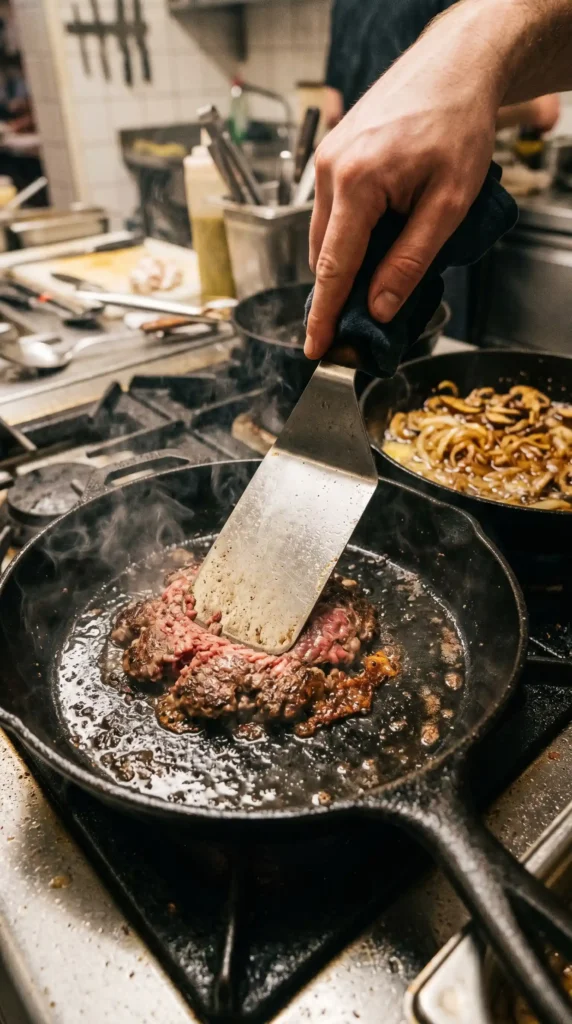
This recipe runs in three parallel stages: caramelise the onions (the longest step), sauté the mushrooms, and cook the patties. Because the onions take the most time, start them first and keep them going on low heat while you prepare everything else. The patties and mushrooms come together quickly once the onions are done.
Step 1: Caramelise the Onions
Heat the butter and olive oil together in a wide, heavy-bottomed skillet over medium heat. Once the butter melts and the foam subsides, add all the sliced onions to the pan at once. They will look like too many onions for the pan — this is normal. Toss them to coat in the butter and oil, add the salt and sugar, then reduce the heat to medium-low.
Cook the onions, stirring every 3–4 minutes, for 25–30 minutes total. This is the step most people rush and most people regret. True caramelised onions need low, slow heat to transform from sharp and pungent to sweet, golden, and jammy. High heat browns the outside of each onion strand quickly but leaves the inside bitter and underdeveloped. Medium-low heat draws out the natural sugars slowly and evenly.
The onions will release a significant amount of liquid in the first 10 minutes — this is fine and expected. Keep cooking until that liquid evaporates and the onions begin to brown and concentrate in the pan. Stir more frequently in the final 10 minutes as they darken. In the last 2 minutes, add the tablespoon of balsamic vinegar and stir it in — it adds a subtle acidity that balances the sweetness and gives the onions a glossy, deeply flavoured finish. Remove from heat and set aside.
Step 2: Sauté the Mushrooms
While the onions cook, heat the butter and olive oil for the mushrooms in a separate skillet over medium-high heat. Add the sliced mushrooms in a single layer and — this is crucial — do not stir them for the first 2–3 minutes. Mushrooms release significant moisture when they cook, and stirring them immediately traps that moisture around each piece, causing them to steam rather than sauté. Letting them sit undisturbed allows the liquid to evaporate from the base of the pan and the mushrooms to begin browning directly against the hot surface.
Once the mushrooms look golden on the underside, stir them and continue cooking for another 2–3 minutes until browned on multiple sides. Add the minced garlic and thyme and cook for a further 60 seconds, stirring constantly, until the garlic turns fragrant and lightly golden. Add the soy sauce or Worcestershire sauce, stir to coat, and cook for 30 more seconds until the liquid absorbs. Season with salt and pepper. Remove from heat and set aside with the onions.
Why You Must Not Crowd the MushroomsIf you add too many mushrooms to a small pan at once, the moisture they release has nowhere to go and they steam in their own liquid rather than browning. Steam-cooked mushrooms are grey, soft, and flat-tasting. Browned mushrooms are golden, slightly crispy at the edges, and packed with deep savoury flavour. Use a large pan or cook in two batches if necessary. The difference in the finished sandwich is significant.
Step 3: Season and Shape the Patties
Divide the ground beef into four equal portions — about 115g (4oz) each. Mix the garlic powder, onion powder, smoked paprika, and Worcestershire sauce into the beef gently using your hands, incorporating the seasonings evenly without overworking the meat. Overworked beef becomes dense and tough rather than juicy and tender. Mix just enough to distribute the seasoning — no more.
Roll each portion loosely into a ball but do not press or flatten it yet. The smashing happens in the pan, not on the counter. Season the outside of each ball generously with salt and freshly cracked black pepper just before cooking — seasoning raw ground beef too far in advance draws out moisture and can make the surface wet, which interferes with the sear.
Step 4: Cook the Patties
Heat a large cast iron skillet or heavy stainless steel pan over high heat until it is very hot — a drop of water should skitter across the surface immediately. Add a thin coat of neutral oil. Place two beef balls into the pan, spaced well apart. Using the bottom of a heavy spatula or a burger press, smash each ball flat immediately — pressing down firmly and steadily until each patty is roughly 1cm thick and about 10–12cm wide.
Cook the smashed patties on the first side for 3–4 minutes without touching them. The crust needs uninterrupted contact with the hot pan to develop properly — moving the patty early tears the sear and leaves you with grey, steamed beef rather than a dark, flavourful crust. When the edges look cooked and the top surface shows rising juices, flip each patty once using the spatula. Scrape all the browned bits from the pan surface as you flip — those bits go back onto the patty where they belong.
Cook the second side for 2 minutes, then immediately lay two slices of Swiss cheese over each patty. Cover the pan with a lid or a large metal bowl for 60 seconds to trap steam and melt the cheese completely. The cheese should look fully melted and slightly bubbly at the edges. Remove the patties to a plate and repeat with the remaining two portions. Keep the cooked patties warm by covering loosely with foil.
Step 5: Toast the Bread and Assemble
Wipe the skillet clean with a paper towel and return it to medium heat. Spread softened butter generously on one side of each bread slice — cover every corner and edge, not just the centre. Place four slices butter-side down in the pan. If you are using Dijon mustard or mayonnaise, spread it now on the upward-facing sides of those toasting slices.
On each toasting slice, layer the fillings in this order for the best structural result: a spoonful of caramelised onions, a portion of the sautéed mushrooms, then the cheese-topped beef patty. Top with the remaining four bread slices, butter-side facing outward. Press down gently with the spatula and toast for 2–3 minutes per side over medium heat until each face is deeply golden and the bread feels firm and crunchy when pressed. The exterior should have a satisfying crunch that holds the whole sandwich together from first bite to last. FYI, resist the urge to rush this on high heat — the outside burns before the cheese re-melts and the interior warms through.
Remove the finished sandwiches from the pan, let them rest for 60 seconds, then slice each one diagonally. The diagonal cut reveals the layers inside, looks dramatic, and makes the sandwich easier to handle. Serve immediately while the cheese is still melted and the bread is still crispy.
Variations Worth Making
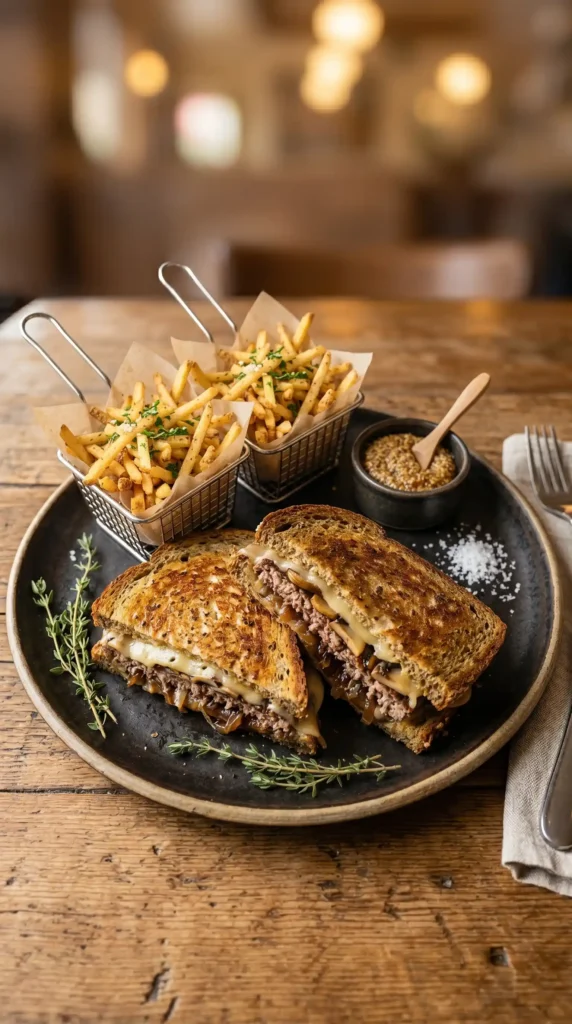
Double Patty Mushroom Swiss Patty Melt
Use two smaller patties per sandwich instead of one larger one. Smash each to about 6mm thickness and stack them with a slice of cheese between the two layers. The extra layer of beef and cheese makes the sandwich substantially richer and more filling — ideal for a weekend dinner rather than a casual lunch. The bread-to-beef ratio shifts in favour of beef, which most people consider an improvement. Patty Mushroom Swiss Patty Melt
Chicken Patty Melt Version
Replace the ground beef with seasoned ground chicken or thinly pounded chicken breast. Season the chicken the same way — garlic powder, onion powder, smoked paprika, Worcestershire — and cook on medium heat rather than high to prevent drying out. Swap the Swiss cheese for provolone, which melts more readily and has a milder flavour that suits chicken better than the sharper Swiss.
Vegetarian Mushroom Patty Melt
Use a thick portobello mushroom cap as the patty. Brush it with olive oil, season generously with salt, pepper, garlic powder, and smoked paprika, and cook it in the hot skillet for 4–5 minutes per side until golden and tender. Add the Swiss cheese, caramelised onions, and sautéed cremini mushrooms exactly as the original recipe directs. The portobello provides enough substance and flavour to carry the entire sandwich convincingly.Mushroom Patty Melt
Storage and Reheating
The caramelised onions and sautéed mushrooms both keep well in the fridge for up to 4 days in airtight containers, which makes this an excellent meal prep component. Make a big batch of both on Sunday and you can assemble a Mushroom Swiss Patty Melt on a weeknight in under 15 minutes once the toppings are already cooked and waiting.
Assembled sandwiches do not store well — the bread absorbs moisture from the fillings and loses its crunch within an hour. Always cook the patties and toast the bread fresh on the day of eating. Cooked beef patties keep in the fridge for up to 2 days and reheat well in a skillet for 2 minutes per side — do not microwave them, which makes the bread soggy and the cheese rubbery.
Frequently Asked Questions
What bread works best for a patty melt?
Rye bread is the traditional and best choice — its slightly sour, earthy flavour contrasts beautifully with the richness of the beef and cheese. Marble rye gives you the flavour of dark rye with a more visually appealing swirled appearance. Sourdough is a solid alternative if rye is unavailable — it toasts with a similar crunch and has enough structural integrity to hold the fillings. Avoid soft sandwich bread, which compresses and becomes soggy almost immediately.
Can I use a different cheese instead of Swiss?
Gruyère is the closest substitute and actually melts even better than standard Swiss — it has more fat content, a deeper nutty flavour, and produces a more dramatic pull when bitten into. Provolone works well for a milder result. American cheese melts the most readily of all and produces a creamy, saucy texture, though its flavour profile is considerably less complex. Stay away from cheddar — it can split into greasy pools rather than melting smoothly at the temperatures used for patty melt cooking.
Can I make the caramelised onions faster?
You can shorten the time slightly to 20 minutes on medium heat rather than medium-low, but anything faster than that produces browned rather than caramelised onions — they look similar but taste noticeably more bitter and sharp rather than sweet and jammy. Adding the pinch of sugar helps accelerate caramelisation somewhat. Some cooks add a tablespoon of water or balsamic vinegar during cooking to deglaze and speed up the process, but there is genuinely no shortcut that fully replicates the flavour of slowly cooked onions.
Should I smash the patty or keep it thick?
Smashing is the correct technique for a patty melt. Smashing increases surface contact between the meat and the hot pan, which creates significantly more Maillard browning — the deeply flavourful, dark crust that gives a smash patty its characteristic taste. A thick patty steams in its own juices and develops far less crust. The slightly thinner smashed patty also fits proportionally between two slices of rye bread far better than a domed thick patty, which makes the sandwich structurally easier to eat.
What sauce or condiment goes best with a Mushroom Swiss Patty Melt?
Dijon mustard spread on the inner bread face before assembly adds tang and complexity without overwhelming the other flavours. A thin layer of mayonnaise adds richness and helps the bread toast more evenly. Some people use a Thousand Island or special burger sauce, which works well for a more diner-style result. Avoid ketchup — its sweetness competes with the caramelised onions and flattens the savoury depth the mushrooms and cheese provide. Less is more with condiments on a patty melt. Mushroom Swiss Patty Melt
Final Thoughts
The Mushroom Swiss Patty Melt is one of those recipes that makes you wonder why you ever ordered it from a diner when you could make it better at home in 45 minutes. The caramelised onions, the deeply sautéed mushrooms, the smashed beef crust, and the melted Swiss between two slices of buttery toasted rye — every element earns its place and nothing is wasted.
Make the onions and mushrooms ahead on a Sunday and this becomes one of the fastest, most satisfying weeknight dinners in your regular rotation. Fast food quality this genuinely is not — but fast cooking it absolutely can be.
Start those onions right now. Low heat, patience, and 45 minutes later you will be eating the best sandwich you have made all year. Everything else on the menu can wait.
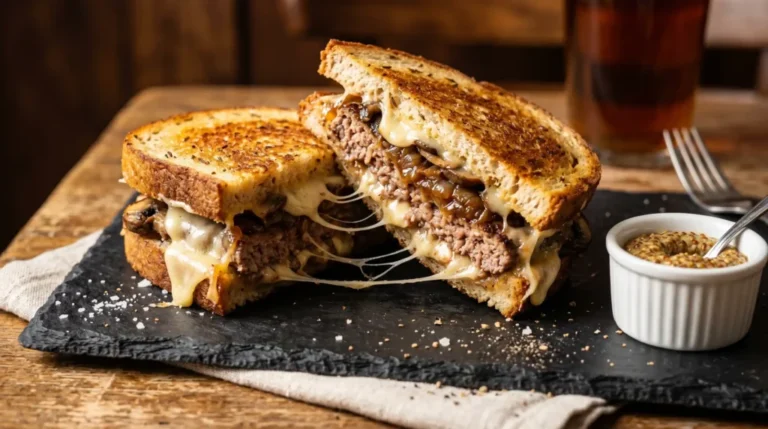
Mushroom Swiss Patty Melt
Ingredients
Method
- Start by caramelizing the onions: heat the butter and olive oil in a skillet over medium heat, add sliced onions, salt, and sugar. Cook on medium-low for 25–30 minutes, stirring occasionally.
- For the mushrooms, in a separate skillet, heat butter and olive oil over medium-high heat, add sliced mushrooms in a single layer. Do not stir for the first 2-3 minutes. Then stir, add minced garlic and thyme, and cook for another minute.
- For the beef patties, divide beef into four portions and mix in seasoning gently without overworking. Form loosely into balls.
- Heat a skillet over high heat, add oil, and cook the beef balls by smashing them flat. Cook for 3-4 minutes on one side without disturbing.
- Flip the patties, cook for 2 minutes, then add Swiss cheese on top, cover to melt.
- Toast the assembled sandwiches in the skillet with butter until golden and crispy on both sides.
- Remove from heat, let rest for 60 seconds, slice diagonally and serve immediately.