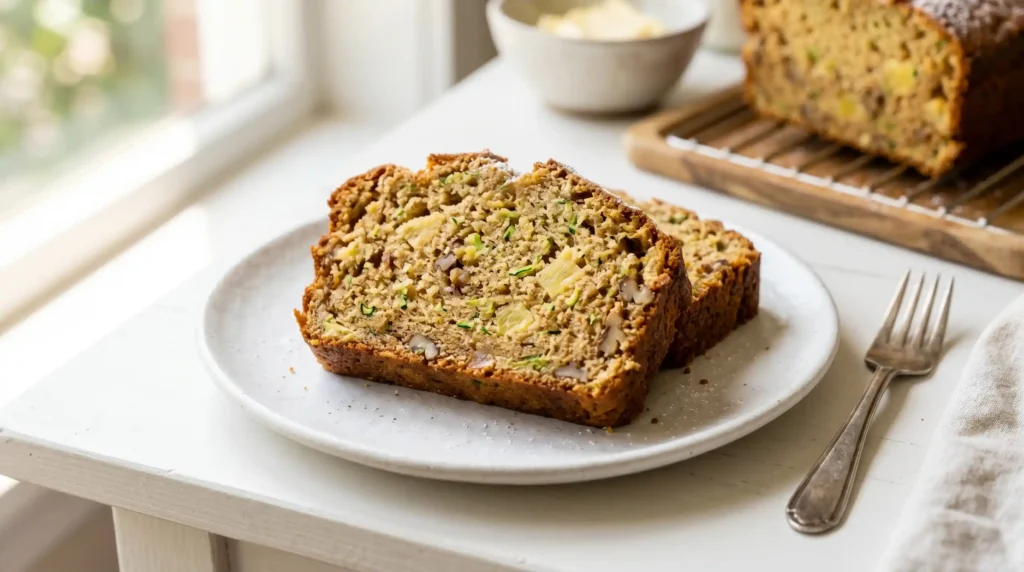
Okay, hear me out. Pineapple. Zucchini. Bread. Together. I know what you’re thinking, and yes, it sounds like a wild experiment gone wrong. But trust me on this one, because this Pineapple Zucchini Bread is the kind of loaf that disappears from the counter before it even cools down.
The zucchini keeps the bread moist without adding any flavor you’d notice. The crushed pineapple adds a gentle tropical sweetness that just works. I first made this on a Sunday afternoon with a zucchini surplus from my garden, and now it is a permanent part of my baking rotation.
Whether you want a quick breakfast, an afternoon snack, or something sweet to bring to a potluck, this bread has you covered. Let me walk you through exactly how to make it.
Recipe Overview
Before we get into the weeds, here is a quick snapshot so you can plan your baking session:
- Servings: Makes 2 standard loaves (about 8–9 slices each)
- Prep Time: 20 minutes
- Bake Time: 55–65 minutes
- Total Time: About 1 hour 20 minutes
- Difficulty: Easy — beginner-friendly!
What You’ll Need: The Ingredients
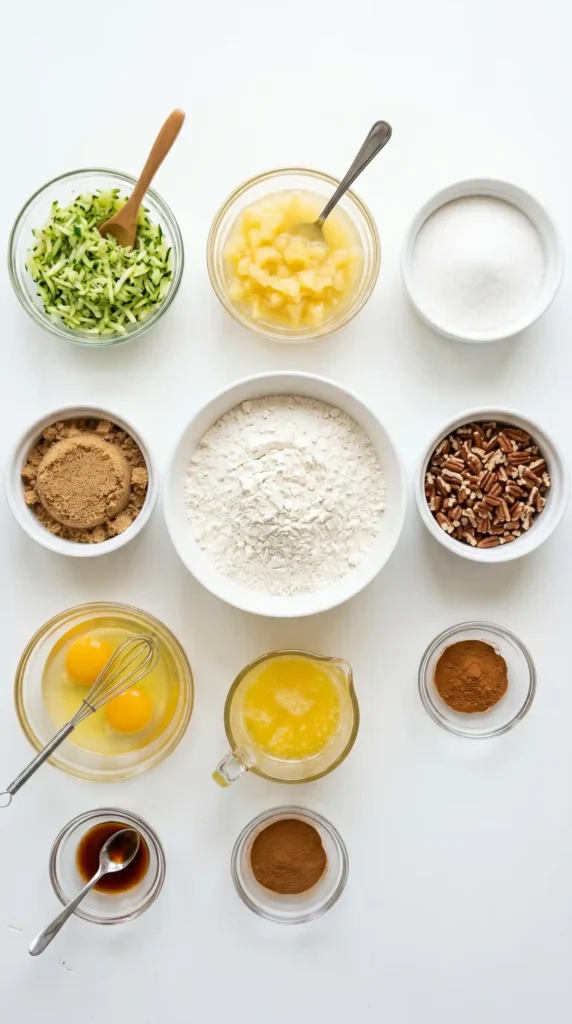
Nothing fancy here, just pantry staples and fresh produce. You probably already have most of this at home, FYI.
Dry Ingredients
- 3 cups all-purpose flour
- 1 cup granulated sugar
- 1 cup light brown sugar
- 1/2 teaspoon baking powder
- 1 teaspoon baking soda
- 1 teaspoon ground cinnamon
- 1 teaspoon salt
Wet Ingredients
- 1 cup unsalted butter, melted
- 3 large eggs
- 2 teaspoons vanilla extract
Main Ingredients & Mix-ins
- 2 cups coarsely shredded zucchini, well-drained
- 8 ounces crushed pineapple, drained (canned is perfectly fine)
- 3/4 cup chopped pecans (optional — swap with walnuts or chocolate chips)
A quick note on the zucchini: draining it well is non-negotiable. Too much moisture and your bread turns into a soggy disappointment. More on that in the steps below.
How to Make Pineapple Zucchini Bread: Step-by-Step
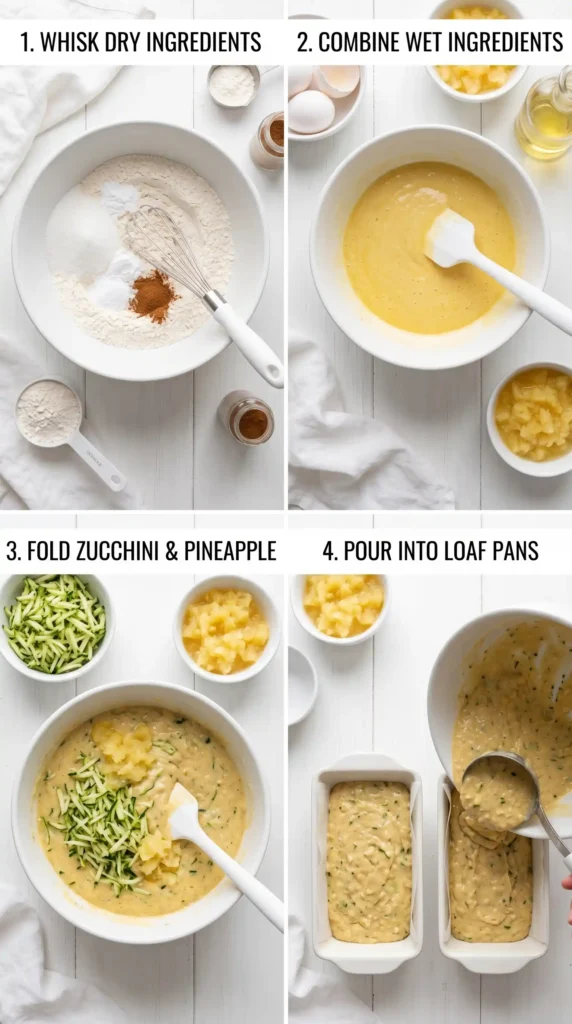
Alright, let’s get baking. Follow these steps closely and you’ll have a gorgeous loaf every single time.
Step 1: Prep Your Oven and Pans
Preheat your oven to 325°F (165°C). While it warms up, grab two standard 9×5-inch loaf pans. Grease them generously with butter or a non-stick spray, then lightly dust with flour. This prevents sticking and guarantees a clean release when the bread is done.
Don’t skip the flour dusting step. Butter alone can sometimes hold, but adding that thin flour coating gives you insurance. You don’t want half your loaf stuck to the pan after all that work. 🙂
Step 2: Drain the Zucchini and Pineapple Properly
This is the step most people rush, and it’s the one that makes or breaks your bread. Place your shredded zucchini in a clean kitchen towel or several layers of paper towels. Squeeze out as much liquid as you can. Do it twice if needed. You want the zucchini to feel almost dry to the touch.
For the pineapple, drain it through a fine mesh strainer. Press it down with the back of a spoon to push out the juice. You want the fruit, not the liquid. Too much pineapple juice throws off the moisture balance of the whole batter.
Step 3: Mix the Dry Ingredients
In a large mixing bowl, combine your 3 cups of all-purpose flour, 1 cup of granulated sugar, 1 cup of light brown sugar, 1/2 teaspoon of baking powder, 1 teaspoon of baking soda, 1 teaspoon of ground cinnamon, and 1 teaspoon of salt.
Whisk everything together until combined. This step ensures the leavening agents and spices distribute evenly throughout the flour. No one wants a bite with a clump of baking soda in it. Take your time with this.
Step 4: Whisk the Wet Ingredients
In a separate medium bowl, whisk together your 3 large eggs, 1 cup of melted (but cooled) unsalted butter, and 2 teaspoons of vanilla extract. Whisk until the mixture looks smooth and slightly frothy. This only takes about 60 seconds.
Make sure your melted butter isn’t piping hot when you add the eggs. If the butter is too warm, it will scramble the eggs, and nobody wants that in their bread batter. Let it cool for a few minutes before whisking.
Step 5: Combine Wet and Dry Ingredients
Pour the wet ingredients into the bowl of dry ingredients. Use a rubber spatula or a wooden spoon to fold everything together. Stir slowly and deliberately. You want everything just combined, no more. Overmixing activates the gluten in the flour, and that leads to a dense, tough loaf.
The batter will look thick and a little lumpy. That is perfectly normal and actually a good sign. Stop mixing the moment you no longer see dry flour streaks.
Step 6: Fold in the Zucchini, Pineapple, and Pecans
Now comes the fun part. Add your drained zucchini, drained crushed pineapple, and chopped pecans directly into the batter. Fold gently using that same rubber spatula. Work the mix-ins through the batter with slow, sweeping motions from the bottom up.
Do not stir aggressively. You want the zucchini and pineapple distributed evenly without beating the air out of the batter. A few folds — maybe ten to twelve passes — should do it. Trust the process here.
Step 7: Pour Into Pans and Bake
Divide the batter evenly between your two prepared loaf pans. Give each pan a gentle tap on the counter to settle the batter and release any large air bubbles. The batter should fill each pan about two-thirds of the way up.
Place both pans on the center rack of your preheated 325°F oven. Bake for 55 to 65 minutes. Start checking at the 55-minute mark. Insert a toothpick or thin skewer into the center of each loaf. If it comes out clean or with just a few dry crumbs, the bread is done.
If the toothpick comes out with wet batter on it, give the bread another 5 to 8 minutes and check again. Every oven runs a little differently, so keep an eye on it rather than trusting the clock alone.
Step 8: Cool Before Slicing
Remove the pans from the oven and let them sit on a wire rack for 10 to 15 minutes. Then carefully run a butter knife around the edges and turn the loaves out. Let them cool on the rack for at least another 30 minutes before slicing.
I know waiting is hard, IMO this is the toughest part of any baking recipe. But cutting too early causes the bread to crumble and fall apart. A fully cooled loaf slices cleanly and holds together beautifully.
Tips for the Best Pineapple Zucchini Bread
Want to guarantee a perfect loaf every time? Keep these tricks in mind:
- Drain everything well: This point bears repeating. Wet zucchini and undrained pineapple are the number one cause of soggy bread.
- Don’t overmix: Stir only until combined. Overworked batter produces a tough, dense loaf.
- Use room temperature eggs: Cold eggs don’t blend as smoothly with melted butter. Leave them out for 20 minutes beforehand.
- Brown sugar for depth: The light brown sugar adds a subtle molasses note that pairs perfectly with cinnamon. Don’t swap it all out for white sugar.
- Pecan substitutes work great: Walnuts, chocolate chips, or even raisins all work beautifully as substitutes or additions.
- Check your zucchini size: Coarsely shredded zucchini gives better texture than finely grated. You want small flecks, not zucchini paste.
How to Store Pineapple Zucchini Bread
Good news: this bread stores really well. Here are your options:
- Room temperature: Wrap tightly in plastic wrap or store in an airtight container. Keeps fresh for up to 3 days.
- Refrigerator: Extend shelf life to about 7 days. Wrap well to prevent drying out.
- Freezer: Slice the loaves first, then wrap individual slices in plastic wrap. Store in a zip-top freezer bag for up to 3 months. Thaw at room temperature or toast straight from frozen.
Why This Flavor Combo Actually Works
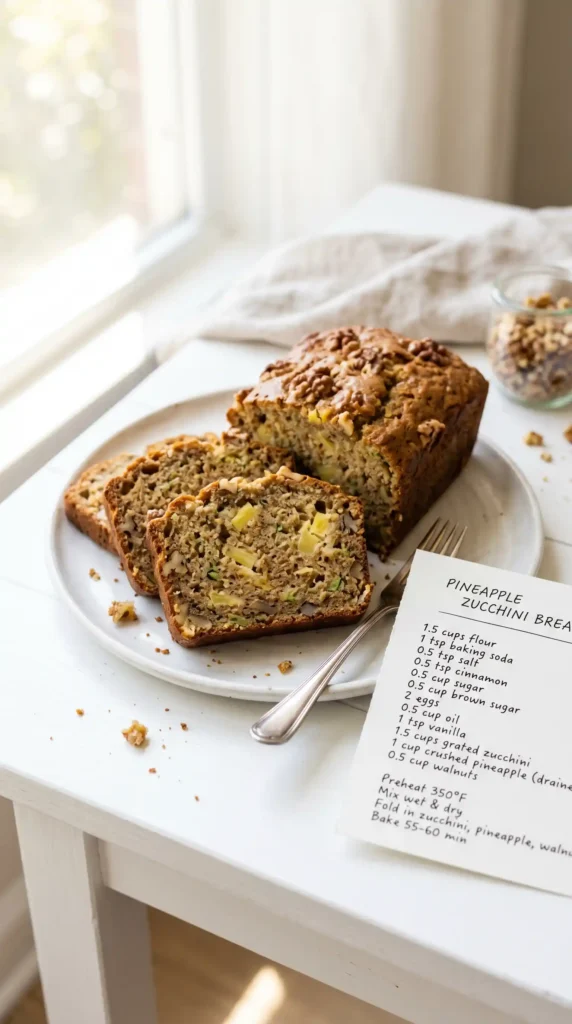
Have you ever wondered why zucchini shows up in so many baked goods? It has a very mild flavor on its own, but it holds a ton of moisture. That moisture releases slowly during baking, keeping the crumb soft and tender long after the bread comes out of the oven.
Crushed pineapple plays a similar role. It adds natural sugar and fruit acid, which tenderizes the gluten structure. The result is a bread that is moist, soft, and slightly sweet without being cloying. The cinnamon ties it all together with warmth.
The pecans add a little crunch that breaks up the soft texture and gives each bite some contrast. You could skip them, but you would be missing out on something special. Why settle for a one-note loaf when you can have a symphony? :/
Frequently Asked Questions
Can I use fresh pineapple instead of canned?
Yes, absolutely. Fresh crushed pineapple works well in this recipe. Just finely chop or pulse it in a food processor to get a consistency similar to canned crushed pineapple. Drain it thoroughly the same way you would drain a canned variety. Fresh pineapple has a slightly brighter flavor, which is a nice bonus.
Do I need to peel the zucchini before shredding?
No peeling necessary. The zucchini skin is thin and soft, and it bakes right into the bread without any noticeable texture. You’ll see small flecks of green throughout the slices, which honestly looks pretty great. Just make sure to wash the zucchini well before grating.
Can I make this recipe into muffins instead of loaves?
Yes, and they turn out fantastic. Use a standard 12-cup muffin tin lined with paper liners or well greased. Fill each cup about two-thirds full. Bake at 350°F for 20 to 25 minutes. The higher temperature works for muffins since they are smaller and need a bit more heat to set properly.
What if I don’t have unsalted butter? Can I use salted?
You can use salted butter, but reduce the added salt in the recipe to 1/2 teaspoon instead of 1 full teaspoon. Salted butter adds about a quarter teaspoon of salt per half cup, so adjusting keeps the bread from tasting overly salty. You can also substitute vegetable oil for butter in a 1:1 ratio if needed.
Why is my Pineapple Zucchini Bread still wet in the middle?
The most common reason is undrained zucchini or pineapple. Extra moisture in the batter requires much longer baking time and can prevent the center from setting properly. The second reason is an oven that runs cool. Use an oven thermometer to verify your actual temperature. If the center is still wet after 65 minutes, tent the top with foil and bake for another 10 minutes.
Can I reduce the sugar in this recipe?
Yes, you can reduce the total sugar by up to a quarter cup without dramatically affecting the texture. Sugar in quick breads contributes to moisture and browning, so cutting too much can lead to a drier, paler loaf. If you want a less sweet result, try reducing each sugar by 2 tablespoons rather than cutting one out entirely.
Final Thoughts: Just Bake It Already
This Pineapple Zucchini Bread recipe proves that the most unexpected ingredient pairings often produce the most memorable results. It is moist, warmly spiced, subtly sweet, and genuinely addictive.
You get two full loaves from one batch, which means one for now and one to freeze, or one to share with someone you want to impress. Either way, it is a win. The recipe is forgiving, the ingredients are affordable, and the results are consistently excellent.
So go grab that zucchini sitting in your fridge, open a can of crushed pineapple, and get your oven going. You’ve got a loaf to bake.
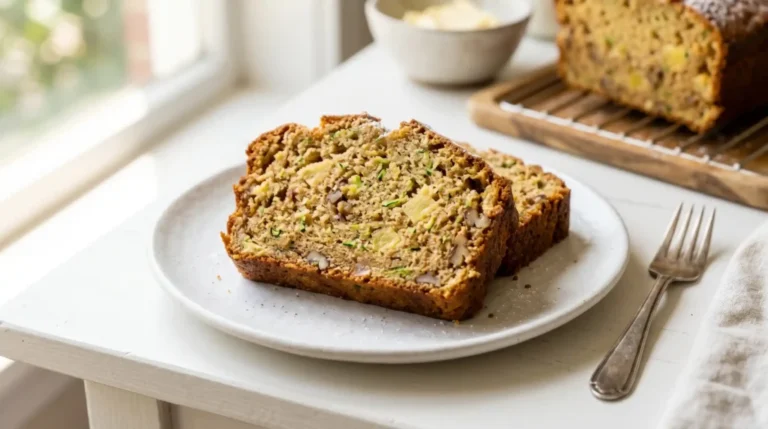
Pineapple Zucchini Bread
Ingredients
Method
- Preheat your oven to 325°F (165°C). Grease two standard 9x5-inch loaf pans with butter or non-stick spray and lightly dust with flour.
- Drain the shredded zucchini using a clean towel or paper towels. Squeeze out as much liquid as possible.
- Drain the crushed pineapple through a fine mesh strainer, pressing with a spoon to remove excess juice.
- In a large mixing bowl, combine all dry ingredients and whisk together.
- In a separate bowl, whisk together eggs, melted butter, and vanilla extract until smooth.
- Pour the wet ingredients into the dry ingredients and stir until just combined.
- Gently fold in the drained zucchini, crushed pineapple, and chopped pecans.
- Divide the batter evenly between the prepared loaf pans and tap each pan to settle the batter.
- Bake in the preheated oven for 55 to 65 minutes, until a toothpick inserted into the center comes out clean.
- Remove from the oven and let cool in the pans for 10 to 15 minutes. Then, turn the loaves out onto a wire rack to cool completely.