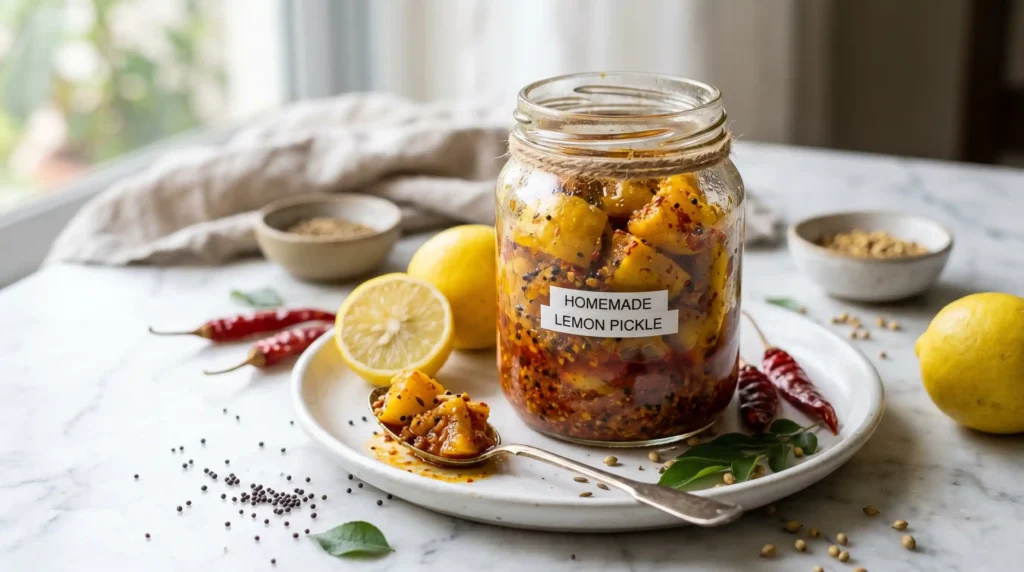
Servings: About 2 cups (roughly 20 servings) | Prep Time: 20 minutes | Resting/Curing Time: 7 to 10 days | Total Active Time: 30 minutes
My grandmother kept a big glass jar of lemon pickle on her kitchen counter year-round. The smell alone — tangy, spicy, deeply savory — would hit you the moment you walked through her door. I have been chasing that exact flavor ever since.
Good lemon pickle is one of those condiments that transforms an ordinary meal into something memorable. A spoonful alongside rice and dal, or tucked into a roti — it just works every single time.
And here is the great news: making it at home is far easier than most people think. You do not need any special equipment or hard-to-find ingredients. You just need a little patience while it cures.
What Exactly Is Lemon Pickle?
If you have never tried lemon pickle, let me paint you a picture. It is intensely tangy, salty, spiced, and slightly oily — basically everything a good condiment should be. It works as a side, a flavor booster, or even a spread.
This is not the sweet, jammy lemon preserve you might find in a British tearoom. This is the bold, punchy South Asian-style pickle that makes your taste buds wake up and pay attention.
IMO, once you try homemade lemon pickle, store-bought versions feel genuinely disappointing. The freshness of real lemons and whole spices makes a difference you can actually taste.
Ingredients You Will Need
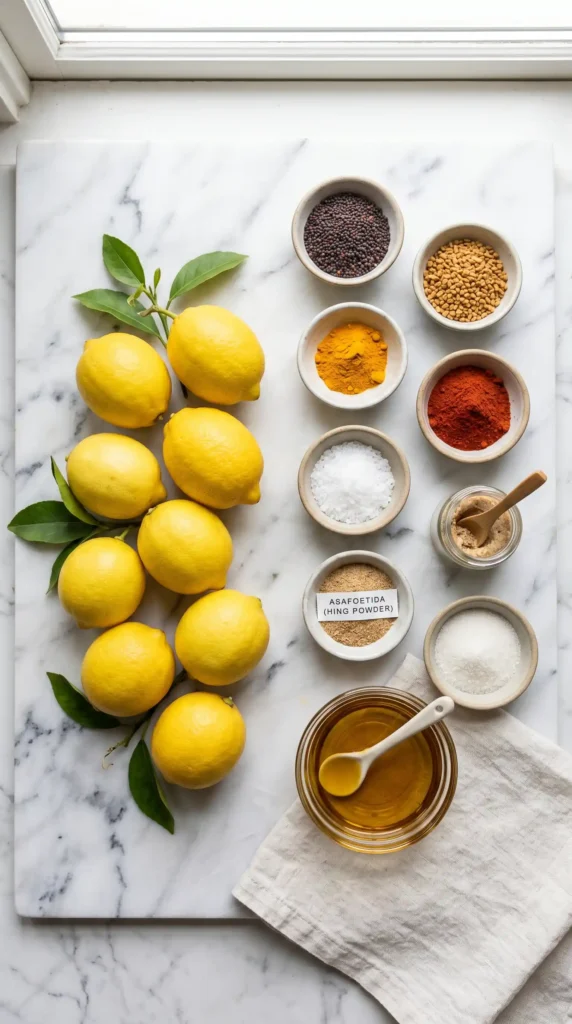
One of the best things about this recipe is how simple the ingredient list is. Everything here is a pantry staple in most households that cook South Asian food regularly.
Main Ingredients
- 8 to 10 medium lemons (about 700g total)
- 3 tablespoons coarse salt (or rock salt)
- 2 tablespoons mustard oil (or any neutral oil)
Spices
- 1 tablespoon mustard seeds
- 1 teaspoon fenugreek seeds
- 1 tablespoon red chili powder
- 1 teaspoon turmeric powder
- 1 teaspoon asafoetida (hing)
- 1 tablespoon sugar (optional, but recommended)
The mustard oil gives this pickle its signature sharpness and acts as a natural preservative. If you cannot find it, use a light vegetable oil — but fair warning, the flavor will be noticeably different.
Why These Specific Spices?
Every spice in this recipe earns its place. Nothing here is decorative. Let me quickly break down what each one brings to the jar:
- Mustard seeds add pungency and a mild heat that builds slowly.
- Fenugreek seeds contribute a slight bitterness that balances the sourness of the lemon.
- Red chili powder brings the obvious heat, so adjust this to your tolerance.
- Turmeric acts as a natural preservative and gives the pickle its golden color.
- Asafoetida adds a savory depth that is hard to describe but impossible to miss.
Have you ever bitten into a pickle and wondered why it tasted so complex even though the ingredient list looked short? That layering of spices is exactly why.
Equipment You Will Need
You do not need a fully stocked kitchen for this one. Here is your basic list:
- Large glass jar (sterilized, at least 1-liter capacity)
- Sharp knife and cutting board
- Heavy-bottomed pan or small skillet
- Mixing bowl
- Dry spoon (always use dry utensils with pickles)
Sterilizing your jar is non-negotiable. Rinse it with hot water, let it dry completely in the sun or a warm oven, and make sure no moisture remains. Even a tiny bit of water can ruin the entire batch by introducing mold.
How to Make Lemon Pickle
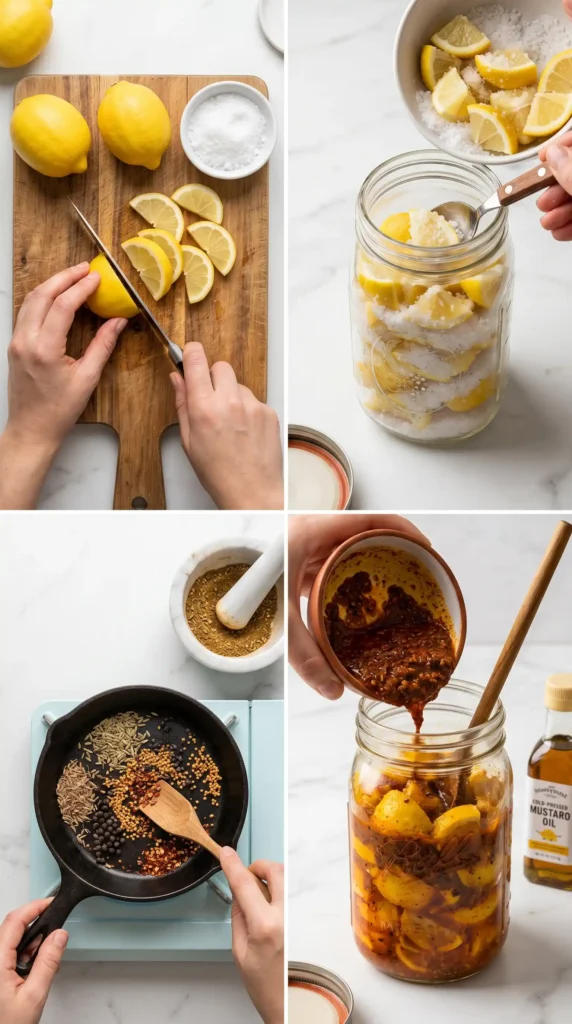
Let me walk you through the full process of making lemon pickle step by step. There is some waiting involved, but the actual hands-on work takes less than 30 minutes total. The patience pays off, I promise.
Step 1: Wash and Dry the Lemons Thoroughly
Start by washing all 8 to 10 lemons under running water. Scrub the skin gently to remove any surface residue. This step matters more than you might think — the skin of the lemon becomes part of the pickle, so you want it clean.
After washing, dry each lemon completely using a clean kitchen towel. Then spread them on a dry surface and let them air-dry for another 15 to 20 minutes. Any remaining moisture is the enemy of a good long-lasting pickle. Do not rush this step.
Step 2: Cut the Lemons
Once the lemons are fully dry, cut each one into quarters or eighths depending on your preference for chunk size. Quartered pieces give you big, bold bites of lemon. Smaller pieces blend more easily into rice and dal.
As you cut, remove any visible seeds but do not worry about getting every single one. A few seeds in the jar are completely fine. Place all the cut lemon pieces into a clean, dry mixing bowl and set them aside.
Step 3: Salt the Lemon Pieces
Sprinkle 3 tablespoons of coarse salt over the cut lemon pieces in the bowl. Use your clean, dry hands or a dry spoon to toss everything together so every piece gets a good coating of salt.
Transfer the salted lemon pieces into your sterilized glass jar. Press them down firmly so they sit compactly. Seal the jar and leave it out at room temperature in a sunny spot for 3 to 4 days. Shake the jar once every day to redistribute the salt and the natural lemon juice that collects at the bottom.
By day three or four, the lemon skin will have softened noticeably and the lemons will have released a good amount of their natural juice. This initial curing step is what mellows the sharp raw edge of the lemon rind and gets it ready to absorb all the spices.
Step 4: Roast and Grind the Spices
On the day you plan to add the spices, heat a dry skillet over medium-low heat. Add 1 tablespoon of mustard seeds and 1 teaspoon of fenugreek seeds. Dry-roast them for about 2 minutes, stirring constantly, until you smell a warm, nutty aroma.
Remove from heat immediately and let them cool completely. Once cool, grind them into a coarse powder using a mortar and pestle or a small spice grinder. You want texture here — not a super fine powder. Coarse ground spices give the pickle more body and a satisfying bite.
Step 5: Prepare the Spice Mix
In a small bowl, combine your freshly ground mustard and fenugreek powder with 1 tablespoon of red chili powder, 1 teaspoon of turmeric powder, 1 teaspoon of asafoetida, and 1 tablespoon of sugar if you are using it.
Mix all the dry spices together thoroughly. This combined spice blend is what transforms ordinary salted lemons into deeply flavored lemon pickle. Take a moment to smell it — it already smells incredible at this stage, and it only gets better.
Step 6: Heat the Oil
Pour 2 tablespoons of mustard oil into a small pan and heat it over medium heat until it just begins to smoke lightly. This step is important specifically for mustard oil — heating it removes its raw pungency and mellows it into something smoother and more aromatic.
Turn off the heat and let the oil cool for 3 to 4 minutes. You want it warm but not scorching hot when you add it to the spice mix. Adding blazing hot oil can burn the spices and turn them bitter.
Step 7: Combine Everything
Open your jar of pre-cured lemon pieces. Add the spice mix directly into the jar over the lemon pieces. Then drizzle the warm oil over the top. Using a clean, dry spoon, mix everything together gently but thoroughly.
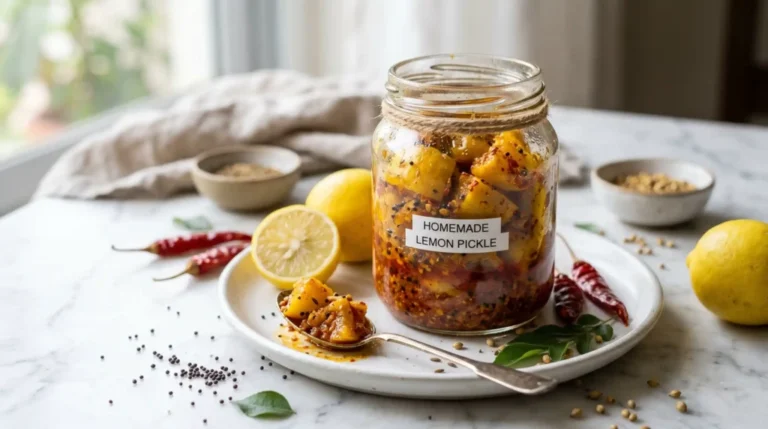
Make sure every piece of lemon gets coated in the oil and spice mixture. The jar should look vibrant — yellow from the turmeric, flecked with red chili, and glossy from the oil. Seal the jar tightly.
Step 8: Cure and Rest
Place the sealed jar back in a sunny spot or a warm area of your kitchen. Let it sit undisturbed for another 4 to 6 days, shaking it gently once a day. The lemon pieces continue to soften, the spices meld together, and the pickle develops its full, complex flavor.
FYI — the pickle is technically edible after day 7, but it reaches peak flavor around day 10. Waiting those extra few days makes a genuinely noticeable difference. After that, store it in a cool, dry spot or refrigerate it.
Tips for the Best Lemon Pickle
- Always use dry utensils — moisture causes spoilage.
- Choose thin-skinned lemons; they cure faster and taste better in pickle.
- More sunlight during curing = faster softening of the lemon skin.
- Taste and adjust salt or chili after day 7, before the pickle fully sets.
- A thin layer of oil on top of the pickle in the jar helps it stay fresh longer.
How to Serve Lemon Pickle
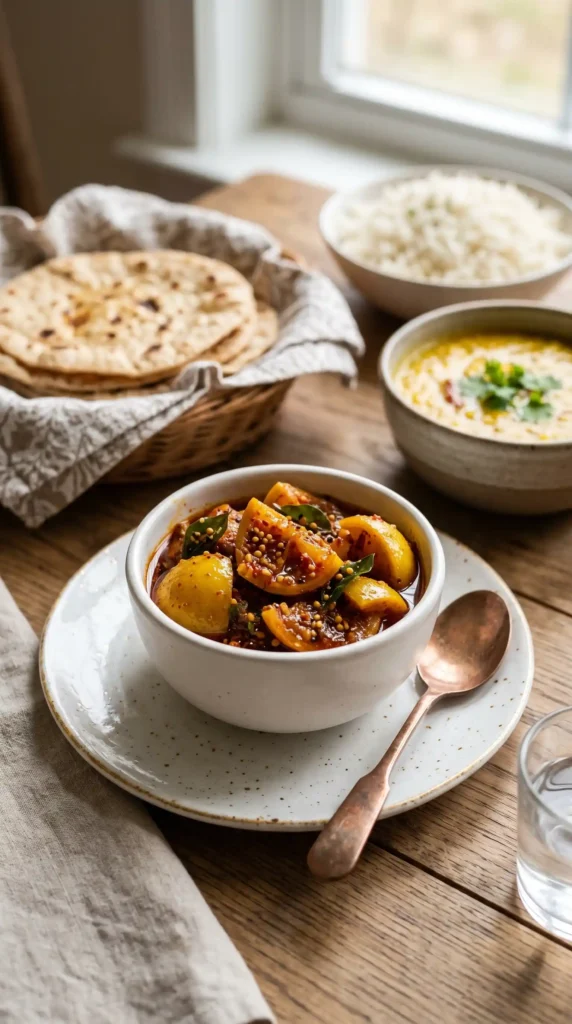
The short answer: with everything. The longer answer involves some genuinely great combinations:
- Alongside steamed rice and dal for a classic comfort meal.
- As a sharp, tangy side with parathas or rotis.
- Chopped finely and stirred into yogurt for an instant spiced raita.
- As a bold condiment alongside grilled meats or roasted vegetables.
FAQs About Lemon Pickle
How long does homemade lemon pickle last?
When stored properly in a sterilized, airtight jar and handled with dry utensils every time, homemade lemon pickle lasts easily for 6 to 12 months at room temperature. Refrigerating it extends the shelf life even further, sometimes up to 2 years.
Can I use lime instead of lemon for this pickle?
Yes, absolutely. Limes work beautifully in this recipe and give you a slightly sharper, more intensely tart pickle. The process stays exactly the same — just swap the lemons for an equal weight of limes. Many traditional recipes actually use limes.
Why did my lemon pickle turn bitter?
Bitterness usually comes from one of two things — fenugreek seeds added in too large a quantity, or lemon pith that did not cure long enough. Make sure you follow the initial salting and curing period of 3 to 4 days before adding spices. That step mellows the bitterness significantly.
Do I need to refrigerate lemon pickle?
Not necessarily. A well-made lemon pickle with enough salt and oil stays perfectly shelf-stable at room temperature for months. However, once you open it and start using it regularly, refrigerating it is a smart move to extend its life and keep it tasting fresh.
Can I reduce the oil in this recipe?
You can reduce it slightly, but oil serves two important functions here — flavor and preservation. Less oil means a shorter shelf life and a drier pickle. If you want a lighter version, stick to the 2 tablespoons and just use a lighter neutral oil instead of mustard oil.
Final Thoughts
Making lemon pickle at home is one of those small kitchen projects that pays dividends for months. The effort is minimal, the ingredients are cheap, and the result is a deeply personal condiment that tastes nothing like anything from a store shelf.
The hardest part is genuinely just the waiting. But every single day in that jar, the flavors develop and the lemon softens and something magical happens. Trust the process. So grab a bag of lemons, dig out that glass jar, and get started. Your future self — the one eating rice and dal with a perfect spoonful of lemon pickle — will absolutely thank you.
Lemon Pickle
Ingredients
Method
- Wash all lemons under running water and scrub the skin gently.
- Dry each lemon using a clean kitchen towel and let them air-dry for another 15 to 20 minutes.
- Cut the lemons into quarters or eighths, removing visible seeds and place into a bowl.
- Sprinkle salt over the cut lemon pieces and toss to coat.
- Transfer salted lemon pieces into a sterilized glass jar, pressing down firmly.
- Seal the jar and leave it at room temperature for 3 to 4 days, shaking daily.
- On the day of adding spices, dry-roast mustard and fenugreek seeds in a skillet until aromatic.
- Cool and grind the spices into a coarse powder.
- Mix ground spices with red chili powder, turmeric, asafoetida, and sugar in a bowl.
- Heat mustard oil until it just begins to smoke, cool slightly, then add to the spice mix.
- Combine spice mix and warm oil with lemon pieces in the jar.
- Seal it tightly and let it sit undisturbed for another 4 to 6 days, shaking gently once a day.