Prep Time: 25 minutes | Cook Time: 20 minutes | Total Time: 45 minutes | Servings: 12 egg rolls (serves 4 to 6 people)
Philadelphia Called — and It Wants You to Make These Immediately
What if you could hold a Philly cheesesteak in one hand, eat it as a crispy finger food, and not need a napkin the size of a bath towel? That is exactly what Philly Cheesesteak Egg Rolls deliver — all the flavor of the classic sandwich wrapped in a golden, crunchy shell.
I made these for a Super Bowl party two years ago and genuinely ran out before halftime. A tray of twelve egg rolls, gone in twenty minutes. The only complaint I heard all night was that I had not made more. IMO, that is the most meaningful recipe feedback a person can receive.
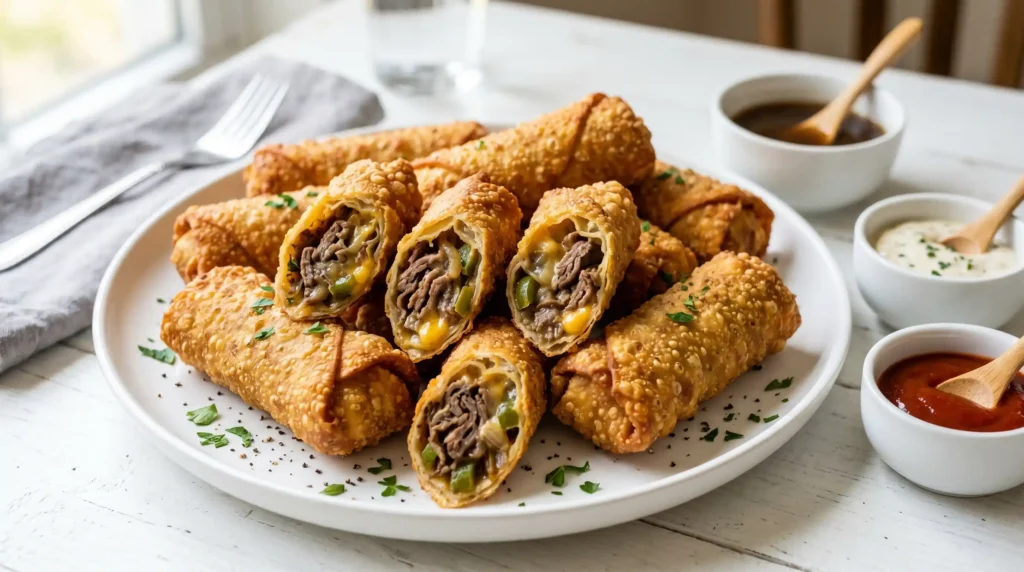
Philly Cheesesteak Egg Rolls pack seasoned shaved beef, caramelized onions, peppers, and melted provolone into a crispy egg roll wrapper, then fry them until deeply golden and impossibly crunchy. They work as a party appetizer, game day snack, or a fun weeknight dinner that everyone at the table actually gets excited about.
Ready to make the snack that steals every party? Let’s get into it.
Why Philly Cheesesteak Egg Rolls Work So Well
The Philly cheesesteak is already a perfect food combination — savory beef, sweet sauteed onions and peppers, and melted cheese. The egg roll wrapper adds a textural contrast that the original sandwich simply does not have. That crunch against the soft, cheesy interior is genuinely addictive.
Traditional cheesesteaks need a specific roll, specific beef, and a certain technique to get right. Egg rolls are far more forgiving. You can swap ingredients, adjust cheese choices, and still end up with something that tastes incredible. Have you ever had a recipe that felt both classic and flexible at the same time? This is that recipe.
The frying step seals in all the moisture from the filling while creating that crackly exterior that makes every bite satisfying. Even people who claim they do not like egg rolls tend to love these — because at their core, they taste like a cheesesteak, not a typical egg roll.
Ingredients for Philly Cheesesteak Egg Rolls
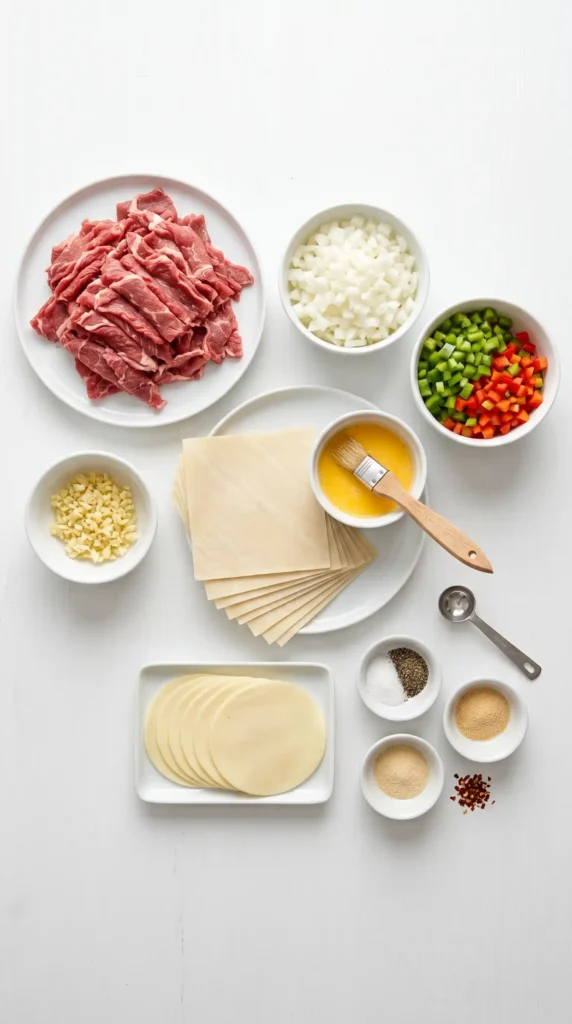
Here is the complete list with exact quantities. Everything is widely available and easy to find at any grocery store
For the Cheesesteak Filling
- 1 lb (450g) ribeye steak or shaved beef steak, very thinly sliced
- 1 tablespoon olive oil or vegetable oil
- 1 tablespoon unsalted butter
- 1 medium yellow onion, thinly sliced (about 1 cup)
- 1 medium green bell pepper, thinly sliced
- 1 medium red bell pepper, thinly sliced (optional but adds sweetness)
- 2 cloves garlic, finely minced
- 1 teaspoon Worcestershire sauce
- 1 teaspoon garlic powder
- 1/2 teaspoon onion powder
- Salt and black pepper to taste
- 6 slices provolone cheese (or 1 cup shredded provolone or white American cheese)
For the Egg Rolls
- 12 large egg roll wrappers
- 1 egg, beaten (for sealing the wrappers)
- Vegetable oil for frying — enough to fill a deep pan 3 inches deep
For Dipping Sauces
- Cheese sauce or queso dip
- Garlic aioli or garlic mayo
- Sriracha mayo for a spicy option
- Classic yellow mustard or spicy brown mustard
How to Make Philly Cheesesteak Egg Rolls Step by Step
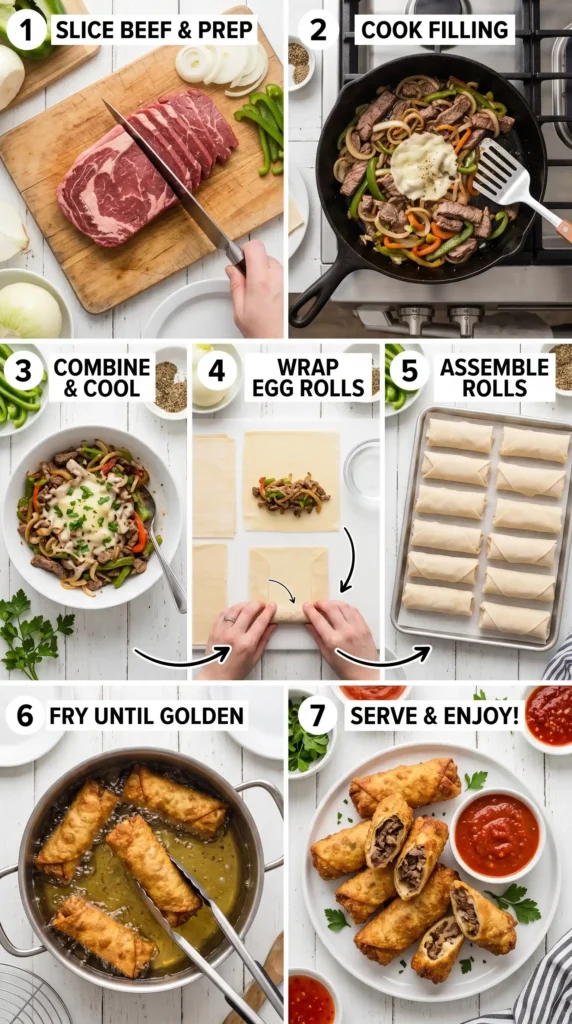
Take your time with each stage of this recipe. The filling needs proper seasoning and texture before it goes into the wrappers, and the wrapping technique matters for getting a clean, sealed egg roll that holds together during frying.
Step 1: Freeze the Beef Briefly for Easy Slicing
If you purchase a ribeye steak rather than pre-shaved beef, place it in the freezer for 20 to 30 minutes before slicing. Partially frozen beef firms up enough to slice paper-thin with a sharp knife. This is the same trick many restaurant kitchens use for cheesesteak prep.
Slice the beef as thinly as possible against the grain. Aim for slices no thicker than an eighth of an inch. Thin beef cooks in seconds in the pan and stays tender in the finished egg roll. Thick chunks cook unevenly and make the egg roll harder to roll tightly. If you prefer convenience, buy pre-shaved steak from the butcher counter — it saves time and works perfectly.
Step 2: Caramelize the Onions and Peppers
Heat a large skillet over medium heat and add the 1 tablespoon of olive oil and 1 tablespoon of butter together. Once the butter melts and the foam subsides, add the sliced onion and both bell peppers to the pan. Spread them out in an even layer.
Cook the onions and peppers over medium heat for 10 to 12 minutes, stirring every couple of minutes. You want them to soften fully and develop a light golden color at the edges — this is where their natural sweetness concentrates and develops. Do not rush this step by turning the heat up too high. High heat makes the vegetables burn on the outside while staying raw in the center.
Add the minced garlic to the pan during the last 2 minutes of cooking. Stir it in and cook until fragrant — about 60 seconds. Season the vegetables with salt, black pepper, garlic powder, and onion powder. Stir well, then transfer the entire cooked vegetable mixture to a large bowl and set aside.
Step 3: Cook the Beef
Return the same skillet to high heat. You want it very hot before the beef goes in. Add a tiny splash of oil if the pan looks dry. Once the pan is hot, add the thinly sliced beef in a single layer if possible. If your pan is not large enough, cook the beef in two batches rather than crowding it.
Cook the beef for 60 to 90 seconds per side, breaking it apart with a spatula or wooden spoon as it cooks. The goal is browned, cooked-through beef with slightly caramelized edges — not grey, steamed meat. Crowding the pan traps steam and prevents browning, which is why cooking in batches matters if needed.
Add the Worcestershire sauce directly to the beef while it cooks and stir it in. The Worcestershire adds a deep, savory, slightly tangy note that amplifies the beef flavor. Once fully cooked, transfer the beef to the bowl with the cooked vegetables and toss everything together until well combined.
Step 4: Add the Cheese to the Filling
Lay the provolone slices over the hot beef and vegetable mixture while everything is still warm. Let the cheese sit for about 60 seconds to soften and begin melting from the residual heat. Then use a spoon or spatula to fold the melting cheese into the filling, breaking it up as you mix.
You want the cheese distributed throughout the filling, not sitting in one large melted clump. Evenly distributed cheese means every section of every egg roll tastes cheesy — not just the center. Let the filling cool for 10 minutes before you begin rolling. Hot filling creates steam inside the wrapper, which can cause tearing during rolling. :/
Step 5: Roll the Egg Rolls
Lay one egg roll wrapper flat on a clean surface with one corner pointing toward you — like a diamond shape. Place about 3 to 4 tablespoons of the filling in the center of the wrapper, shaping it into a compact horizontal log. Do not overfill — overstuffed wrappers burst open during frying and make a mess in the oil.
Fold the bottom corner of the wrapper up and over the filling, tucking it tightly underneath. Then fold both side corners in toward the center, like folding an envelope. Roll the egg roll away from you firmly and evenly, keeping the roll tight as you go. Before reaching the final top corner, brush it with the beaten egg using a pastry brush or your fingertip.
Press the egg-washed corner firmly against the roll to seal it completely. The egg acts as the glue that holds the wrapper shut during frying. Place the finished egg roll seam-side down on a plate or baking sheet. Repeat this process for all 12 egg rolls. Keep finished rolls covered with a slightly damp kitchen towel to prevent the wrappers from drying out while you work.
Step 6: Heat the Oil for Frying
Pour vegetable oil into a deep, heavy-bottomed pot or Dutch oven until it reaches about 3 inches deep. Heat the oil over medium-high heat until it reaches 350 degrees Fahrenheit (175 degrees Celsius). Use a cooking thermometer to check the temperature — this is not a step to guess on.
Oil that is too cool produces greasy, soggy egg rolls. Oil that is too hot burns the outside before the filling heats through. 350 degrees Fahrenheit is the sweet spot that gives you a deep golden, crispy exterior with a hot, fully melted interior. Maintain this temperature throughout frying by adjusting the heat as needed.
Step 7: Fry the Egg Rolls in Batches
Carefully lower 3 to 4 egg rolls into the hot oil at a time using tongs or a slotted spoon. Do not add too many at once — overcrowding the oil drops the temperature significantly and results in uneven cooking and greasy wrappers. Fry in small batches and the quality stays consistent across all twelve.
Fry each batch for 3 to 4 minutes total, turning the egg rolls occasionally so all sides make contact with the hot oil and brown evenly. You are looking for a deep golden-brown color all the way around with a visibly blistered, crispy surface. FYI — the egg rolls continue to darken slightly after they come out of the oil, so pull them just before they reach your ideal color.
Remove the fried egg rolls with tongs and place them on a wire rack set over a baking sheet, or on a plate lined with paper towels. A wire rack is the better option because it allows air to circulate underneath and keeps the bottom of the egg roll just as crispy as the top.
Step 8: Rest Briefly and Serve
Let the egg rolls rest for 3 to 4 minutes before serving. The filling inside is extremely hot straight from the oil and needs a moment to cool slightly so nobody burns the roof of their mouth. Arrange them on a large white serving plate and serve with your choice of dipping sauces on the side.
Tips for Perfect Philly Cheesesteak Egg Rolls
- Cool the filling before rolling. Warm filling creates steam that weakens the wrapper from the inside during frying. Ten minutes of cooling makes a big difference.
- Do not overfill the wrappers. Three to four tablespoons per roll is the limit. More than that and they pop open in the oil.
- Seal every seam with egg wash. Any gap in the seal lets oil leak in and filling leak out. Press firmly all the way around.
- Keep the oil at 350 degrees Fahrenheit. A thermometer takes the guesswork out completely and guarantees consistent results across every batch.
- Drain on a wire rack. Paper towels trap steam underneath and soften the bottom. A rack keeps every side equally crispy.
Want to Bake Them Instead of Frying?
Baking works well if you prefer a lighter version. Preheat your oven to 425 degrees Fahrenheit. Brush each assembled egg roll generously with olive oil or melted butter on all sides. Place them seam-side down on a parchment-lined baking sheet, spaced at least an inch apart.
Bake for 15 to 18 minutes, turning once at the halfway point, until golden and crispy all over. The baked version is less crunchy than the fried version but still delivers great flavor. The air fryer also works brilliantly — cook at 390 degrees Fahrenheit for 8 to 10 minutes, flipping once halfway through.
Storing and Reheating
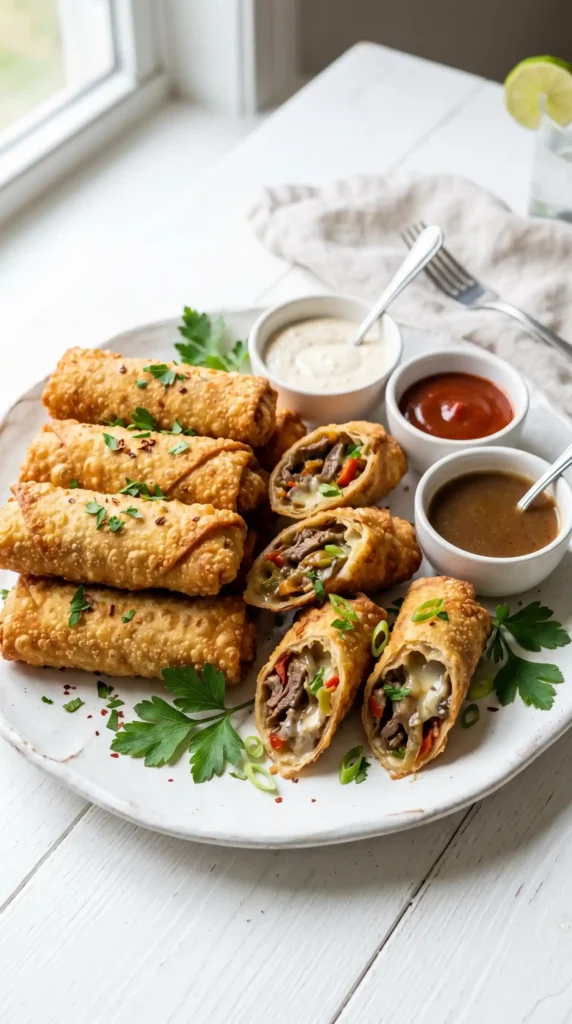
Store leftover Philly Cheesesteak Egg Rolls in an airtight container in the refrigerator for up to 3 days. Reheat them in an oven at 375 degrees Fahrenheit for 8 to 10 minutes, or in an air fryer at 370 degrees for 4 to 5 minutes. Both methods restore the crispiness much better than the microwave, which turns the wrappers soft and chewy.
You can also freeze unfried egg rolls. Assemble them fully, arrange on a baking sheet, freeze until solid, then transfer to a freezer bag for up to 2 months. Fry straight from frozen at 350 degrees Fahrenheit for 5 to 6 minutes — no thawing needed.
Frequently Asked Questions
1. What is the best beef to use for Philly Cheesesteak Egg Rolls?
Ribeye is the traditional and best-tasting option — its marbling keeps it tender and flavorful even after cooking. Pre-shaved steak from the butcher counter is the most convenient choice. Sirloin and flank steak also work well when sliced very thin. Avoid thick cuts or stew beef, which stay chewy regardless of cooking time.
2. Can I make Philly Cheesesteak Egg Rolls ahead of time?
Yes. Assemble the egg rolls fully, place them seam-side down on a baking sheet lined with parchment, cover loosely with plastic wrap, and refrigerate for up to 8 hours before frying. You can also freeze them unfried for up to 2 months and fry straight from frozen when needed.
3. What cheese works best in this recipe?
Provolone is the classic choice and melts beautifully into the filling. White American cheese is another traditional Philly option and creates an even creamier result. Cheez Whiz, used in the authentic Philadelphia version, works great in egg rolls too. Avoid pre-shredded cheeses with anti-caking agents — they do not melt as smoothly.
4. How do I keep the egg rolls from opening up during frying?
Two things matter most: do not overfill the wrappers, and seal every seam thoroughly with beaten egg. Press the seam firmly along the entire length of the roll. Place finished rolls seam-side down while you work and fry them seam-side down first so the seal sets before the roll gets turned.
5. Can I use wonton wrappers instead of egg roll wrappers?
Wonton wrappers are much smaller and thinner than egg roll wrappers, so they produce a mini version rather than a full-sized egg roll. They work well for bite-sized party appetizers but require less filling per piece and a shorter frying time of about 2 minutes. For full-sized Philly Cheesesteak Egg Rolls, stick with standard large egg roll wrappers.
Final Thoughts
Philly Cheesesteak Egg Rolls take one of America’s most beloved sandwiches and transform it into a crispy, handheld, crowd-pleasing appetizer that works in any setting. The filling is rich and savory, the wrapper is shatteringly crunchy, and the whole thing comes together in under an hour with ingredients you can grab at any grocery store.
Whether you fry them, bake them, or air fry them — the result is always something people ask about. Make a double batch. You will not regret it, and your guests will not leave without asking for the recipe.
Philadelphia has great taste. Now so do you.
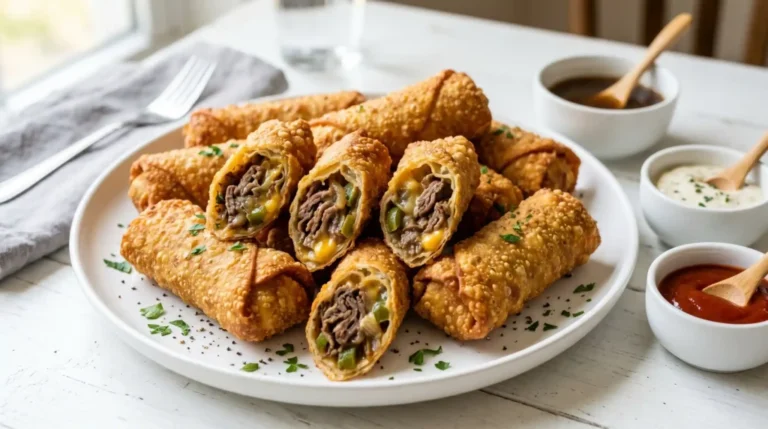
Philly Cheesesteak Egg Rolls
Ingredients
Method
- Freeze the Beef Briefly for Easy Slicing: Place ribeye steak in the freezer for 20 to 30 minutes for easier slicing.
- Caramelize the Onions and Peppers: Heat a large skillet over medium heat with olive oil and butter. Add sliced onion and peppers, cooking for 10 to 12 minutes until softened and lightly golden. Add minced garlic during the last 2 minutes.
- Cook the Beef: Return skillet to high heat and cook thinly sliced beef for 60 to 90 seconds per side. Add Worcestershire sauce during cooking.
- Add the Cheese to the Filling: Lay provolone slices over the hot beef mixture. Let sit for 60 seconds, then fold cheese into the mixture. Allow to cool for 10 minutes.
- Roll the Egg Rolls: Place an egg roll wrapper flat, add filling, and roll tightly, sealing with beaten egg.
- Heat the Oil for Frying: Pour vegetable oil into a pot and heat to 350°F (175°C).
- Fry the Egg Rolls in Batches: Fry egg rolls in small batches for 3 to 4 minutes until golden brown. Use a wire rack to drain them.
- Rest Briefly and Serve: Let egg rolls rest for 3 to 4 minutes before serving, accompanied by dipping sauces.