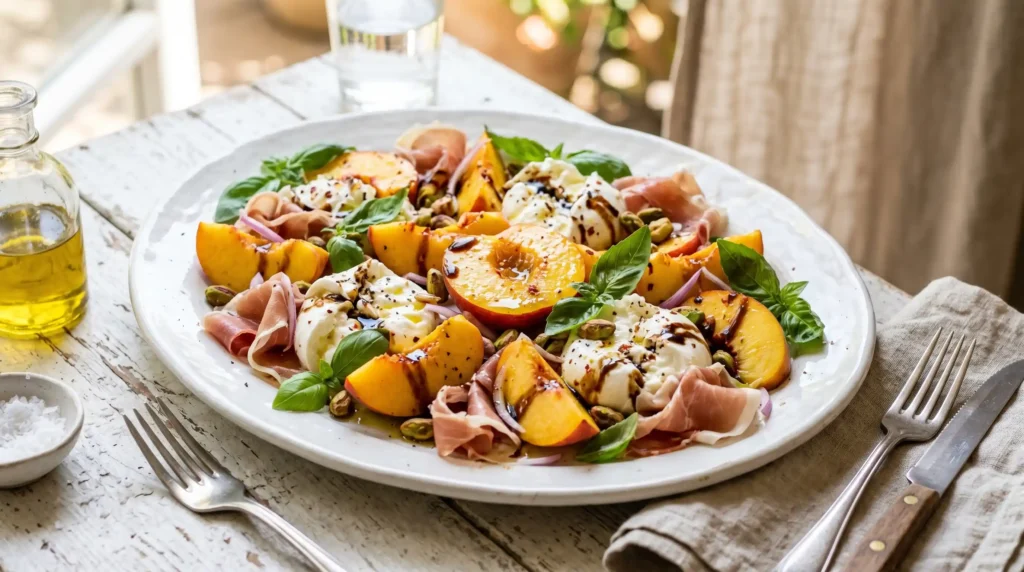
The best summer food requires the least intervention. The best summer food is also the food that makes the most of what summer actually produces — fruit that smells extraordinary, cheese that needs nothing added, and herbs that release flavour the moment you tear them. Summer Peach Mozzarella brings all three together on a single platter in ten minutes, and it consistently produces the strongest reaction of any dish at any summer table where it appears.
I made this for a garden lunch last summer on a day when I had approximately zero time and a bowl of peaches that had reached perfect ripeness and were not going to wait. The result was a platter that people photographed before touching and then cleared within eight minutes — which remains the most satisfying validation any ten-minute recipe can receive. The combination works because every element belongs there. Nothing is decorative. Everything contributes.
Have you ever made a dish that tasted more complex than the sum of its ingredients should logically allow? This is that dish. Let us make it properly.
Why Peach and Mozzarella Is One of the Best Summer Pairings
Mozzarella — particularly fresh mozzarella or burrata — has a mild, milky, slightly tangy flavour and a creamy texture that functions beautifully as a backdrop for stronger, sweeter, more assertive flavours. In a caprese salad, it meets tomato. In this dish, it meets ripe peach — which brings a concentrated summer sweetness, a gentle floral acidity, and a soft, juicy texture that contrasts with the cool creaminess of the cheese in exactly the same way tomato does but with an entirely different seasonal flavour profile.
The prosciutto adds the savoury, salt-cured contrast that prevents the dish from tasting one-dimensionally sweet. Thin prosciutto slices wrapped around peach and cheese produce a bite that delivers sweet, creamy, salty, and savoury simultaneously — a combination of flavour dimensions that explains why this platter generates such consistent enthusiasm. The basil adds a herby, slightly peppery note that brightens every other flavour on the plate.
The honey balsamic drizzle ties everything together. Balsamic adds acidity. Honey adds sweetness and a viscous sheen that makes the platter look genuinely restaurant-quality. Extra-virgin olive oil adds richness and fruitiness. Combined, these three liquid elements produce a dressing that amplifies rather than masks — it makes the peach taste more peach, the cheese taste more cheese, and the basil taste more basil. IMO, this is the summer salad that makes every other summer salad optional.
What You Need
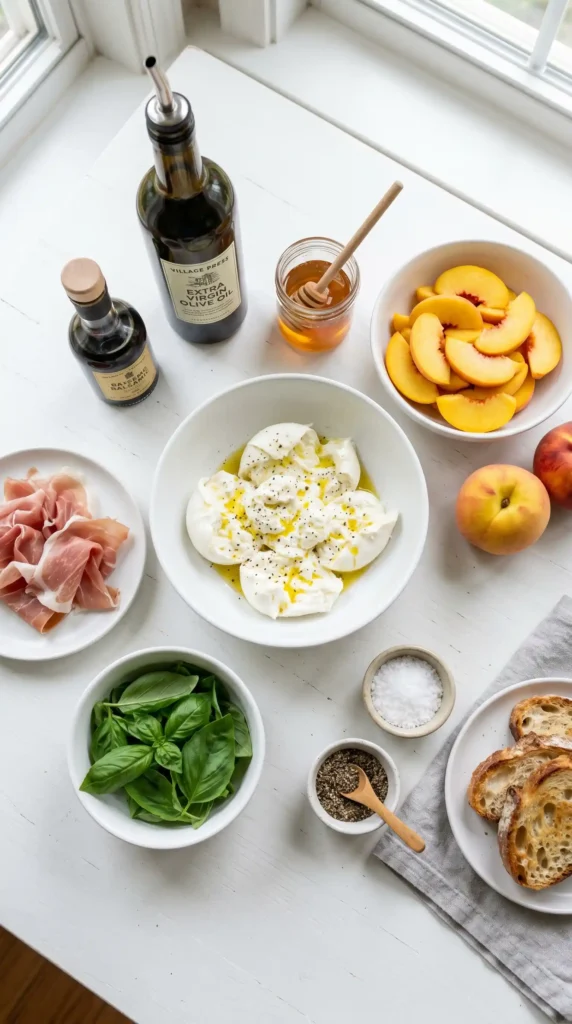
Everything in this recipe has one primary requirement: quality. With ten-minute no-cook recipes, there is no technique to compensate for mediocre ingredients — you taste each element individually and together without any cooking process to modify or develop them. Buy the ripest peaches available. Buy the best mozzarella your grocery store carries. Use real aged balsamic vinegar rather than a thin, young substitute.
The Core Ingredients (Serves 4–6)
- 4 large ripe summer peaches — freestone variety preferred for clean pit removal; they should smell sweet and give very slightly when pressed
- 2 balls (250g each) fresh mozzarella or 2 balls of burrata — burrata produces a more dramatic presentation and a richer, creamier eating experience; standard fresh mozzarella is excellent and more accessible
- 80g (about 6–8 thin slices) prosciutto di Parma or San Daniele — quality Italian prosciutto rather than a generic substitute
- 1 large handful fresh basil leaves, torn — tear rather than cut to release the aromatic oils without the browning that a knife causes
- 30ml (2 tablespoons) extra-virgin olive oil — the best quality you own; this is one of the primary flavour elements
- 2 tablespoons aged balsamic vinegar — or 1 tablespoon balsamic glaze which is already reduced and thicker
- 1 tablespoon honey — acacia or wildflower honey for a lighter, more neutral sweetness
- 1/2 teaspoon flaky sea salt — Maldon or similar; flaky salt on fresh cheese and fruit is transformative
- 1/4 teaspoon freshly cracked black pepper
Optional Additions That Work Well
- 30g toasted pine nuts or walnuts — for crunch and nuttiness
- A few rocket or arugula leaves scattered underneath the arrangement — adds peppery freshness and a green base
- A drizzle of chilli honey or a pinch of chilli flakes — for a subtle heat that contrasts with the sweet peach
Peach Ripeness Is the Single Most Important Variable in This RecipeAn underripe peach tastes starchy, slightly sour, and flat. A perfectly ripe peach tastes of concentrated summer sweetness with floral, honey-like notes that make the entire platter extraordinary. The peach must be the star and it can only be the star when it is at peak ripeness. Check ripeness by smell first — a ripe peach smells intensely sweet even before you touch it. Then gently press near the stem — it should yield very slightly without being mushy. Buy peaches a day or two ahead if needed and leave them at room temperature to finish ripening. FYI — the refrigerator arrests peach ripening completely; never refrigerate underripe peaches.
How to Make Summer Peach Mozzarella Step by Step
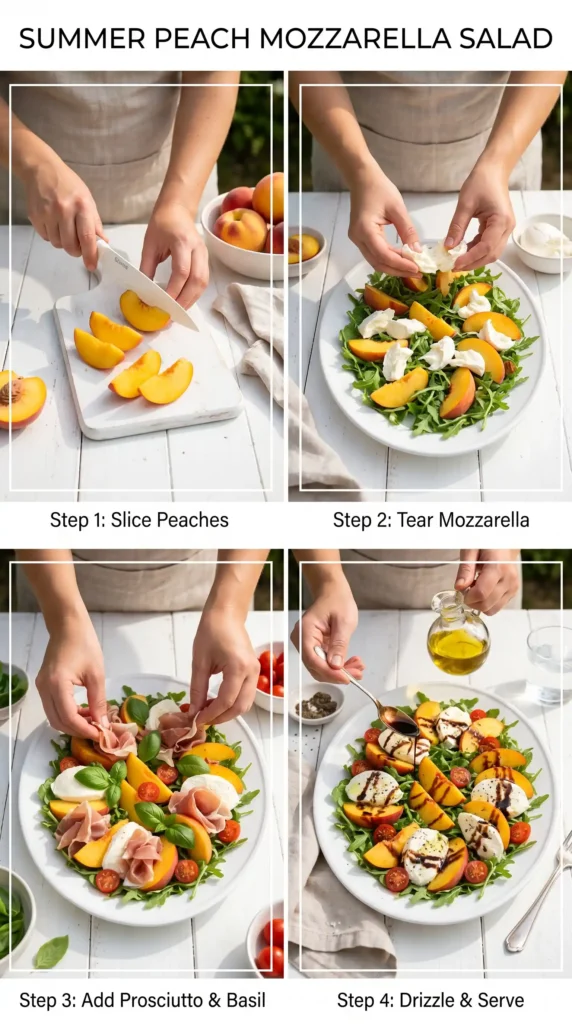
Ten minutes, one platter, and a commitment to quality ingredients rather than technique. The process involves slicing, tearing, arranging, and dressing — none of which requires culinary skill, only care and attention to visual composition. The arrangement matters here because this is a platter meant to be seen as well as eaten. Take the full ten minutes rather than rushing — the visual result is part of the experience.
Step 1: Prepare and Slice the Peaches
Wash the peaches briefly under cold water and pat completely dry — water droplets on the peach surface dilute the olive oil and balsamic when drizzled over and prevent the dressing from clinging to the fruit. Do not refrigerate the peaches before slicing — cold peaches lose their aromatic intensity and the flesh becomes firm in a way that reduces the textural pleasure of eating them. Work with room-temperature peaches throughout.
Cut each peach in half following the natural seam line, twist the two halves apart, and remove the pit. Slice each half into three or four wedges — about 1.5cm thick. Thick wedges hold their structure on the platter and in the hand better than thin ones and provide a more substantial peach bite alongside the cheese. If some peaches are particularly large, you can also cut them into irregular chunks rather than wedges for a more rustic, casual arrangement.
Step 2: Prepare the Mozzarella
If using standard fresh mozzarella, drain the cheese from its liquid and place it on a paper towel for 2 minutes to remove surface moisture. Excess liquid from the cheese dilutes the dressing and creates puddles on the platter that reduce the visual impact. Tear the mozzarella into rough, irregular pieces rather than slicing it neatly — torn mozzarella has a more textural, rustic appearance and more surface area that catches the olive oil and balsamic drizzle.
If using burrata, handle it with extreme care — burrata has a thin outer casing of mozzarella surrounding a soft, creamy interior of stracciatella and cream. Place whole burrata balls directly on the platter and allow them to be broken open at the table as guests serve themselves, which creates a dramatic reveal of the cream interior. Alternatively, cut each burrata ball gently in half just before serving so the cream spills across the platter — this is the more visually striking approach for a dinner party presentation.
Step 3: Arrange the Platter
Start with a base layer of rocket or arugula if using — spread it loosely across the platter rather than packing it down, creating a casual green foundation. This is optional but it elevates the visual contrast between the warm peach tones and the bright green of the leaves. Arrange the peach wedges across the platter in a loose, slightly overlapping pattern that covers about two thirds of the surface — not in a rigid row, but in a flowing arrangement that feels natural rather than architectural.
Nestle the torn mozzarella pieces or whole burrata balls into and around the peach arrangement, distributing them evenly across the platter so that each portion a guest takes includes both peach and cheese. Drape the prosciutto slices loosely around and between the peach and cheese — fold or ruffle each slice rather than laying it flat, which adds visual height and makes the prosciutto look more abundant. Scatter the torn basil leaves across the entire surface of the platter.
Step 4: Make and Apply the Dressing
In a small bowl, combine the aged balsamic vinegar, honey, and a pinch of salt. Stir briefly to dissolve the honey into the vinegar. The combined mixture should look glossy and thick — the honey thickens the balsamic and gives it the body to coat and cling to the peaches and cheese rather than running off immediately. If using balsamic glaze rather than aged balsamic, the honey may be unnecessary since glaze is already sweet and reduced.
Drizzle the extra-virgin olive oil over the platter first in slow, thin streams from a height of about 30cm — this produces an even distribution rather than a single pooling. Follow immediately with the honey balsamic mixture, drizzling it in the same slow, deliberate pattern. Finish with a generous scatter of flaky sea salt and freshly cracked black pepper across the entire surface. The flaky salt on warm peach flesh and creamy cheese is one of the most satisfying flavour interactions in summer food — do not use fine salt here, which dissolves invisibly and does not provide the same texture or flavour pop.
Step 5: Serve Immediately
The Summer Peach Mozzarella platter should go to the table within 5 minutes of being dressed — the salt begins to draw moisture from the peaches after about 10 minutes of contact, producing small pools of liquid on the platter and softening the peach texture slightly. Serve with crusty bread for mopping the dressing. Provide a large serving spoon and tongs so guests can serve themselves portions that include all components.
When and How to Serve This Platter
As a Starter
Place before the main course at a dinner party. It sets the summer tone immediately and works for 4–8 guests depending on the number of peaches and cheese used.
As Part of a Spread
Include on a mezze or antipasto board alongside cured meats, olives, and grilled bread. The peach mozzarella platter provides the fresh fruit element in a spread of richer, saltier items.
As a Light Lunch
With a generous quantity of peaches and cheese and added rocket, this platter works as a complete light lunch for two to four people alongside good bread.
As a Salad Course
Serve between the main course and dessert as a fresh, palate-cleansing interlude. The lightness and acidity of the balsamic and peach make it well suited to this position in a formal meal.
Variations Worth Making
Grilled Peach Mozzarella
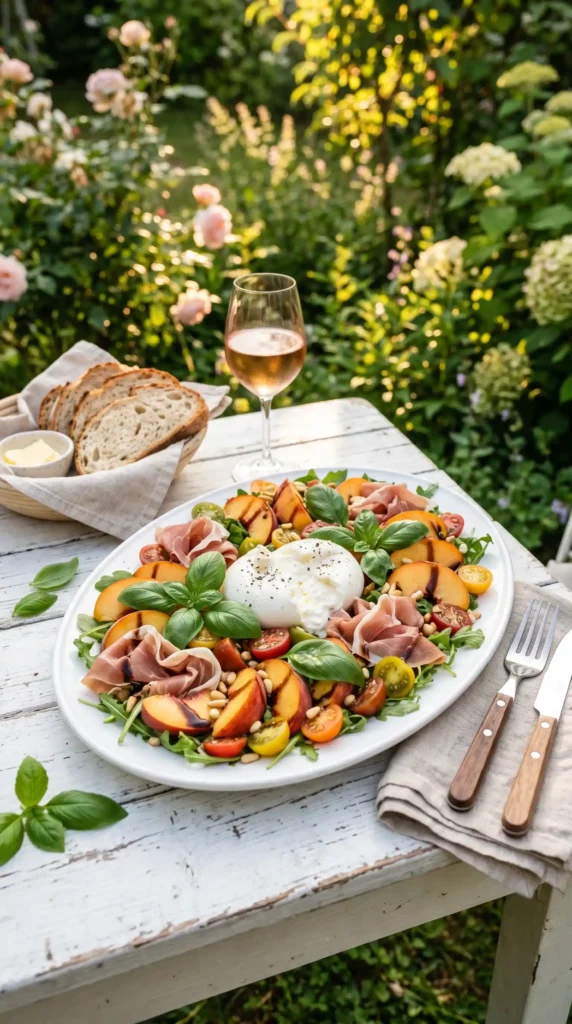
Grill the peach halves cut-side-down on a hot grill for 2–3 minutes until they develop golden grill marks and begin to caramelise. Grilled peaches taste more intense, slightly smoky, and deeply sweet in a way that raw peaches do not. The contrast between warm grilled peach and cold, fresh mozzarella produces a dramatic temperature contrast that makes this version more complex and striking than the raw version.
Peach, Mozzarella, and Candied Walnut Salad
Add 1/4 cup of candied walnuts to the arrangement for crunch and sweetness. Swap the prosciutto for thin slices of smoked salmon and replace the balsamic with lemon juice. Scatter dill fronds instead of basil. The result tastes completely different — lighter, fresher, more Scandinavian in character — while maintaining the same structure of sweet fruit, creamy cheese, and a complementary protein element.
Winter Peach Mozzarella With Canned Peaches
When fresh summer peaches are unavailable, use well-drained canned peach halves in juice rather than syrup. Pat them completely dry, slice them, and follow the recipe as directed. The result lacks the floral freshness of peak-season fresh peaches but still produces a genuine peach-mozzarella flavour combination that satisfies the craving when summer is months away. Increase the balsamic slightly to compensate for the milder fruit flavour.
Frequently Asked Questions
Can I use burrata instead of fresh mozzarella?
Yes — and burrata is the superior choice when available. Burrata consists of a mozzarella outer shell filled with stracciatella (soft curd) and fresh cream, producing a dramatically richer, creamier interior that spills out when broken and coats the surrounding peaches with cream. It tastes more luxurious and creates a more visually dramatic platter than standard fresh mozzarella. Use one or two whole burrata balls and break them open just before serving for maximum visual and flavour impact.
What other fruit works in a summer peach mozzarella salad?
Several stone fruits substitute beautifully. Nectarines work identically to peaches — same flavour profile, slightly firmer flesh, no need to peel. White peaches produce a more delicate, floral result. Plums add a deeper, slightly tart note that pairs well with the honey balsamic. Figs — when in season — produce an extraordinarily rich, jammy combination with burrata and prosciutto that rivals the peach version for elegance. Strawberries and fresh mango both work in a different flavour direction but suit the same format.
Can I make this salad ahead of time?
Partially. Slice and arrange the peaches, mozzarella, and prosciutto up to 30 minutes ahead, keep the platter covered and refrigerated, and take it out 10 minutes before serving to return to room temperature. Do not dress the platter until the moment before serving — the salt in the dressing immediately begins drawing moisture from the peaches and softening the basil. The dressing itself can be made a day ahead and stored covered at room temperature. Always dress at the last possible moment for the best result.
Should I peel the peaches for this recipe?
No — the peach skin adds colour, texture, and a subtle tartness that contrasts with the sweet flesh. For peak-season ripe peaches, the skin is thin, tender, and pleasant to eat. If you have peaches with tough or bitter-tasting skin — which can happen with less ripe or certain varieties — a quick blanch in boiling water for 30 seconds followed by ice water makes peeling effortless. But for genuinely ripe summer peaches, leave the skin on for the full visual and flavour benefit.
What bread goes best with Summer Peach Mozzarella?
Crusty sourdough or a good quality ciabatta are the ideal accompaniments — their open crumb absorbs the olive oil and balsamic pooling on the platter beautifully and their slight tang complements both the sweet peach and the creamy cheese. Grilled or toasted slices provide an additional textural contrast that raw bread does not. Avoid very soft breads like white sandwich bread, which become soggy immediately against the juicy peach and mozzarella moisture rather than absorbing the dressing in the satisfying, flavourful way crusty bread does.
Final Thoughts
This Summer Peach Mozzarella represents the most elegant argument for seasonal eating available in a ten-minute recipe. Nothing here is complicated. Everything here depends on quality — ripe peaches, good mozzarella or burrata, real balsamic, proper olive oil, and the confidence to leave the ingredients largely alone and let them speak for themselves.
It suits dinner parties, casual lunches, garden gatherings, and any table where you want to make a strong visual impression with minimal active effort. The recipe scales up effortlessly — double the peaches and cheese for a larger group and dress just before serving. It works as a starter, a side, a light main, and a component of a larger spread.
Buy those peaches today. Let them ripen on the counter. Pull out the best balsamic you own. And then arrange something on a platter that looks like you spent considerably more time than ten minutes producing it — because that is exactly what everyone around the table will believe, and you are entirely entitled to let them.
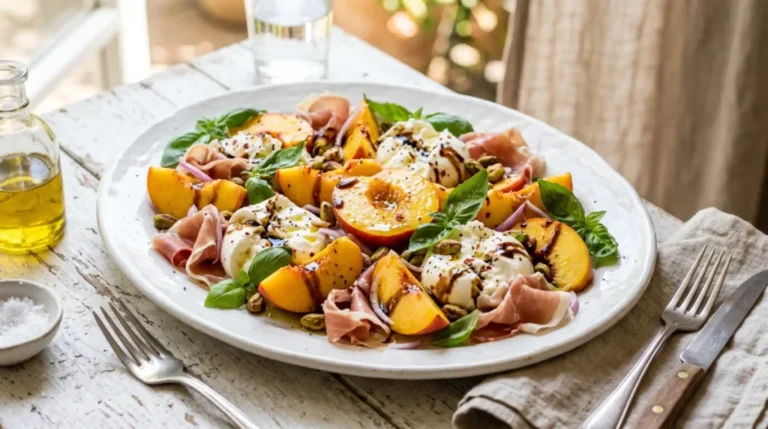
Summer Peach Mozzarella
Ingredients
Method
- Wash the peaches briefly under cold water and pat completely dry.
- Cut each peach in half, remove the pit, and slice each half into three or four wedges.
- Drain standard fresh mozzarella from its liquid and pat dry.
- Tear the mozzarella into rough pieces.
- If using burrata, handle carefully and place directly on the platter.
- Begin with a base layer of rocket or arugula if using.
- Arrange the peach wedges, followed by mozzarella, prosciutto, and basil leaves.
- In a small bowl, mix balsamic vinegar, honey, and a pinch of salt.
- Drizzle olive oil, followed by the honey balsamic mixture over the platter. Season with salt and pepper.
- Serve the platter immediately after dressing.