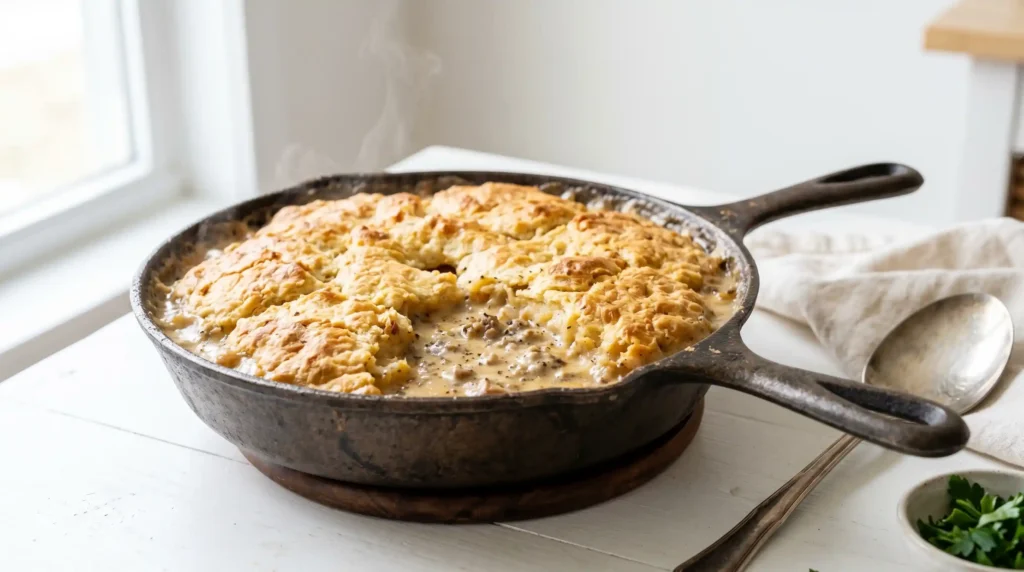
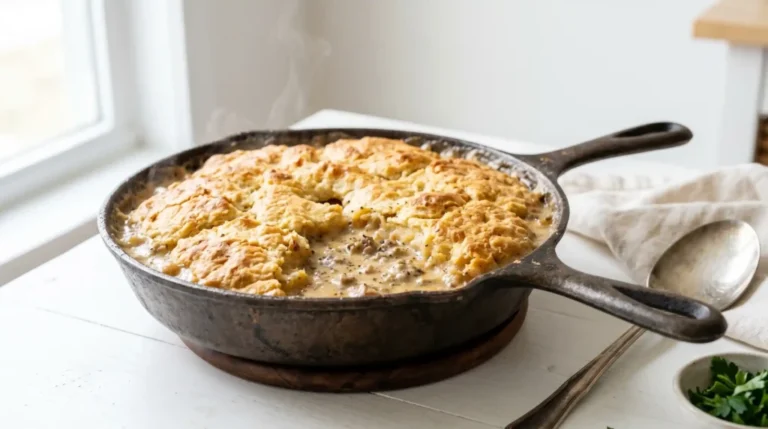
Sausage Gravy Biscuit Pie My grandmother made something close to this every Sunday, and the whole house smelled incredible before noon. I’ve tweaked and tested this version more times than I’d like to admit, and what landed in front of me the last time I made it was genuinely one of the best things I’ve ever eaten at home.
This dish checks every box: savory sausage, deeply flavored rich gravy, and a golden biscuit topping that soaks up just enough of the filling to stay fluffy and satisfying. Sound good? Let’s get into it.
Ingredients You’ll Need
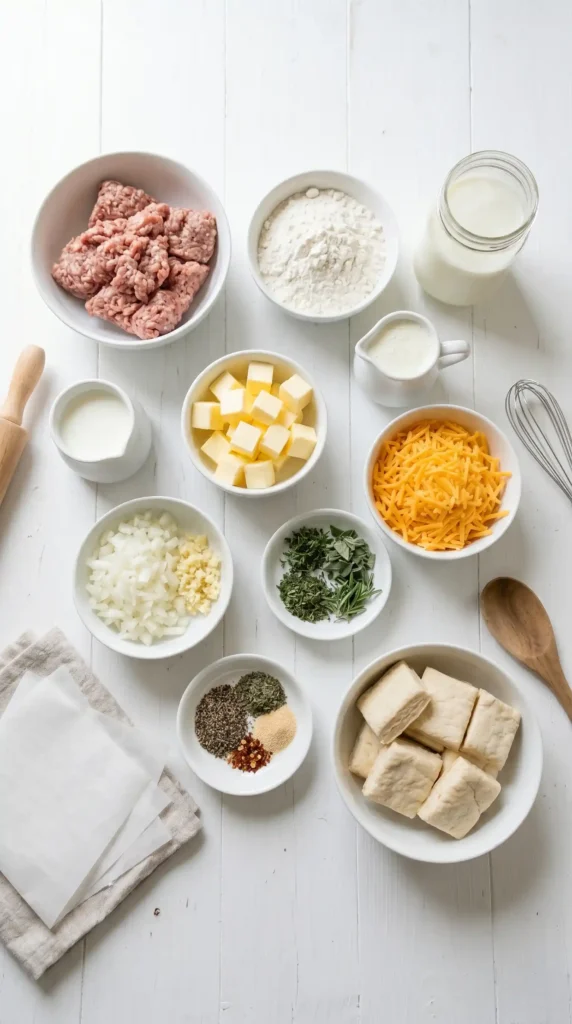
Nothing here requires a trip to a specialty store. These are honest, straightforward ingredients that most home kitchens already have on hand. Here’s everything you need for 6 generous servings:
For the Sausage and Rich Gravy Filling
- 1 lb (450g) pork breakfast sausage, casings removed
- 1 medium yellow onion, finely diced
- 3 cloves garlic, minced
- 3 tablespoons all-purpose flour
- 2 cups whole milk
- 1 cup chicken broth
- 1 teaspoon Worcestershire sauce
- 1/2 teaspoon black pepper
- 1/2 teaspoon smoked paprika
- 1/4 teaspoon dried thyme
- Salt to taste
For the Biscuit Topping
- 2 cups all-purpose flour
- 1 tablespoon baking powder
- 1/2 teaspoon salt
- 1 teaspoon garlic powder
- 6 tablespoons cold unsalted butter, cubed
- 3/4 cup cold buttermilk
- 1/2 cup shredded sharp cheddar cheese
- 1 tablespoon melted butter (for brushing)
FYI — the cold butter in the biscuit dough is not optional. Cold fat is what creates those distinct, flaky layers in the biscuit topping. If your butter is room temperature, your biscuits will come out flat and dense rather than light and airy.
Why This Recipe Works So Well
A lot of savory pie recipes feel heavy or one-dimensional. This one avoids that because the rich gravy gets built properly — low and slow, with real depth from the sausage drippings, garlic, and Worcestershire. It’s not just white sauce poured over meat.
Have you ever had a biscuit pie topping that turned out soggy and sad? That usually happens when the filling is too wet or the biscuits aren’t thick enough. The ratio in this recipe keeps the filling thick and the biscuit topping sturdy and golden.
Key tip: Don’t skip cooking the flour into the sausage drippings before adding your liquid. That step — called making a roux — is what gives your gravy its silky, thick texture instead of a watery, broken mess.
How to Make Sausage, Rich Gravy, and Biscuit Pie
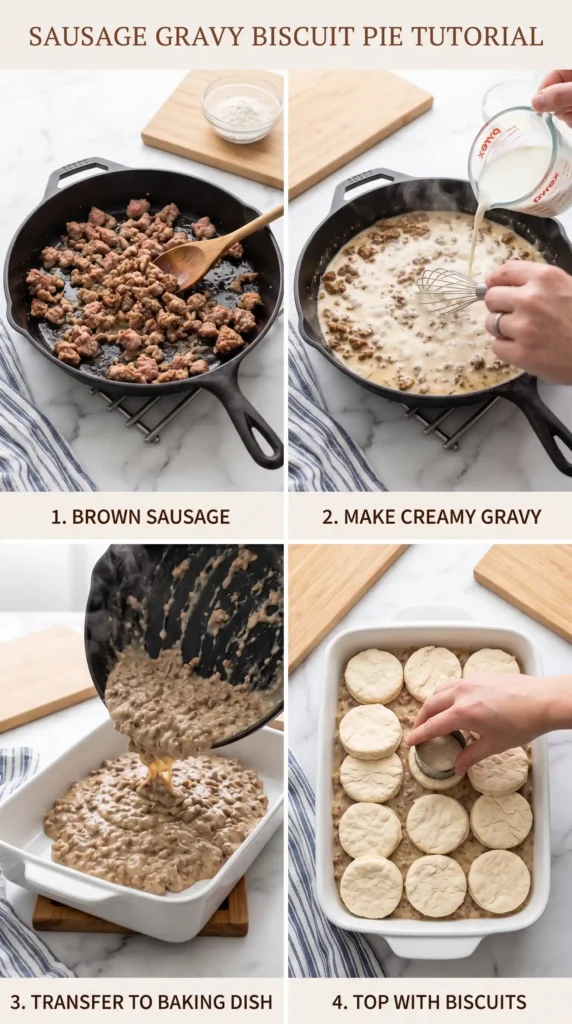
This recipe has two main components: the filling and the biscuit topping. You build them separately, then combine and bake. Follow each step carefully and this will come together beautifully on your first try.
Step 1: Cook the Sausage
Place a large oven-safe skillet or cast iron pan over medium heat. Let it warm up for about 90 seconds before adding anything — a properly preheated pan means better browning on the sausage.
Add the pork sausage to the pan, breaking it apart immediately with a wooden spoon or spatula. You want small, irregular crumbles — not big chunks. Uneven crumbles give the filling more textural variety in every bite.
Cook the sausage for 7 to 9 minutes, stirring occasionally, until it is fully browned and no pink remains. Let some of it sit undisturbed for 30 seconds at a time — those slightly crispy brown bits on the bottom add massive flavor to the gravy later.
Once browned, use a slotted spoon to transfer the sausage to a plate lined with paper towels. Leave the drippings in the pan — that fat is liquid gold for your gravy and you don’t want to lose a drop of it.
Step 2 : Build the Rich Gravy
Return the pan with the drippings to medium heat. Add the diced onion and cook for 4 to 5 minutes, stirring often, until the onion turns soft and translucent. Scrape any browned bits from the bottom of the pan as the onion cooks — those bits dissolve into the gravy and add incredible savory depth.
Add the minced garlic and stir it into the onion. Cook for just 60 seconds. Garlic burns fast at this temperature, so don’t walk away. You want it fragrant and slightly golden, not dark brown.
Sprinkle the 3 tablespoons of all-purpose flour directly over the onion and garlic mixture. Stir constantly for about 2 minutes, coating everything in the flour. The mixture will look thick and almost paste-like — that is exactly what you want. This is your roux, and it’s the backbone of the rich gravy.
Pour in the chicken broth slowly while stirring. Add it in a thin, steady stream rather than dumping it all in at once. This prevents lumps from forming. Keep stirring until the broth is fully incorporated and the mixture is smooth.
Pour in the 2 cups of whole milk, again slowly and while stirring. Add the Worcestershire sauce, black pepper, smoked paprika, dried thyme, and a generous pinch of salt. Stir everything together thoroughly.
Reduce the heat to medium-low and let the gravy simmer for 6 to 8 minutes, stirring frequently. You’ll watch it transform from thin and pale to a rich, glossy, thick gravy that coats the back of a spoon. That’s your signal it’s ready.
Stir the cooked sausage back into the gravy. Taste and adjust salt and pepper as needed. Remove the pan from the heat and let the filling cool for 5 minutes while you make the biscuit topping. The filling needs to be hot but not aggressively boiling when the biscuit dough goes on top.
Step 3 :Make the Biscuit Topping
Preheat your oven to 425°F (220°C) while you prepare the biscuit dough. A fully preheated oven is critical — biscuits need that immediate blast of heat to puff up properly.
In a large bowl, whisk together the flour, baking powder, salt, and garlic powder until evenly combined. Make sure there are no clumps of baking powder hiding in the flour — clumps lead to uneven rise and a slightly bitter taste in spots.
Add the cold cubed butter to the flour mixture. Using your fingertips or a pastry cutter, work the butter into the flour until the mixture looks like coarse, uneven crumbs. Some pieces of butter should still be pea-sized. Those chunks of fat are what create the flaky layers.
Stir in the shredded cheddar cheese and toss it through the flour mixture so it distributes evenly.
Pour in the cold buttermilk and stir with a fork just until a shaggy, slightly sticky dough comes together. Stop mixing the moment the dough holds together — overmixing develops gluten and makes the biscuits tough instead of tender.
Step 4: Assemble and Bake
If your sausage and gravy filling is already in an oven-safe skillet, you can bake it directly in that pan. If not, transfer the filling to a greased 9×13-inch baking dish and spread it into an even layer.
Drop heaping spoonfuls of the biscuit dough evenly over the surface of the filling. You don’t need to spread the dough flat — rough, rustic dollops are actually ideal because they bake up with more texture and golden edges. Space them slightly apart so steam can escape between them.
Brush the tops of the biscuit dough portions lightly with the melted butter. This gives the biscuits their golden, glossy, irresistible-looking finish in the oven.
Place the dish on the center rack of your preheated oven and bake for 22 to 25 minutes. Look for biscuit tops that are deeply golden brown and a filling that’s visibly bubbling around the edges of the biscuits. Those bubbles tell you the filling is hot all the way through.
Remove from the oven and let the pie rest for at least 5 to 8 minutes before serving. I know it smells incredible and waiting feels impossible, but this rest time allows the filling to settle slightly so it doesn’t pour off the plate when you serve it.
Don’t skip the rest time. A freshly baked pie filling runs like liquid if you cut in too early. Give it 5 to 8 minutes and it firms up to a perfect, spoonable consistency that makes for a much cleaner, more satisfying serve.
Tips for Making This Recipe Even Better
IMO, a few small habits separate a good biscuit pie from a truly great one. These aren’t complicated — they’re just details worth keeping in mind:
- Use full-fat sausage. Leaner sausage produces less drippings and a less flavorful gravy. The fat is where the flavor lives.
- Keep your biscuit ingredients cold. Cold butter, cold buttermilk, even chilling the bowl. Cold fat creates steam in the oven, and steam creates flaky layers.
- Don’t rush the gravy simmer. Six to eight minutes of simmering on medium-low is what thickens and enriches the gravy. Cutting it short gives you a thin, watery filling.
- Taste the filling before baking. Once the biscuit lid goes on, you can’t easily adjust seasoning. Taste the gravy and sausage mixture and get it right before assembly.
- Let the pan drippings do the work. Don’t drain the fat before building the gravy. Every drop of flavor from those sausage drippings belongs in your sauce.
Variations Worth Trying
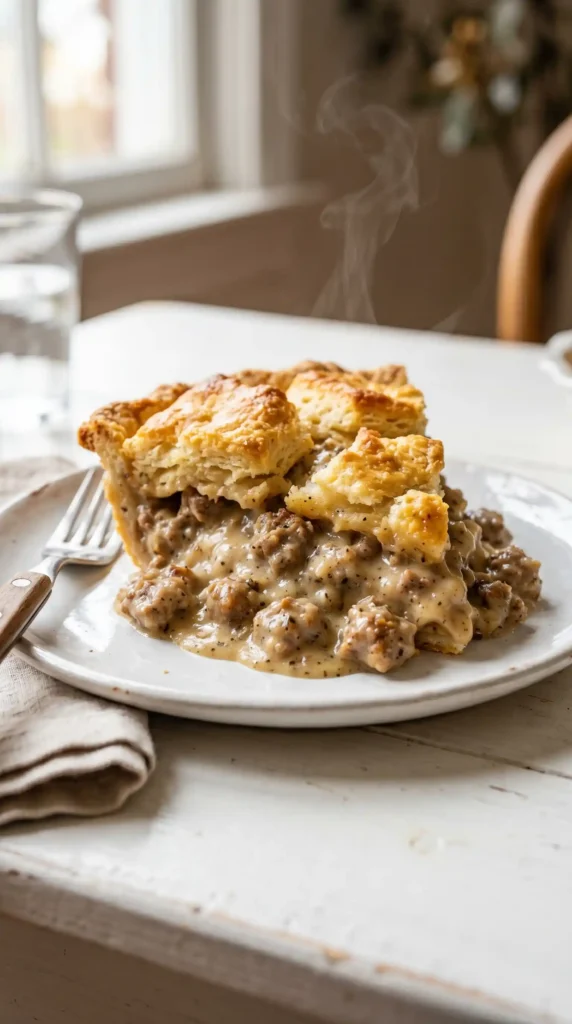
The base recipe is a home run on its own, but this dish responds really well to simple swaps. Have you thought about how your favorite add-ins might make it even more personal?
Add Vegetables to the Filling
Diced bell peppers, mushrooms, or frozen peas all work beautifully in the sausage and rich gravy filling. Add peppers and mushrooms when you cook the onion. Add frozen peas when you return the sausage to the pan — they need almost no cooking time.
Swap the Protein
Ground turkey or chicken sausage work as direct substitutes if you prefer a lighter option. Just add a tablespoon of olive oil when cooking, since leaner meats produce fewer natural drippings for the gravy base.
Herb Biscuit Topping
Stir 2 tablespoons of chopped fresh chives or rosemary into the biscuit dough before adding the buttermilk. The herbs infuse into the biscuit as it bakes and complement the savory filling underneath perfectly.
How to Serve and Store It
This sausage, rich gravy, and biscuit pie is a complete meal on its own, but a few simple sides turn it into a proper spread. A crisp green salad with a sharp vinegar dressing cuts through the richness beautifully. Roasted green beans or steamed broccoli work just as well.
For storage, cover the dish tightly and refrigerate for up to 3 days. The biscuit topping softens slightly in the fridge, but a quick 10-minute reheat in a 350°F oven brings most of the texture back. :/ Microwaving works in a pinch, but the biscuits lose their structure. The oven is always worth it.
Frequently Asked Questions
Can I use store-bought biscuit dough instead of making my own?
Yes, canned biscuit dough like Pillsbury works as a shortcut. Just separate the biscuits and arrange them over the filling before baking. The homemade version has a noticeably better flavor and texture, but store-bought saves a significant amount of time on busy weeknights.
Can I make this ahead of time and bake it later?
You can prepare the sausage and gravy filling up to two days ahead and refrigerate it. Make the biscuit dough fresh on the day you bake — biscuit dough made too far ahead loses its leavening power and won’t rise properly. Reheat the filling slightly before topping and baking.
Why is my gravy lumpy?
Lumpy gravy usually means the liquid was added too quickly or all at once before the roux was ready. Add the broth and milk in a slow, steady stream while stirring constantly. If lumps still form, whisk the gravy vigorously — most lumps dissolve with enough stirring. A fine mesh strainer is your last resort.
Can I freeze sausage and biscuit pie?
The filling freezes well for up to 2 months. The biscuit topping does not freeze well — it becomes dense and loses its texture after thawing. Freeze just the filling, then make a fresh biscuit topping and bake when you’re ready to serve. This is actually a great meal prep strategy.
What type of sausage works best for this recipe?
Pork breakfast sausage gives the most flavor and the richest drippings for the gravy. Sage-flavored sausage is a particularly good choice — the herbs in the sausage season the entire dish. Italian sausage also works and adds a slightly spiced, fennel-forward profile that pairs well with the biscuit topping.
Do I need an oven-safe skillet for this recipe?
Not necessarily. You can cook the filling in any pan and transfer it to a greased baking dish for the oven step. Using one oven-safe cast iron skillet from start to finish just reduces dishes and helps with heat retention, but it is absolutely not a requirement to get great results.
Final Thoughts
The sausage, rich gravy, and biscuit pie is proof that the most satisfying meals don’t require complicated techniques or rare ingredients. What they do require is a little patience, good seasoning, and a willingness to let the filling simmer long enough to develop real depth.
Whether you’re making this for a family dinner, a Sunday brunch, or just because it’s cold outside and you want something that makes the house smell amazing — this recipe delivers every single time. Make it once and it will permanently earn a spot in your regular rotation.
Go make a big batch and thank yourself later. Your future self — probably sitting on the couch with a generous bowl of this pie — will appreciate the effort.
Sausage Gravy Biscuit Pie
Ingredients
Method
- Place a large oven-safe skillet or cast iron pan over medium heat and warm it up for about 90 seconds.
- Add the pork sausage, breaking it apart with a wooden spoon until small crumbles form.
- Cook for 7 to 9 minutes, stirring occasionally, until fully browned. Transfer to a plate lined with paper towels.
- Return the drippings to medium heat and add the diced onion. Cook for 4 to 5 minutes until soft.
- Add minced garlic and cook for 1 minute until fragrant.
- Sprinkle the flour over the mixture and stir constantly for about 2 minutes to form a roux.
- Slowly pour in the chicken broth while stirring to prevent lumps, then add the milk, Worcestershire sauce, black pepper, smoked paprika, thyme, and salt.
- Simmer for 6 to 8 minutes until thickened, then stir in the sausage and adjust seasoning as needed.
- Let the filling cool for 5 minutes.
- Preheat the oven to 425°F (220°C).
- In a bowl, whisk together flour, baking powder, salt, and garlic powder.
- Work cold butter into the flour until crumbly, then stir in cheese.
- Add cold buttermilk and mix until a shaggy dough forms.
- Transfer the filling to a greased baking dish if not using the skillet.
- Drop spoonfuls of biscuit dough over the filling. Brush with melted butter.
- Bake for 22 to 25 minutes until biscuit tops are golden brown and filling bubbles.
- Let it rest for 5 to 8 minutes before serving.