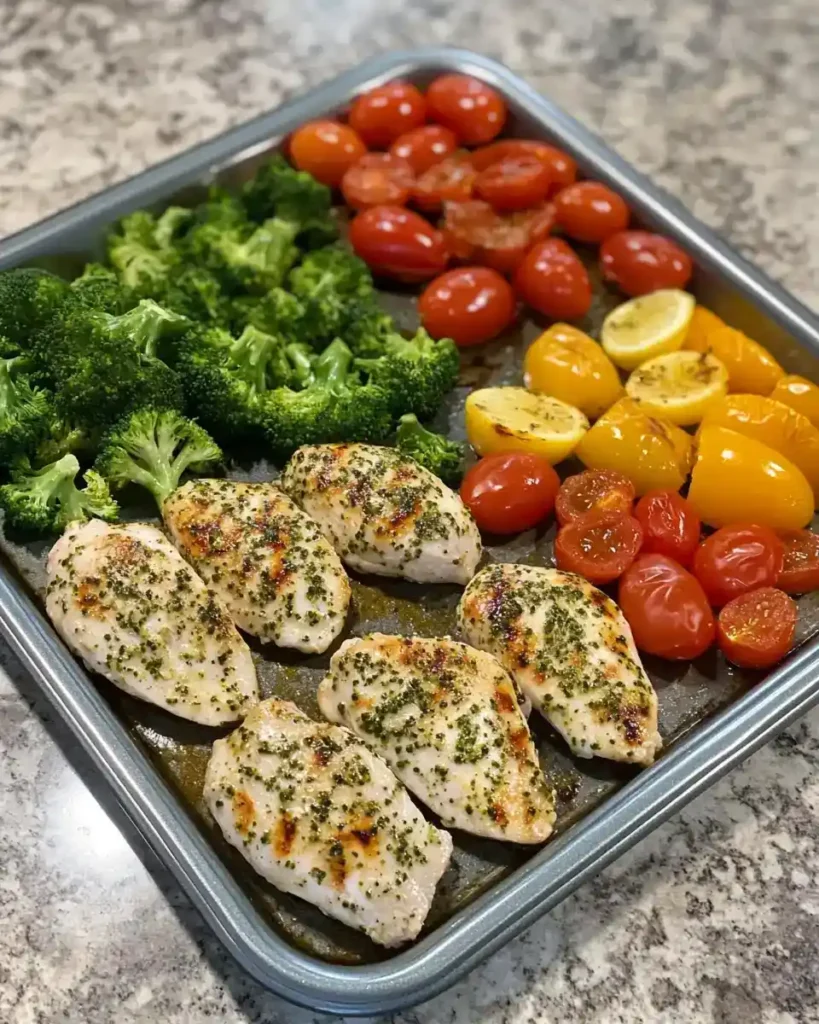
Want dinner on the table with barely any cleanup? This lemon herb chicken and veggies sheet pan recipe delivers juicy chicken, caramelized veggies, and exactly one dirty pan.
Servings: 4 | Prep Time: 15 minutes | Cook Time: 30 minutes | Total Time: 45 minutes
I discovered this recipe during a week when doing dishes felt like punishment. One pan, minimal effort, maximum flavor. It’s stayed in my rotation ever since.
Why This Lemon Herb Chicken And Veggies Sheet Pan Recipe Works
Sheet pan dinners get a bad reputation for being boring, but this one isn’t. The lemon and herb marinade does double duty, flavoring both the chicken and the vegetables at once.
Everything roasts together, which means the chicken juices baste the veggies as they cook. That’s not a happy accident; that’s just smart cooking, IMO.
Best part? Almost zero cleanup. One pan goes in the oven, one pan comes out, and you’re free to enjoy your evening instead of scrubbing pots.
Ingredients You’ll Need
Fresh, simple ingredients make this dish shine. Nothing fancy required, just good produce and a decent marinade.
For the Chicken and Marinade:
- 4 boneless, skinless chicken breasts
- ¼ cup olive oil
- 3 tablespoons fresh lemon juice
- 2 teaspoons dried oregano
- 2 teaspoons garlic powder
- 1 teaspoon onion powder
- Salt and pepper, to taste
For the Vegetables:
- 2 cups broccoli florets
- 1 cup cherry tomatoes, halved
- 1 red bell pepper, sliced
- 1 yellow bell pepper, sliced
- Fresh parsley, chopped, for garnish
Optional Add-Ins: sliced zucchini, sliced carrots, red pepper flakes, fresh thyme or rosemary, sliced lemon for garnish.
Have you ever noticed how much better food tastes when it’s roasted instead of steamed? That caramelized edge is basically non-negotiable in this recipe.
How to Make Lemon Herb Chicken And Veggies Sheet Pan
This recipe breaks down into four simple stages. None of it is complicated, so don’t overthink it.
Step 1: Marinate the Chicken
Start by whisking together the olive oil, lemon juice, oregano, garlic powder, onion powder, salt, and pepper in a small bowl. This marinade is the backbone of the whole dish, so don’t rush it.
Pour half of this mixture over the chicken breasts, making sure each piece gets coated evenly. Save the rest for the vegetables later on, since it’s too good to waste.
Let the chicken sit for at least 30 minutes at room temperature, or longer in the fridge if you’re planning ahead. The extra time really does make a difference in how deep the flavor goes.
Turn the chicken once or twice while it marinates. This small step ensures every side soaks up that lemony, herby goodness evenly.
Step 2: Prep and Season the Vegetables
While the chicken marinates, wash and chop your broccoli, tomatoes, and bell peppers into similar-sized pieces. Uniform sizing matters here because it keeps everything cooking at the same pace.
Toss the vegetables in a separate bowl with the remaining marinade. Make sure every piece gets coated, since this is where a lot of the flavor actually comes from.
Feel free to swap in whatever’s sitting in your crisper drawer. Zucchini, carrots, or even sweet potatoes all work beautifully in this formula.
Step 3: Arrange Everything on the Sheet Pan
Preheat your oven to 425°F while you set up the pan. Place the chicken breasts in the center of a large, rimmed sheet pan, giving each piece some breathing room.
Arrange the seasoned vegetables around the chicken in a single, even layer. Avoid piling them on top of each other, since crowded veggies steam instead of roast, and steamed veggies are just sad.
Spacing is everything here. Give each piece enough room to actually brown, not just sit there getting warm.
Step 4: Roast Until Golden and Tender
Slide the pan into the oven and roast for 25 to 30 minutes. You’re looking for the chicken to hit an internal temperature of 165°F and the vegetables to turn tender with slightly charred edges.
Check the chicken a few minutes early since ovens vary wildly. Nobody wants dry, overcooked chicken after all that marinating effort.
Want extra char on the veggies? Broil the pan for the last two to three minutes, watching closely so nothing burns. It adds a nice smoky edge that regular roasting doesn’t quite achieve.
Let the finished dish rest for five minutes before serving. This lets the chicken juices redistribute, keeping every slice tender instead of dry.
Equipment You’ll Need
Nothing exotic required here, just kitchen basics. Here’s the short list:
- Large, rimmed sheet pan
- Two mixing bowls
- Whisk or fork
- Meat thermometer
- Cutting board and sharp knife
No sheet pan on hand? A roasting pan works as a solid backup. No whisk? A fork gets the marinade just as mixed.
Tasty Variations to Try
Once you’ve nailed the basic version, mix things up. Cooking shouldn’t feel like following strict orders every single time.
- Protein swap: try salmon or shrimp instead of chicken for a quicker cook time
- Seasonal veggies: rotate in asparagus, green beans, or sweet potatoes depending on the season
- Herb change-up: fresh basil or rosemary instead of oregano shifts the whole flavor profile
- Spicy version: add sliced jalapeños or red pepper flakes before roasting
- Heartier meal: serve everything over quinoa or brown rice to soak up the juices
Storage and Reheating Tips
Leftovers keep well, which makes this a solid meal-prep option. Store everything in an airtight container in the fridge for three to four days.
Reheat in the oven or microwave until warmed through. The oven method keeps the veggies from getting soggy, so it’s my personal preference when I have the extra few minutes.
Planning ahead? Marinate the chicken and prep the veggies a full day in advance. Everything stays in the fridge until you’re ready to roast.
Frequently Asked Questions
Can I use frozen chicken for this recipe? Yes, just thaw it completely first. Marinade doesn’t penetrate frozen meat well, so thawing ensures you actually get that lemony flavor throughout.
What other vegetables work well here? Almost anything roastable works. Asparagus, green beans, and sweet potatoes are all great options, just keep pieces similarly sized for even cooking.
How long do leftovers last? Stored in an airtight container, leftovers stay good for three to four days in the fridge. They reheat well for quick lunches too.
Can I prep this dish ahead of time? Definitely. Marinate the chicken and chop the vegetables a day early, then store both in the fridge until you’re ready to roast.
What should I serve alongside this dish? Quinoa, brown rice, or couscous all pair nicely and soak up extra juices. A light side salad or crusty bread rounds out the meal well too.
Final Thoughts
Lemon herb chicken and veggies sheet pan proves that easy dinners don’t have to sacrifice flavor. It’s fast, it’s colorful, and it barely dirties your kitchen.
Give this one a try next time you want a low-effort, high-reward dinner. Once that lemony aroma fills your kitchen, you’ll understand the hype
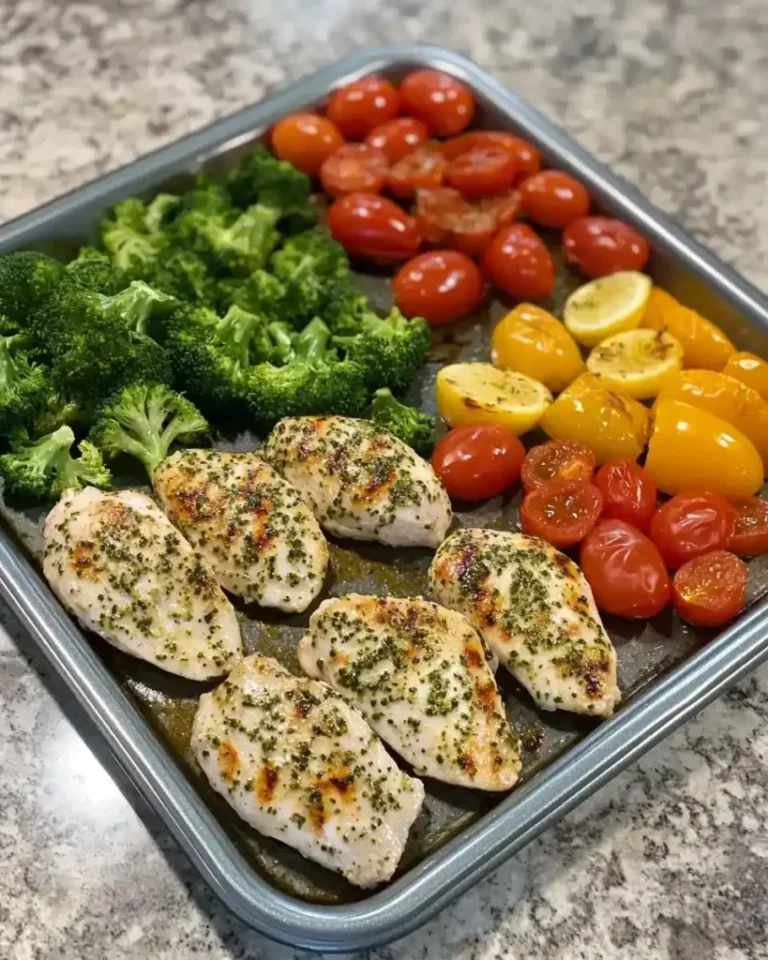
Lemon Herb Chicken and Veggies
Ingredients
Method
- Whisk together olive oil, lemon juice, oregano, garlic powder, onion powder, salt, and pepper in a small bowl.
- Pour half of this mixture over the chicken breasts, ensuring each piece gets coated evenly. Save the rest for the vegetables.
- Let the chicken sit for at least 30 minutes at room temperature, or longer in the fridge if possible.
- Turn the chicken once or twice while it marinates.
- Wash and chop the broccoli, tomatoes, and bell peppers into similar-sized pieces.
- Toss the vegetables in a bowl with the remaining marinade until all pieces are coated.
- Preheat the oven to 425°F.
- Place the chicken breasts in the center of a large, rimmed sheet pan.
- Arrange the seasoned vegetables around the chicken in a single, even layer.
- Slide the pan into the oven and roast for 25 to 30 minutes.
- Check for an internal temperature of 165°F for the chicken and tender vegetables.
- Optional: Broil for the last 2 to 3 minutes for extra char.
- Let the dish rest for five minutes before serving.