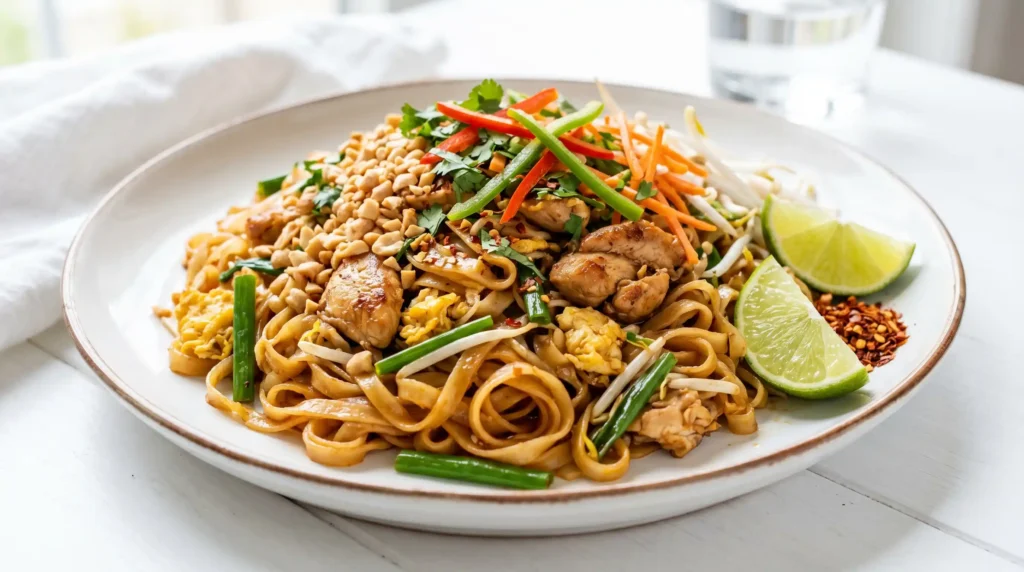
Let’s be real — there’s something deeply satisfying about a plate of Pad Thai. Those glossy noodles, the tangy-sweet sauce clinging to every strand, a cloud of crushed peanuts on top. It’s the kind of dish that makes you go quiet mid-bite.
I made this recipe for the first time on a rainy Thursday evening with zero plan and one leftover chicken breast. It turned out so good that I’ve cooked it nearly every other week since. Sound familiar? Let’s get you there too.
Quick heads-up: This recipe makes 2–3 generous servings. Total time is about 50 minutes, with most of that being noodle-soaking time. Actual stove-side cooking? Just 15 minutes. You’re basically doing nothing most of the time.
What You’ll Need
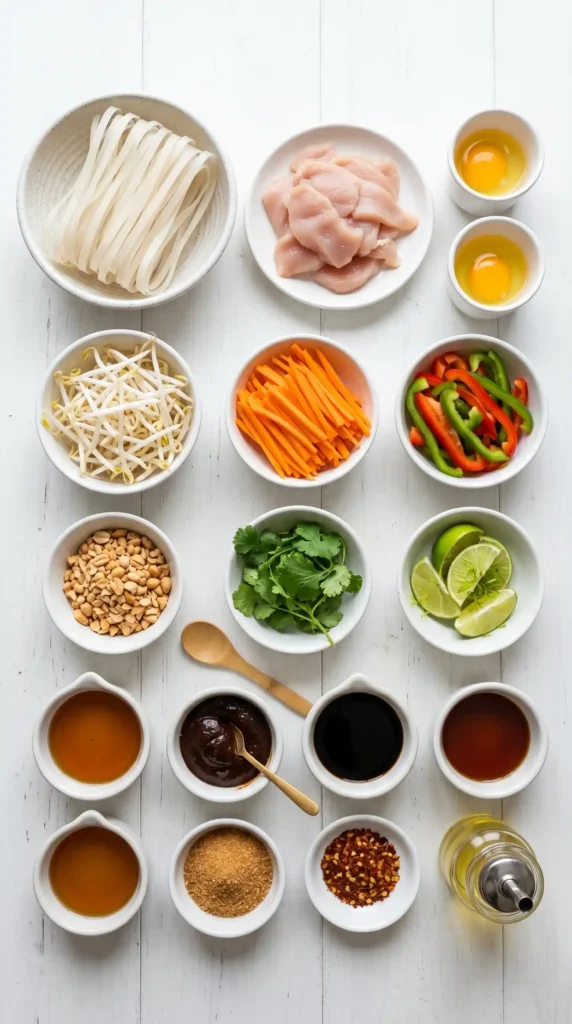
Before anything hits the pan, let’s talk ingredients. The beauty of Pad Thai is that none of this is exotic or hard to find. Your local supermarket carries everything on this list.
Main Ingredients
- Rice noodlesSoak in warm water until softened200 g
- Chicken breast, thinly slicedSwap for shrimp or firm tofu if preferred200 g
- EggsScrambled gently alongside the chicken2 large
- Bean sprouts, carrots & bell peppersMixed — add more veggies as desired1 cup
- Peanuts, crushedFor garnishing¼ cup
- Fresh cilantro, choppedFor garnishing2 tbsp
- Vegetable oilFor cooking3 tbsp
Pad Thai Sauce
- Fish sauce3 tbsp
- Sugar1 tbsp
- Tamarind pasteThe soul of the dish — don’t skip this1 tbsp
- Soy sauce1 tbsp
- Chili powderAdjust to taste1 tsp
That’s it. Twelve ingredients plus the sauce components. Nothing fussy, nothing intimidating. IMO, the sauce is the secret weapon here — we’ll cover that in just a moment.
The Pad Thai Sauce — Don’t Skip This Step
Here’s the thing about Pad Thai — people obsess over the noodles and forget the sauce is doing 80% of the heavy lifting. Get this right, and the rest practically cooks itself.
The sauce is a balance of four flavors: salty (fish sauce), sweet (sugar), sour (tamarind paste), and spicy (chili powder). Every good Pad Thai is just these four things playing nicely together.
Mixing the sauce
Take a small bowl and add 3 tablespoons of fish sauce, 1 tablespoon of sugar, 1 tablespoon of tamarind paste, 1 tablespoon of soy sauce, and 1 teaspoon of chili powder. Stir everything together until the sugar fully dissolves.
Give it a quick taste. Does it need more tang? Add a tiny bit more tamarind. Too salty? A touch more sugar balances it right out. This is your moment to personalise the whole dish before anything hits the heat.
Can’t find tamarind paste? A small squeeze of lime juice mixed with a pinch of brown sugar gets you surprisingly close. Not identical, but it works in a pinch — no pun intended.
Preparing the Noodles the Right Way
Here’s where a lot of people quietly ruin their Pad Thai without realising it: they overcook the noodles before the noodles even touch the pan. Sound dramatic? It really isn’t.
Rice noodles do not need boiling. All they need is a 30-minute soak in warm (not hot) water. Fill a bowl with warm water, drop the noodles in, and walk away. You’re looking for noodles that are pliable and bendable but still have a slight bite to them.
Why you shouldn’t over-soak
Over-soaked noodles fall apart the moment they hit the hot pan. They turn to mush. You end up with a sad, sticky pile rather than those silky, separate strands you’re after. Thirty minutes is the sweet spot — set a timer if you need to.
Once your noodles are ready, drain them and give them a gentle toss. Don’t leave them sitting in the water while you prep everything else, or they’ll keep absorbing moisture and turn soft on you.
How to Make Pad Thai — Step by Step
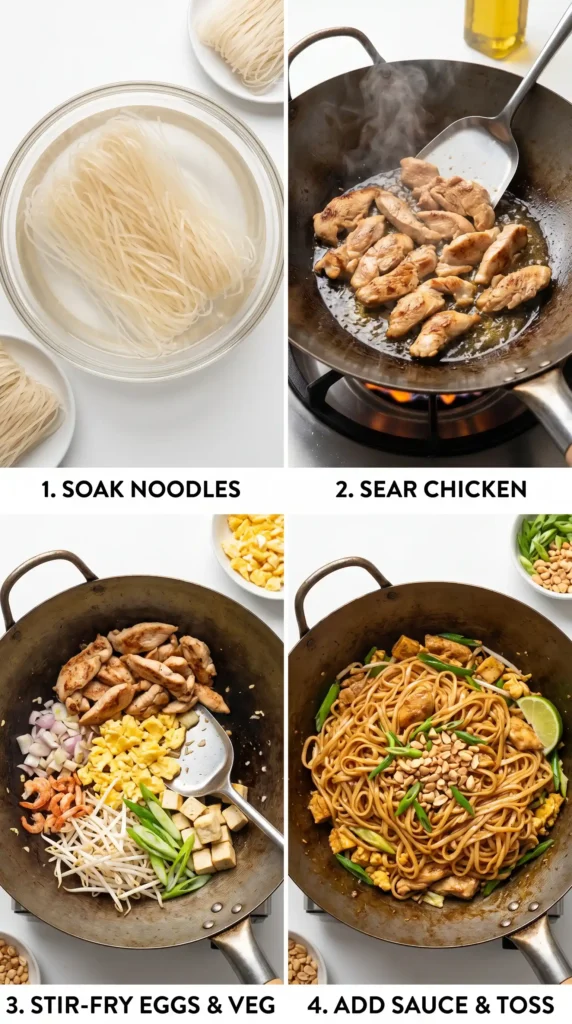
Now for the good part. Have everything prepped, measured, and within arm’s reach before you turn on the stove. Pad Thai cooks fast — there’s no time to be fumbling around looking for your fish sauce once the heat is on. This is genuinely important.
Step 1
Heat the oilPour 3 tablespoons of vegetable oil into your largest pan or wok. Set it over medium-high heat and let it warm up until you can see it shimmer slightly — about 60 to 90 seconds. A hot pan is what separates a great Pad Thai from a greasy, limp one. Don’t rush this part.
Step 2
Cook the chickenAdd your 200 g of thinly sliced chicken to the shimmering oil in a single layer. Let it sit undisturbed for about 2 minutes before stirring — this gets you those golden, slightly caramelised edges that add real depth of flavour. Continue cooking, stirring occasionally, until the chicken is cooked all the way through with no pink remaining. This takes roughly 5 to 7 minutes total depending on how thick your slices are. Season lightly with a pinch of salt.
Step 3
Scramble the eggsPush the cooked chicken to one side of the pan, clearing some space. Crack both eggs directly into that cleared space. Let them sit for about 20 seconds until the whites just begin to set around the edges, then use your spatula to scramble them in soft, lazy strokes. You want big, just-cooked curds here — not fully dry. Once the eggs are about 80% cooked, fold them into the chicken and toss gently to combine everything.
Step 4
Add the vegetablesToss in your 1 cup of mixed vegetables — the bean sprouts, carrot strips, and bell pepper pieces. Stir everything around the pan briskly for about 2 minutes. You want the vegetables to heat through and pick up some colour, but they shouldn’t go completely soft. Bean sprouts in particular should stay a little crunchy — that texture contrast is part of what makes Pad Thai so good to eat.
Step 5
Add the noodlesGrab your drained rice noodles and add them straight into the pan. Use tongs or two forks to gently loosen and fold them through the chicken, eggs, and vegetables. Work carefully here — rice noodles are delicate and can tear if you’re too aggressive. Spread them across the base of the pan as much as possible so they make good contact with the heat. Let them cook undisturbed for 30 seconds before stirring again.
Step 6
Pour over the sauceThis is the moment everything comes together. Pour your pre-mixed sauce evenly over the noodles and toss everything thoroughly so every single noodle gets coated. Keep tossing and folding for about 2 to 3 minutes over medium-high heat. The sauce should reduce slightly and cling to the noodles in a gorgeous, glossy way. If things look a little dry, add a tiny splash of water — just a tablespoon at a time — and keep tossing.
Step 7
Taste and adjustBefore you plate up, taste a noodle. Does it need more salt? A little more fish sauce. More tang? Add a small squeeze of fresh lime. This final seasoning check is something most recipes forget to mention, but it genuinely makes a difference. Your palate knows better than any written recipe at this point — trust it.
Step 8
Plate and garnishDivide the Pad Thai between your plates and immediately scatter a generous handful of crushed peanuts over the top — about ¼ cup total, shared between portions. Add your 2 tablespoons of freshly chopped cilantro. Serve with a wedge of fresh lime on the side for squeezing at the table, plus extra peanuts if you’re feeling generous. Eat it while it’s hot.
Tips for the Best Pad Thai
- Use a wok if you have one — the high sides and intense heat make a real difference.
- Don’t overcrowd the pan. Cook in batches if you’re scaling up the recipe.
- Mix the sauce ahead of time — it keeps in the fridge for up to a week.
- Swap chicken for shrimp, tofu, or a combination of both with zero other changes needed.
- Serve immediately. Pad Thai waits for no one — it gets sticky fast once it cools.
- Fresh lime juice at the table is non-negotiable. It lifts the whole dish.
Easy Ways to Customise Your Pad Thai
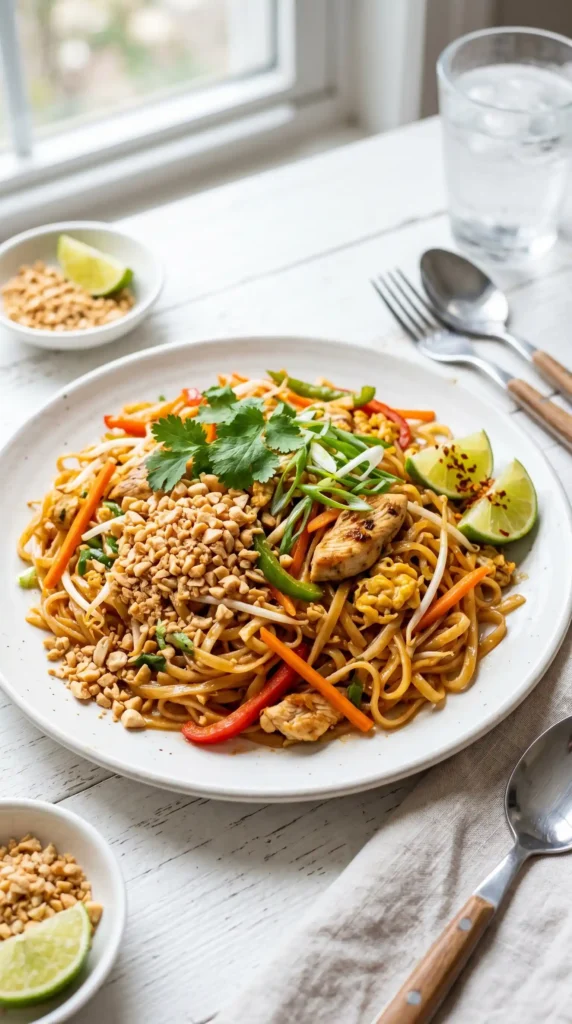
Once you’ve made the base recipe once, you’ll start seeing it as a template rather than a fixed dish. That’s exactly the right way to think about it. Have you ever looked at what’s in your fridge on a Wednesday and wondered if it could become Pad Thai? The answer is almost certainly yes.
Protein options
Chicken is the classic weeknight choice, but shrimp cooks even faster and gives the dish a lovely sweetness. Firm tofu, pressed and patted dry before going in the pan, picks up the sauce beautifully. You can also do half chicken, half shrimp if you’re feeling fancy.
Veggie variations
Beyond the base mix of bean sprouts, carrots, and bell pepper, sliced mushrooms, baby corn, and snap peas all work brilliantly. FYI, the crunchier the vegetable, the better it holds up in the pan without going mushy.
Making it vegetarian
Just swap the fish sauce for soy sauce or tamari, use tofu instead of chicken, and you’ve got a fully vegetarian Pad Thai. The tamarind paste stays. The peanuts stay. Nothing else changes — and honestly, you’d barely notice the difference.
What to Serve With Pad Thai
Pad Thai is a complete meal all on its own, but if you’re feeding a crowd or want to stretch it further, a few simple sides round it out nicely.
A simple cucumber salad dressed with rice vinegar and a pinch of sugar cuts through the richness beautifully. Spring rolls or a simple clear soup also work well alongside a full Pad Thai spread. Keep the sides light — the noodles are the star, and they know it.
Frequently Asked Questions
Can I make Pad Thai without tamarind paste?
Yes — mix one tablespoon of fresh lime juice with half a teaspoon of brown sugar. It won’t taste exactly the same, but it gives you the tangy-sweet balance the sauce needs. Some people also use rice vinegar as a substitute. Tamarind paste is worth tracking down at an Asian grocery store, though — it makes a noticeably better result.
Why are my noodles sticking together?
This usually happens when noodles are over-soaked before cooking, or when the pan isn’t hot enough. Make sure your oil is properly shimmering before the noodles go in, and toss them frequently once they hit the heat. Adding the sauce immediately helps too, since the liquid keeps everything moving and separated.
Can I meal-prep Pad Thai in advance?
Pad Thai is best eaten fresh, but you can absolutely prep ahead. Mix the sauce up to a week in advance and store it in the fridge. Soak and drain the noodles a few hours ahead and toss them lightly in oil to prevent sticking. Then the actual stir-fry only takes 15 minutes when you’re ready to eat.
What kind of rice noodles should I use?
Look for flat rice noodles labelled “Pad Thai noodles” or “rice stick noodles,” typically 3–5mm wide. Thinner vermicelli noodles get too soft and clump together. The medium-width flat noodles hold their structure in the pan and absorb the sauce without dissolving — exactly what you want.
Is Pad Thai gluten-free?
The base recipe is very close to gluten-free since rice noodles contain no wheat. The soy sauce is the one ingredient to watch. Swapping regular soy sauce for tamari (which is gluten-free) makes the whole dish safe for people avoiding gluten. Fish sauce and tamarind paste are both naturally gluten-free.
How do I reheat leftover Pad Thai?
The best way is a quick blast in a hot pan with a tiny splash of water — about a tablespoon. Toss it for 2 to 3 minutes and it comes back to life. Microwaving works in a pinch but tends to make the noodles a bit rubbery. Either way, a fresh squeeze of lime over the top after reheating makes a big difference.
Go Make This Tonight
There you have it — a proper Pad Thai you can cook in your own kitchen, in under an hour, with ingredients that cost a fraction of a takeout order. Is it exactly what you’d get at a Bangkok street stall? No. Is it genuinely delicious, weeknight-friendly, and endlessly customisable? Absolutely.
The first time you nail this recipe, something clicks. You stop seeing it as an “exotic” dish and start seeing it as a regular part of your rotation. And once you’ve got the sauce memorised, the rest is just instinct.
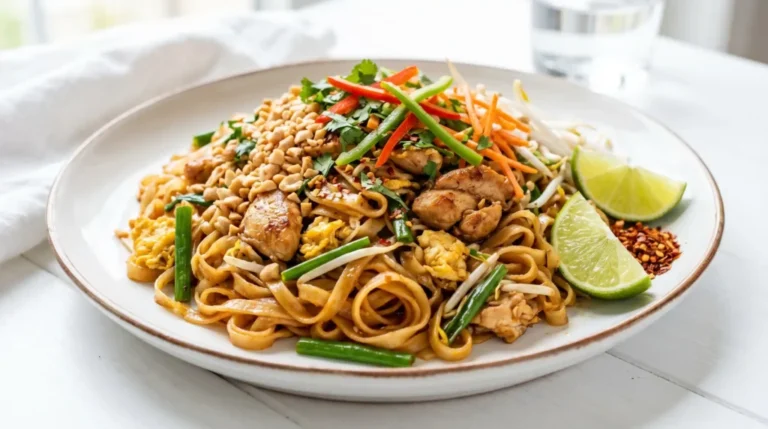
Pad Thai
Ingredients
Method
- Soak rice noodles in warm water for 30 minutes until pliable.
- While noodles soak, mix the Pad Thai sauce in a small bowl.
- Heat vegetable oil in a large pan or wok over medium-high heat.
- Add sliced chicken and cook until golden and cooked through, about 5 to 7 minutes.
- Push chicken to one side, crack eggs, scramble in the cleared space, then combine with chicken.
- Add the mixed vegetables and stir for about 2 minutes until they’re heated through.
- Add drained rice noodles to the pan, gently folding them into the mixture.
- Pour Pad Thai sauce over the noodles and toss everything until well coated, cooking for 2 to 3 minutes.
- Taste and adjust seasoning with more fish sauce or lime juice if necessary.
- Plate the Pad Thai and garnish with crushed peanuts and cilantro. Serve with lime wedges.