Prep Time: 20 minutes | Bake Time: 40 minutes | Total Time: 1 hour | Servings: 10 to 12 slices
This Orange Cake Will Make You Question Every Other Cake You Have Ever Made
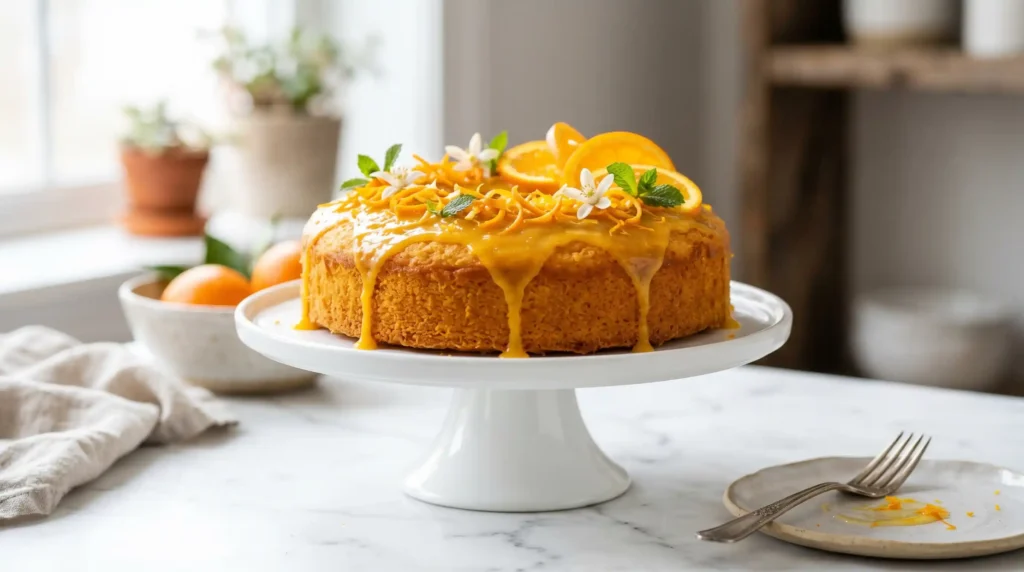
Have you ever taken a bite of something so good that you just stopped what you were doing and stared into the middle distance for a second? That is exactly what a well-made orange cake does. It is bright, fragrant, moist, and honestly a little bit unfair to every other baked good on the table.
I made my first orange cake on a whim because I had a bag of oranges going soft on the counter and zero patience for waste. What came out of the oven that afternoon completely reordered my baking priorities. I have been making this recipe on repeat ever since, and every single person who tries it asks for the recipe.
The magic of a great orange cake lies in using both the zest and the juice of fresh oranges. The zest carries concentrated citrus oils that give the cake its punchy aroma, while the juice keeps the crumb tender and moist. Together, they make a cake that tastes genuinely alive with flavor.
Why This Orange Cake Recipe Actually Works
There are a lot of orange cake recipes floating around that produce something more like a vaguely citrus-scented vanilla cake. Not this one. This recipe uses real oranges at every stage — in the batter, in the syrup, and in the glaze — so the orange flavor runs all the way through.
Using fresh orange zest is non-negotiable. Bottled orange juice or orange extract will not give you the same result. The volatile oils in fresh zest do something to a cake that no artificial flavoring can replicate. IMO, this is the single most important tip in the whole recipe.
The batter also uses a combination of butter and oil. Butter brings flavor and structure, while oil keeps the crumb soft and moist for days rather than hours. You get the best of both — rich taste and a texture that stays tender even after the cake cools completely.
Ingredients for Your Orange Cake

Straightforward, accessible ingredients — that is the whole idea. You do not need anything exotic here. Just good fresh oranges and a few baking staples you likely already have.
For the Cake
- 2 cups (250g) all-purpose flour
- 1 and 1/2 teaspoons baking powder
- 1/2 teaspoon baking soda
- 1/2 teaspoon fine salt
- 3/4 cup (150g) granulated white sugar
- 2 tablespoons fresh orange zest (from about 2 large oranges)
- 3 large eggs, at room temperature
- 1/2 cup (115g) unsalted butter, softened
- 1/4 cup (60ml) neutral vegetable oil
- 3/4 cup (180ml) fresh orange juice (from about 2 to 3 oranges)
- 1/3 cup (80ml) full-fat sour cream or plain Greek yogurt
- 1 teaspoon pure vanilla extract
For the Orange Syrup (Optional but Highly Recommended)
- 1/4 cup (60ml) fresh orange juice
- 3 tablespoons granulated sugar
For the Orange Glaze
- 1 cup (120g) powdered sugar, sifted
- 3 to 4 tablespoons fresh orange juice
- 1 teaspoon fresh orange zest
How to Make Orange Cake — Every Step in Detail
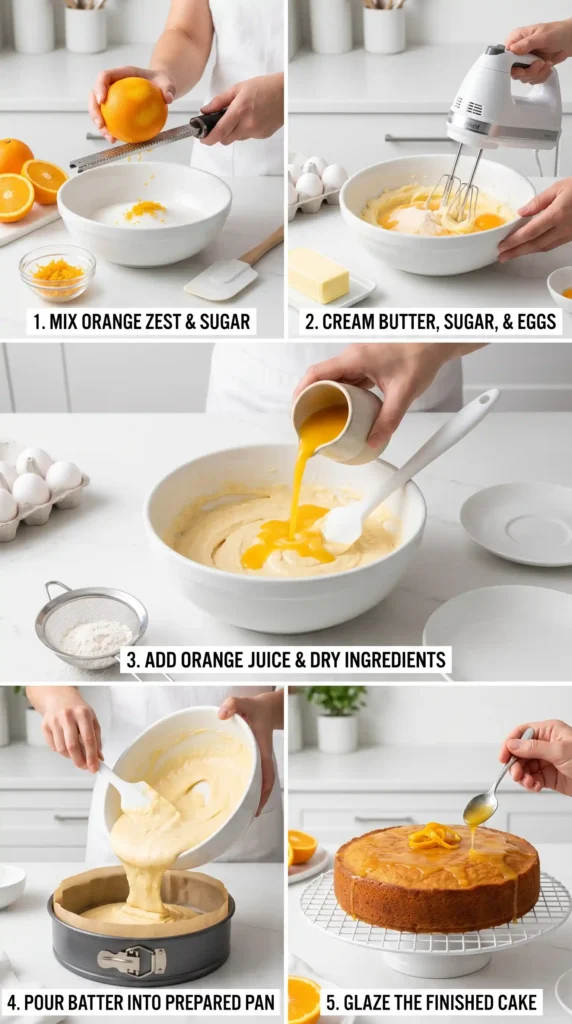
Follow these steps carefully and you will end up with a cake that is golden on the outside, moist and tender on the inside, and bursting with real orange flavor from top to bottom.
Step 1 : Get Everything Ready Before You Start
Preheat your oven to 175 degrees Celsius (350 degrees Fahrenheit). Give the oven a full 15 minutes to reach the right temperature. Baking in an under-heated oven gives you a dense, uneven cake, so do not rush this step.
Grease a 9-inch round cake pan generously with butter, then dust it lightly with flour. Tap out any excess. Alternatively, line the base with a circle of parchment paper and just grease the sides — this gives you the cleanest release when the cake comes out of the pan.
Take your eggs and butter out of the refrigerator at least 30 minutes before you start. Room temperature eggs and butter combine into a smoother, more uniform batter. Cold butter will not cream properly and cold eggs can cause the batter to curdle. These small details genuinely matter.
Zest your oranges before you cut them and juice them. It is dramatically easier to zest a whole orange than a cut one. Use a fine microplane grater and only take the bright orange outer layer — the white pith underneath is bitter and will throw off the flavor of your cake.
Step 2 : Mix the Dry Ingredients
In a medium bowl, whisk together the flour, baking powder, baking soda, and salt. Whisking the dry ingredients together rather than just dumping them into the batter ensures the leavening distributes evenly. Uneven leavening gives you a cake that rises in strange shapes or has dense patches.
Set this dry mixture aside. You will come back to it in a few steps.
Step 3 : Create the Orange Sugar Base
In your largest mixing bowl, combine the granulated sugar and the fresh orange zest. Using your fingertips, rub the zest into the sugar for about 60 seconds. Press and massage the two together until the sugar turns slightly orange and smells intensely fragrant.
This step sounds fussy but it is one of the most important moves in the whole recipe. Rubbing the zest into the sugar breaks down the orange oil cells and releases them directly into the fat — which is where flavor lives in a cake. You get a dramatically more aromatic, more orange-forward result from this one extra minute of effort.
Step 4 : Cream the Butter and Build the Batter
Add the softened butter to the orange sugar and beat everything together using a hand mixer or stand mixer on medium speed. Beat for a full 3 minutes until the mixture turns pale, fluffy, and significantly increased in volume. This step traps air in the butter, which helps the cake rise and gives it a lighter crumb.
Pour in the vegetable oil and continue beating for another 30 seconds. The oil loosens the creamed butter slightly and will keep the finished cake moist for longer. This is the butter-plus-oil combination that makes this recipe so reliable.
Add the eggs one at a time, beating well for about 20 seconds after each addition before adding the next. Adding eggs one at a time prevents the batter from curdling. If the mixture looks slightly broken or separated at this stage, do not panic — it will come together once the flour goes in.
Add the vanilla extract and mix for another 10 seconds.
Step 5 :Add the Orange Juice and Sour Cream
In a small jug or bowl, stir together the fresh orange juice and the sour cream (or Greek yogurt) until combined. The sour cream adds a gentle tang that balances the sweetness of the cake and reacts with the baking soda to help the cake rise. It also adds richness to the crumb.
With the mixer on low speed, add one-third of the dry flour mixture to the butter mixture. Mix just until the flour disappears — a few seconds. Then add half the orange juice and sour cream mixture and mix again briefly. Continue alternating — dry, wet, dry, wet, dry — ending with the final portion of flour.
Stop mixing as soon as the last of the flour disappears. Over-mixing at this stage develops gluten, which makes the crumb tough and chewy instead of tender. A few small lumps in the batter are completely fine and will bake out.
Step 6 : Bake the Orange Cake
Pour the batter into your prepared cake pan and smooth the top with a spatula. Give the pan a couple of gentle taps on the counter to release any large air bubbles trapped in the batter.
Slide the pan into the center of your preheated oven and bake for 38 to 42 minutes. The cake is ready when the top looks deep golden, the edges have pulled slightly away from the sides of the pan, and a toothpick inserted into the center comes out clean or with just a few dry crumbs attached.
Do not open the oven door during the first 30 minutes of baking. Opening the door too early drops the oven temperature suddenly and can cause the center of the cake to sink. Set a timer and trust the process.
Step 7 : Make the Orange Syrup
While the cake bakes, combine the fresh orange juice and sugar for the syrup in a small saucepan over medium heat. Stir until the sugar dissolves completely, then let it simmer for 2 minutes. Remove from heat and set aside.
As soon as the cake comes out of the oven, use a toothpick or skewer to poke about 20 small holes all over the surface. Then immediately brush or spoon the warm orange syrup over the hot cake, letting it soak into those holes. This step is what keeps the orange cake tasting moist and orangey right down to the last crumb — do not skip it 🙂
Let the cake cool in the pan for 15 minutes, then carefully turn it out onto a wire rack and allow it to cool completely before glazing. Glazing a warm cake gives you a runny, transparent mess rather than a clean, pretty finish.
Step 8 : Make and Apply the Orange Glaze
Whisk together the sifted powdered sugar, fresh orange juice, and orange zest in a small bowl. Start with 3 tablespoons of juice and add more a teaspoon at a time until you reach a thick but pourable consistency — think honey, not water.
Pour the glaze over the completely cooled cake, starting in the center and letting it flow naturally toward the edges. For dramatic drips down the sides, nudge the glaze right to the edge with a spoon. Let the glaze set for 15 minutes before slicing and serving.
Tips for the Best Orange Cake Every Time
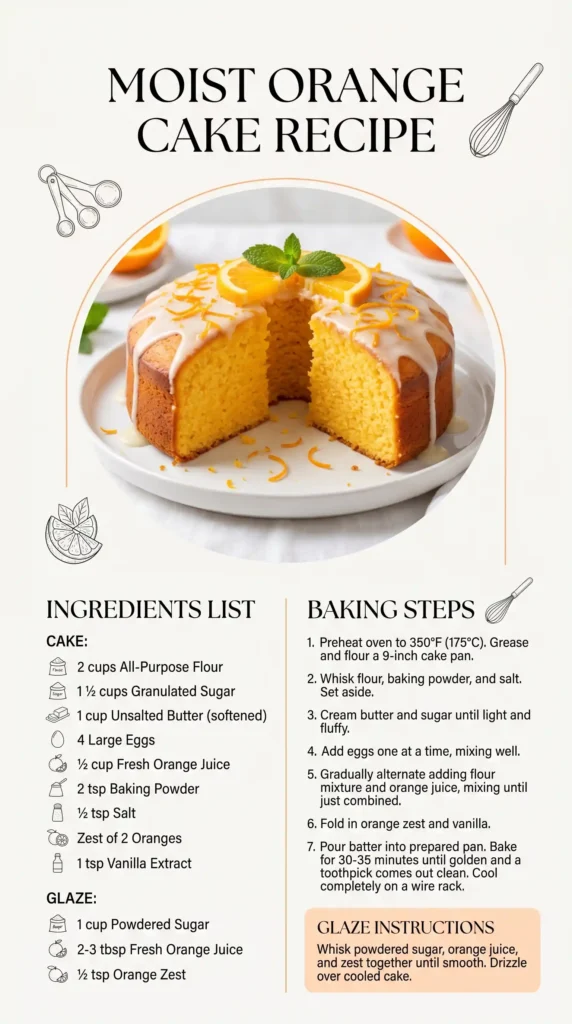
Always use fresh oranges. Bottled juice lacks the brightness and fresh zest is irreplaceable. Naval oranges or blood oranges both work beautifully.
Do not skip the orange syrup. It takes two minutes to make and it is the difference between a good cake and a genuinely great one.
Measure flour correctly. Spoon flour into the measuring cup and level it off — do not scoop directly from the bag. Scooping packs in too much flour and makes the cake dense.
Room temperature ingredients really do matter. Cold eggs and butter straight from the fridge produce an uneven batter. Give them time to warm up and your cake will thank you.
Frequently Asked Questions
Can I make this orange cake in a loaf pan instead?
Yes — this batter works well in a standard 9 by 5 inch loaf pan. Pour the batter in and bake at the same temperature for 50 to 60 minutes, checking from the 50-minute mark with a toothpick. The longer bake time is needed for the thicker loaf shape, so keep an eye on it from about 45 minutes onward.
How do I store leftover orange cake?
Store the cake at room temperature, covered loosely with plastic wrap or under a cake dome, for up to 3 days. If you need it to last longer, refrigerate it for up to 5 days and bring individual slices to room temperature for 20 minutes before eating. FYI, the orange flavor actually deepens and improves on day two.
Can I use blood oranges or mandarins instead of regular oranges?
Absolutely. Blood oranges give you a gorgeous pink-tinted glaze and a slightly berry-like undertone in the flavor — it looks stunning and tastes wonderful. Mandarins work well too, though they are sweeter and less acidic, so the cake will taste a little milder. Clementines are another great option and have a lovely floral note.
Why did my orange cake sink in the middle?
A sunken center usually means one of three things: the oven was not fully preheated, the cake was underbaked and removed too early, or the oven door was opened before the structure had set. Always preheat fully, check the internal temperature (it should reach about 95C or 200F), and resist the urge to open the door before the 30-minute mark.
Can I make this as cupcakes instead of a full cake?
This recipe makes about 16 standard-size cupcakes. Fill each liner two-thirds full and bake at the same temperature for 18 to 22 minutes. Brush the warm cupcakes with the orange syrup as soon as they come out, then top with the glaze once they cool. They are every bit as good as the full cake and much easier to serve at a party.
Can I add anything to the batter for extra flavor?
A few additions that work really well with orange cake: 1 teaspoon of ground cardamom for a warm, exotic note; 1/2 teaspoon of cinnamon for a spiced citrus combination; or 1/2 cup of dark chocolate chips folded in at the end for a chocolate-orange twist that is genuinely spectacular. Just avoid adding anything too wet, as it will affect the batter’s balance.
Final Thoughts
The orange cake recipe is one of those recipes that looks impressive, tastes extraordinary, and is actually not that complicated once you break it down step by step. Fresh oranges, a reliable batter method, a quick syrup, and a glossy glaze — that is really all it takes.
Whether you serve it as a weekend treat, a birthday cake, or just because you have oranges sitting on the counter, this cake will consistently deliver. It keeps well, it travels well, and it makes people genuinely happy.
Get those oranges zested and start baking. The sooner you make this, the sooner you get to eat it — and trust me, that is a very good reason to get moving right now.

Orange Cake
Ingredients
Method
- Preheat your oven to 175 degrees Celsius (350 degrees Fahrenheit) and let it heat for 15 minutes.
- Grease a 9-inch round cake pan with butter and dust with flour. Alternatively, line the base with parchment paper.
- Let your eggs and butter sit at room temperature for at least 30 minutes.
- Zest the oranges before juicing them.
- In a medium bowl, whisk together the flour, baking powder, baking soda, and salt. Set aside.
- In a large mixing bowl, combine the granulated sugar and fresh orange zest. Rub them together until fragrant.
- Add the softened butter and beat until pale and fluffy. Then add the vegetable oil and beat for another 30 seconds.
- Add eggs one at a time, beating well after each addition. Mix in the vanilla extract.
- In a separate bowl, combine the fresh orange juice and sour cream. Gradually mix this into the butter mixture, alternating with the dry ingredients, until just combined.
- Pour the batter into the prepared pan and smooth the top. Bake for 38 to 42 minutes until golden and a toothpick comes out clean.
- Let the cake cool for 15 minutes in the pan before transferring it to a wire rack.
- While the cake bakes, heat the orange juice and sugar for the syrup in a small saucepan until the sugar dissolves. Simmer for 2 minutes.
- Poke small holes in the cake and brush the syrup over it after baking.
- Whisk together powdered sugar, orange juice, and zest until you reach a thick but pourable consistency.
- Pour the glaze over the cooled cake and let it set for 15 minutes before serving.