Servings: 12-14 pancakes (serves 4) | Prep Time: 20 minutes | Cook Time: 30 minutes | Total Time: 50 minutes
Some foods just hit differently. German potato pancakes — known in Germany as Kartoffelpuffer — are crispy on the outside, tender in the middle, and so ridiculously satisfying that it’s almost unfair. I tried them for the first time at a Christmas market years ago and have been making them at home ever since.
If you’ve ever stood at a German market stall watching someone fry these golden rounds and thought ‘I need to make these myself’, you’re in exactly the right place. This recipe gives you everything you need to nail them on your very first attempt.
No fancy equipment. No complicated technique. Just beautifully crispy German potato pancakes that taste like you made them with decades of practice. Let’s get into it.
What Are German Potato Pancakes?
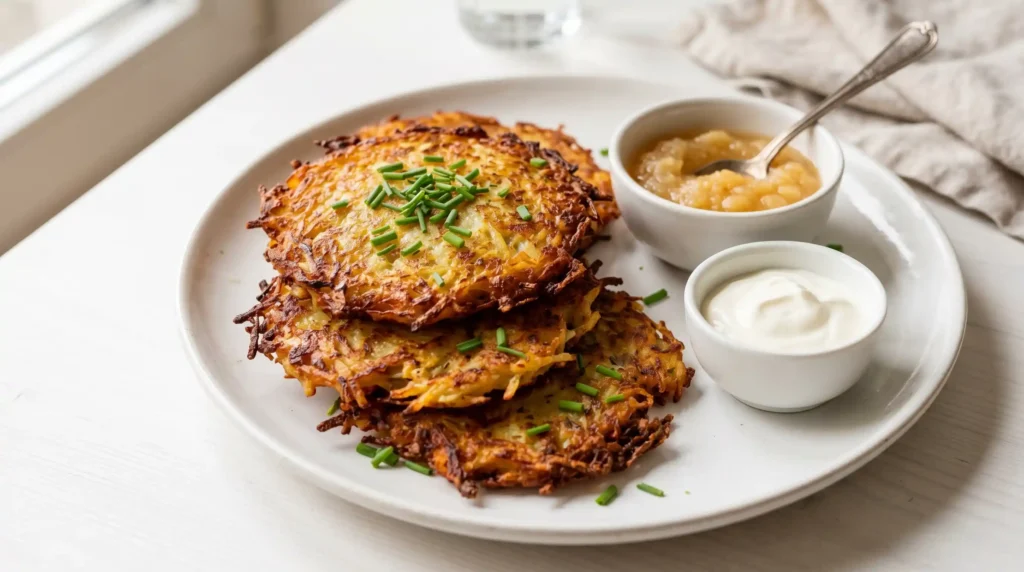
German potato pancakes, or Kartoffelpuffer, are a classic German dish made from grated raw potato, onion, egg, and a little flour, fried in oil until deeply golden and crisp. They’re a street food staple at German Christmas markets and a beloved home comfort dish.
Unlike American-style hash browns, German potato pancakes hold together as individual patties with a defined shape and a crust that actually crunches when you bite into it. The inside stays soft and potato-forward while the edges go satisfyingly crisp.
People serve them both sweet and savoury. The classic sweet pairing is apple sauce or sour cream. The savoury route goes toward smoked salmon or herb cream cheese. Have you ever had a dish that works brilliantly on both ends of the flavour spectrum? This is one of those rare ones.
Ingredients You Will Need
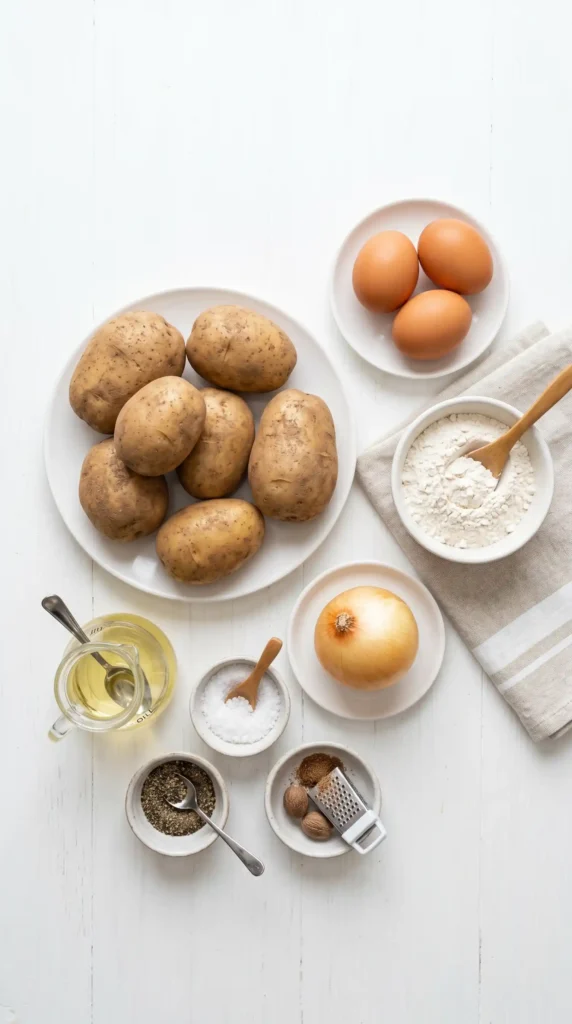
The ingredient list for German potato pancakes is beautifully short. The magic here comes entirely from technique, not from a long list of components.
Main Ingredients
- 1kg (about 6 medium) starchy potatoes, such as Maris Piper or Russet
- 1 medium onion
- 2 large eggs
- 3 tablespoons plain flour
- 1 teaspoon salt
- Half a teaspoon black pepper
- Half a teaspoon ground nutmeg (optional but traditional)
- Vegetable oil or clarified butter for frying (about 4-6 tablespoons)
For Serving
- Apple sauce (traditional sweet option)
- Sour cream or creme fraiche
- Chopped chives for garnish
Choosing the Right Potato
This one decision makes or breaks your German potato pancakes. You must use starchy potatoes, not waxy ones. Starchy varieties like Maris Piper, Russet, or King Edward release more starch when grated, which helps the pancakes hold together and get that signature crust.
Waxy potatoes like Charlotte or new potatoes contain too much moisture and not enough starch. They make pancakes that fall apart in the pan and never quite achieve that deep golden crunch. FYI, this is the number one reason most people’s first attempt at potato pancakes goes wrong.
Starchy potato = crispy, sturdy pancake. Waxy potato = soggy, falling-apart mess. Choose wisely.
Step-By-Step: How to Make German Potato Pancakes
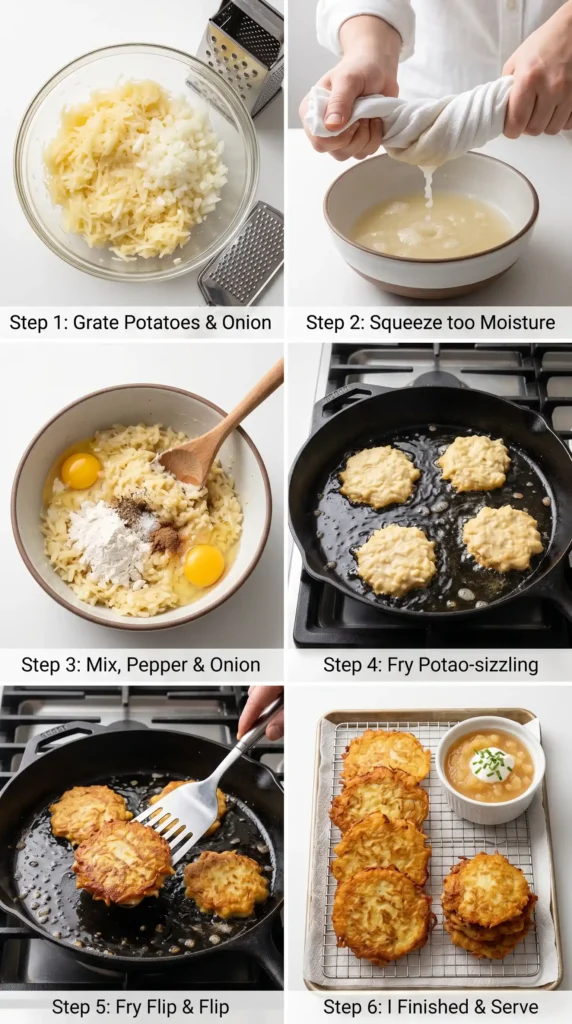
Follow these steps carefully and you’ll turn out perfectly crispy German potato pancakes every single time. The technique matters as much as the ingredients here.
Step 1: Grate the Potatoes and Onion
Peel all six potatoes and your onion. Use the large holes on a box grater to grate everything into a large mixing bowl. Grate the onion in with the potato from the very beginning — the onion juice mingles with the potato starch and starts building flavour immediately.
Work quickly once you start grating. Raw potato oxidises and turns an unpleasant grey-brown colour when exposed to air. The sooner you get them into the bowl and start the next step, the better your pancakes will look. A little browning won’t affect the taste, but nobody wants grey pancakes.
If you own a food processor with a grating disc, use it. It cuts your prep time in half and saves your knuckles from the box grater. IMO, this is one of those recipes where the food processor genuinely earns its counter space
Step 2: Squeeze Out Every Drop of Moisture
This is the single most important step in the entire recipe. Potatoes contain a shocking amount of water, and if you don’t remove it, your pancakes will steam instead of fry. You’ll get pale, floppy, soggy rounds instead of the crispy golden beauties you’re after.
Transfer your grated potato and onion mixture into a clean tea towel or several layers of cheesecloth. Gather the corners and twist the bundle over the sink, squeezing as hard as you can. Keep twisting and squeezing until no more liquid drips out. You will be genuinely surprised by how much liquid comes out of a kilogram of potatoes.
Pour the drained liquid into a bowl and let it sit for two minutes. You’ll see white potato starch settling at the bottom of the bowl. Carefully pour off the water and add that concentrated starch back into your squeezed potato mixture. This trick gives your pancakes extra binding power and better crunch.
Step 3: Mix the Batter
Transfer your squeezed potato and onion mixture into a clean mixing bowl. Add your two eggs, three tablespoons of plain flour, one teaspoon of salt, half a teaspoon of black pepper, and the ground nutmeg if you’re using it. Mix everything together thoroughly with a fork or your hands until fully combined.
The mixture should hold together when you press a handful of it between your palms. If it feels too wet and won’t hold its shape, add one more tablespoon of flour and mix again. If it feels too dry and crumbly, add a tiny splash of water. You want a mixture that’s just moist enough to shape but not so wet it falls apart.
Taste a tiny bit of the raw mixture. You should be able to tell if it needs more salt at this stage. Potato pancakes need a confident amount of seasoning — underseasoned ones taste flat and disappointing regardless of how crispy they get.
Step 4: Heat the Oil
Pour enough vegetable oil into a large heavy-bottomed frying pan to coat the base generously — about 3 to 4 tablespoons to start. Heat it over medium-high heat until it shimmers and moves freely around the pan. A properly heated pan is what gives you that immediate sizzle and crust formation.
Test the oil temperature before you add the first pancake. Drop a tiny pinch of the potato mixture into the pan. If it sizzles immediately on contact, the oil is ready. If it just sits there quietly, the oil needs more time.
Do not rush this heating step. Pancakes added to oil that’s not hot enough will absorb the oil and turn greasy. Hot oil immediately seals the surface of the pancake, creating that golden crust while the inside cooks through. This is exactly what you want from your German potato pancakes.
Step 5: Shape and Fry the Pancakes
Take a generous handful of the potato mixture — about 3 to 4 tablespoons worth — and place it in the hot pan. Immediately press it flat with the back of a spatula to form a round disc about 1cm thick and roughly 10cm across. Work confidently and quickly because the mixture starts cooking the moment it hits the pan.
Fry the first side for 4 to 5 minutes over medium-high heat without moving or pressing it. You need to let the crust form undisturbed. Resist the urge to poke, press, or lift it early. When the edges look golden and the underside releases easily from the pan with no sticking, it’s ready to flip.
Flip it once using a wide spatula and fry the second side for another 4 to 5 minutes. The second side usually colours faster than the first, so keep a close eye on it. Both sides should be deep golden brown and crispy when done. Pale, lightly coloured pancakes won’t have that satisfying crunch.
Cook your pancakes in batches of 3 to 4 at a time, depending on your pan size. Crowding the pan lowers the oil temperature and leads to steaming instead of frying. Add a fresh splash of oil between each batch to keep the cooking consistent.
Step 6: Drain and Keep Warm
As each batch finishes, transfer the pancakes to a wire rack set over a baking tray. Do not stack them on a plate with paper towels — this traps steam underneath and softens the crust you worked so hard to build. A wire rack keeps the air circulating around the whole pancake.
If you’re making a large batch, keep them warm in an oven preheated to 100 degrees Celsius while you finish frying the rest. They’ll stay crispy for up to 20 minutes this way without losing their texture. This is a lifesaver when you’re cooking for a crowd :/
Serving Suggestions
The traditional German way to serve potato pancakes is with cold apple sauce and sour cream on the side. The cool, sweet apple sauce against the hot, crispy pancake is a combination that’s stood the test of time for good reason.
- Sweet: Serve with homemade or good-quality apple sauce and a spoonful of sour cream.
- Savoury: Top with smoked salmon, crème fraîche, and fresh dill.
- Hearty: Serve alongside a fried egg and crispy bacon for a full meal.
- Simple: Just sprinkle with flaky sea salt and eat them straight from the pan. No judgement.
Tips for the Crispiest German Potato Pancakes
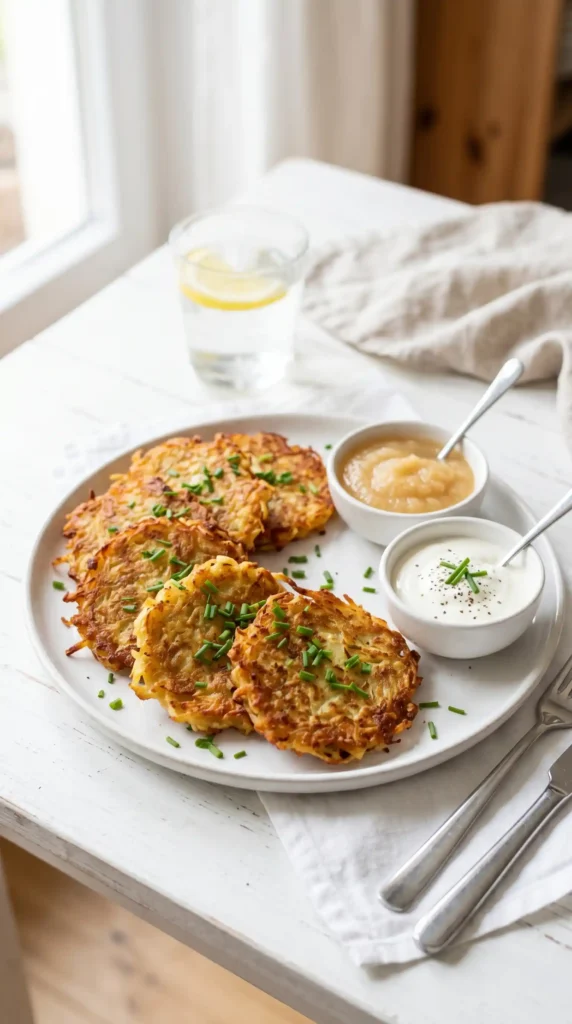
- Use starchy potatoes: Russet, Maris Piper, or King Edward. Never waxy varieties.
- Squeeze aggressively: The drier the mixture, the crispier the pancake. Be ruthless with the squeezing.
- Hot oil is non-negotiable: Add pancakes only when the oil is fully up to temperature.
- Don’t crowd the pan: Cook in small batches so the oil stays hot throughout.
- Wire rack, not plate: Draining on a wire rack preserves the crust. A plate steams it soft.
- Season generously: Potatoes need more salt than you think. Taste and adjust before frying.
Frequently Asked Questions
1. Why are my German potato pancakes falling apart?
The most common cause is too much moisture in the potato mixture. You need to squeeze the grated potato very thoroughly before mixing in the other ingredients. If you’ve squeezed well and they still fall apart, add another tablespoon of flour to help bind the mixture together.
2. Can I make German potato pancakes ahead of time?
You can fry them up to a day ahead and reheat them in the oven at 200 degrees Celsius for 8 to 10 minutes on a wire rack. They won’t be quite as crispy as freshly made, but they come surprisingly close. Avoid microwaving them — that destroys the crust entirely.
3. Can I freeze potato pancakes?
Yes. Let them cool completely on a wire rack, then freeze in a single layer on a baking tray. Once frozen solid, transfer to a freezer bag. Reheat directly from frozen in the oven at 200 degrees Celsius for 15 minutes. They reheat beautifully and stay crispy.
4. What oil is best for frying German potato pancakes?
Vegetable oil or sunflower oil work best because they have a high smoke point and a neutral flavour that lets the potato shine. Clarified butter is the traditional German choice and adds a lovely richness. Avoid regular butter as it burns before the oil gets hot enough.
5. Can I make German potato pancakes gluten-free?
Absolutely. Simply swap the plain flour for a gluten-free plain flour blend or use potato starch instead. The recovered starch from Step 2 also helps bind the mixture. The result is virtually identical to the original version in both taste and texture.
Final Thoughts
German potato pancakes are one of those recipes that looks impressive but asks very little of you in return. A few basic ingredients, the right technique, and a hot pan are genuinely all you need.
The keys to success are starchy potatoes, thorough moisture removal, and properly heated oil. Get those three things right and you’ll produce crispy, golden, deeply satisfying Kartoffelpuffer that taste like they came straight from a German Christmas market stall.
So grab those potatoes, get the grater out, and start frying. Your kitchen is about to smell absolutely incredible.
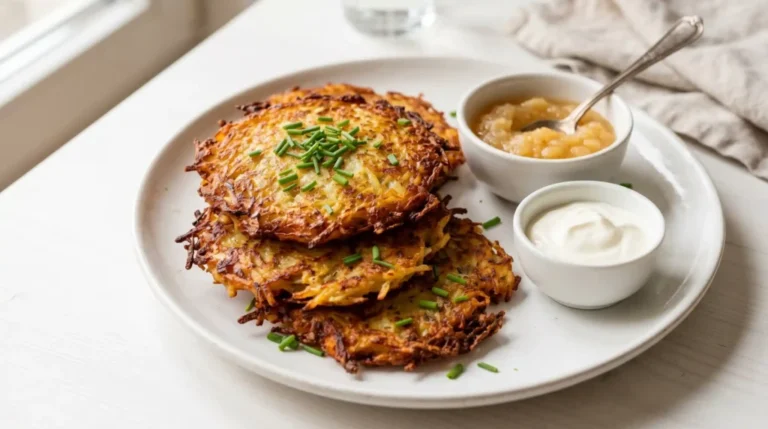
German Potato Pancakes
Ingredients
Method
- Grate the Potatoes and Onion: Peel the potatoes and onion, then grate them into a large mixing bowl using a box grater or food processor.
- Squeeze Out Every Drop of Moisture: Transfer the grated mixture into a clean tea towel or cheesecloth, squeeze to remove excess moisture, and reserve the potato starch.
- Mix the Batter: In a clean bowl, combine the drained potato-onion mixture with eggs, flour, salt, pepper, and optional nutmeg. Mix until fully combined.
- Heat the Oil: Pour enough vegetable oil into a frying pan to coat the base and heat it until shimmering.
- Shape and Fry the Pancakes: Form the potato mixture into discs and fry each side for 4 to 5 minutes until golden brown and crispy.
- Drain and Keep Warm: Transfer cooked pancakes to a wire rack to keep them crisp. Optionally, keep them warm in an oven.