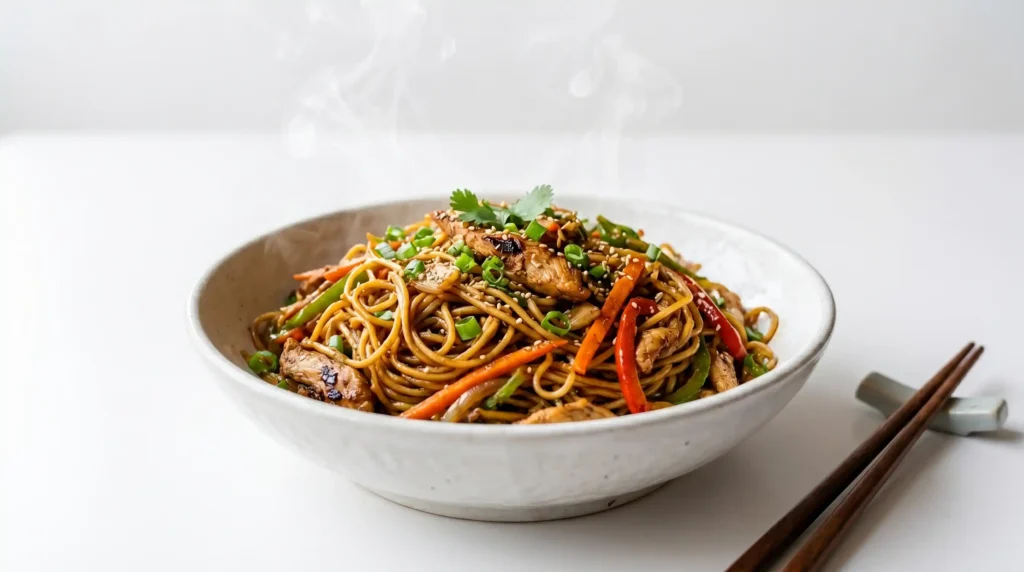
Hakka noodles occupy a specific and irreplaceable position in the Indo-Chinese food universe — which is itself one of the most distinctive and underappreciated fusion cuisines on the planet. Chicken Hakka Noodles combine the wok technique and seasoning philosophy of Chinese cooking with the bold spicing and heat preferences of Indian cuisine into a dish that belongs entirely to neither tradition and is completely its own thing. One wok, 30 minutes, and something that tastes like your favourite takeaway order, made in your own kitchen.
I grew up eating Hakka noodles from street-side stalls and small Indo-Chinese restaurants where the wok heat was genuinely theatrical and the smell from 15 metres away was enough to commit you to ordering. The home version never quite matched that experience — until I understood that the issue was always heat rather than ingredients. A screaming-hot wok and quick, confident cooking produces Hakka noodles with the characteristic slightly smoky flavour that defines this dish. Moderate heat produces a stir-fry that tastes pleasant but not correct.
Have you ever made noodles at home and wondered why they do not taste like the ones at your local Indo-Chinese restaurant? The wok heat is almost always the answer. Let us fix that.
What Are Hakka Noodles and Why Are They Different?
Hakka noodles are a style of thin, firm egg noodles that originate from the Hakka Chinese community — a group with significant historical presence in Kolkata, India, where Indo-Chinese cuisine as a fusion genre essentially developed. The noodles themselves are different from standard Chinese noodles in that they are specifically designed to hold up to the high-heat stir-fry technique without turning mushy and to carry bold sauce flavours without becoming waterlogged.
The Indo-Chinese treatment — soy sauce, vinegar, chilli sauce, and garlic as the primary seasoning base — produces a distinctly different flavour from standard Chinese noodle dishes. The vinegar adds brightness that standard Chinese stir-fry sauces often lack. The chilli sauce adds a spicy, slightly sweet heat. Together, these two elements create a sauce profile that tastes simultaneously familiar and distinct — recognisably of Chinese origin but flavoured for a different palate.
Hakka noodles are available in most Indian grocery stores as dried packets and in some Asian supermarkets. If they are unavailable, thin egg noodles or Chinese noodles labelled for stir-frying work as direct substitutes with no change to the technique. The key quality is firmness — noodles that hold their texture under high heat rather than softening into a clump. FYI — lo mein noodles are too soft for this preparation; look specifically for thin, stir-fry-appropriate noodles for the best result.
What You Need
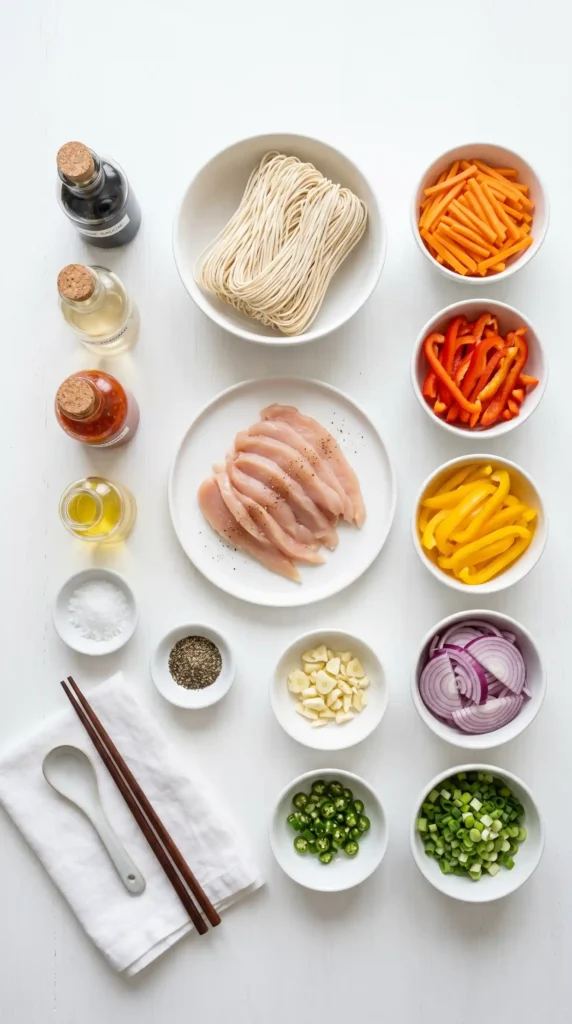
Twelve ingredients. Everything available at Indian or Asian grocery stores and most well-stocked general supermarkets. The sauce is built from three ingredients that perform distinct roles — understanding each one helps you adjust the recipe to suit your preference. The sauce quantities in this recipe produce a medium-flavoured result; adjustments for more heat or more tanginess are covered in the variations section.
For the Noodles and Chicken
- 200g hakka noodles (dried) — or substitute thin egg noodles for stir-frying
- 150g boneless chicken (breast or thigh), thinly sliced against the grain into strips about 5mm thick
- 1 tablespoon neutral oil (sunflower, vegetable, or peanut oil) for stir-frying — not olive oil, which has too low a smoke point for the required high heat
- 1 teaspoon salt (for the noodle cooking water) + salt to taste in the final dish
- 1 teaspoon black pepper
The Sauce
- 1 tablespoon soy sauce — dark soy for a richer, deeper colour; light soy for a more delicate, saltier flavour; standard soy sauce works perfectly
- 1 tablespoon vinegar — white vinegar or rice vinegar; rice vinegar is milder and slightly sweeter; white vinegar is sharper
- 1 tablespoon chilli sauce — Sriracha, Chinese chilli garlic sauce, or Indian red chilli sauce all work; choose based on your preferred heat level
The Aromatics and Vegetables
- 2 garlic cloves, finely minced
- 1 medium onion, thinly sliced
- 1 bell pepper (red, yellow, or green), seeds removed and thinly sliced
- 1 medium carrot, julienned into thin matchsticks
Slice the Chicken Thinly Against the Grain — This Is the Texture DifferenceHakka noodles chicken should have a silky, tender texture rather than a chewy, tough one. Cutting chicken against the grain — perpendicular to the direction the muscle fibres run — shortens the fibres and produces tender pieces that cook quickly at high heat without becoming rubbery. Slicing with the grain produces longer fibres that tighten into chewy, dense pieces under high heat. Take 30 extra seconds to identify the grain direction and cut perpendicular to it. The texture difference is significant and noticeable.
Understanding the Three-Sauce Formula
The sauce in Chicken Hakka Noodles is built from three ingredients that each contribute a specific flavour dimension. Getting the balance right between these three elements is what separates genuinely great Hakka noodles from those that taste flat or one-dimensional. Here is what each element does and how to adjust for personal preference:
| Sauce Ingredient | What It Does | Adjust How |
|---|---|---|
| Soy Sauce | Provides savoury depth (umami), colour, and the base saltiness of the dish | Add more for deeper colour and more savoury flavour; reduce if the dish tastes too salty |
| Vinegar | Adds brightness and acidity that lifts the soy heaviness and provides the characteristic tang | Add more for a sharper, more tangy result; reduce for a milder flavour profile |
| Chilli Sauce | Adds heat, a slightly sweet-spicy note, and the vibrant red colour in the finished dish | Add more for significantly more heat; reduce or omit for a mild version suitable for children |
How to Make Chicken Hakka Noodles Step by Step
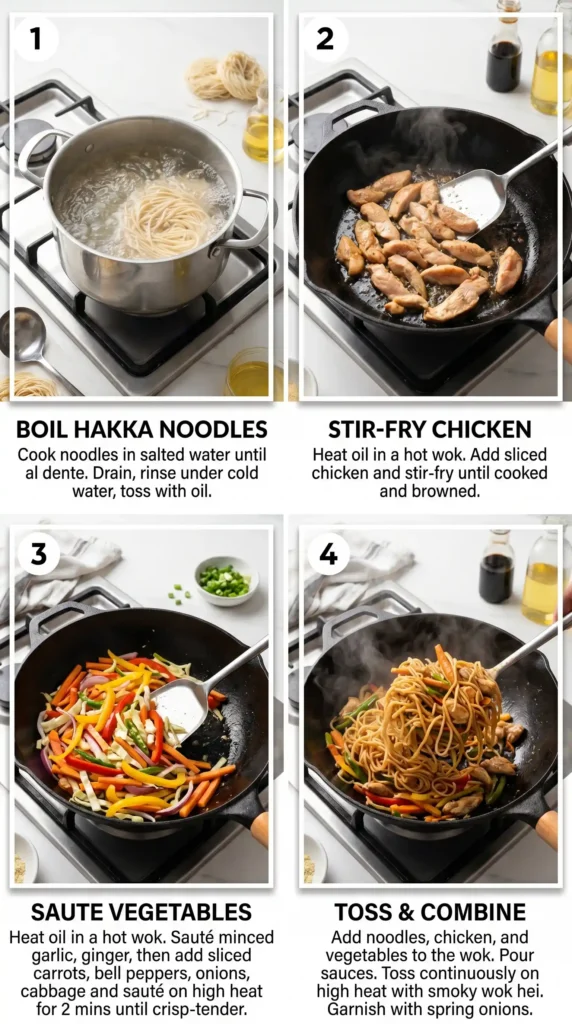
Three stages: boil and prepare the noodles, cook the chicken, then stir-fry everything together at high heat. The most important variable throughout is heat level — this recipe requires genuinely high heat throughout the cooking process to produce the slightly smoky, wok-kissed flavour that defines Hakka noodles. Medium heat produces acceptable noodles. High heat produces authentic ones.
Step 1: Boil and Prepare the Hakka Noodles
Bring a large pot of water to a full rolling boil. Add 1 teaspoon of salt and the hakka noodles. Cook according to the packet instructions — most dried hakka noodles take 4–6 minutes to reach al dente, which means firm to the bite with just the faintest resistance at the centre. Do not overcook the noodles — they will continue cooking briefly in the hot wok later, and overcooked noodles that go into a hot wok produce a mushy, clumping result rather than the separate, springy noodle strands that characterise properly made Hakka noodles.
Drain the cooked noodles in a colander and immediately run cold water over them for 30 seconds — the cold water stops the cooking process and removes the surface starch that causes noodles to stick to each other. Drain thoroughly, then toss the drained noodles with a teaspoon of neutral oil and use your hands or tongs to separate any clumped strands so every noodle is individually coated in oil. Set aside at room temperature until needed. Do not refrigerate the noodles — cold noodles clump more aggressively in the hot wok and cook unevenly.
Step 2: Prepare and Cook the Chicken
Before the cooking starts, combine the soy sauce, vinegar, and chilli sauce in a small bowl and stir to combine the sauce mixture. Keeping the sauce premixed and within reach means you can add it to the wok quickly without scrambling to measure while everything else is cooking at high heat. Hakka noodles cooking is fast and does not wait for you to find the vinegar bottle.
Heat a wok or large skillet over the highest flame your stove produces. Add the tablespoon of oil and swirl to coat. When the oil begins to shimmer and smoke very slightly — which indicates it has reached the required stir-fry temperature — add the thinly sliced chicken in a single layer. Leave the chicken undisturbed for 60–90 seconds before stirring — this contact time allows the high heat to sear the chicken surface and produce the slightly caramelised exterior rather than steaming it in its own moisture from constant stirring.
After the initial sear, stir the chicken actively for another 60 seconds until cooked through and no pink remains visible. Remove the cooked chicken from the wok to a plate and set aside. Do not wash the wok — the residual oil and chicken caramelisation in the pan contribute flavour to the vegetables and noodles in the next step.
Step 3: Stir-Fry the Aromatics and Vegetables
Return the wok to high heat. Add a small splash of additional oil if the pan looks dry. Add the minced garlic and stir vigorously for about 20 seconds — the garlic should sizzle aggressively and turn golden at the edges without burning. Burnt garlic produces bitterness that the other flavours cannot cover, so 20 seconds at high heat is the maximum. Add the sliced onion immediately after the garlic and stir constantly for about 90 seconds until the onion softens slightly but retains some crunch.
Add the julienned carrot and bell pepper strips to the wok. Stir-fry on high heat for 2 minutes — keep everything moving constantly with a spatula or wok spoon, tossing the vegetables through the hot oil rapidly. The goal is vegetables that are cooked through but still have a slight bite — tender-crisp is the correct target. The carrot requires slightly more heat to soften than the bell pepper, which is why they go in together rather than sequentially — the carrot starts cooking first and the bell pepper benefits from slightly less total time.
Step 4: Add the Noodles, Chicken, and Sauce
Return the cooked chicken to the wok alongside the vegetables. Immediately add the oil-coated, room-temperature noodles. Pour the premixed sauce over the noodles and chicken. Add the black pepper. Now use tongs or two spatulas to toss everything together aggressively at high heat — work quickly for 2–3 minutes, lifting and folding the noodles through the vegetables and sauce so every strand gets coated and touched by the hot wok surface.
This tossing stage is where Hakka noodles acquire their characteristic “wok hei” — the slightly smoky, caramelised quality that occurs when food makes brief direct contact with a hot wok surface. Tossing rather than stirring allows the noodles to briefly touch and briefly leave the hot surface repeatedly, building that flavour progressively. Taste after 2 minutes of tossing and adjust — more soy if it needs saltiness, a splash more vinegar if it needs brightness, more chilli sauce if it needs heat.
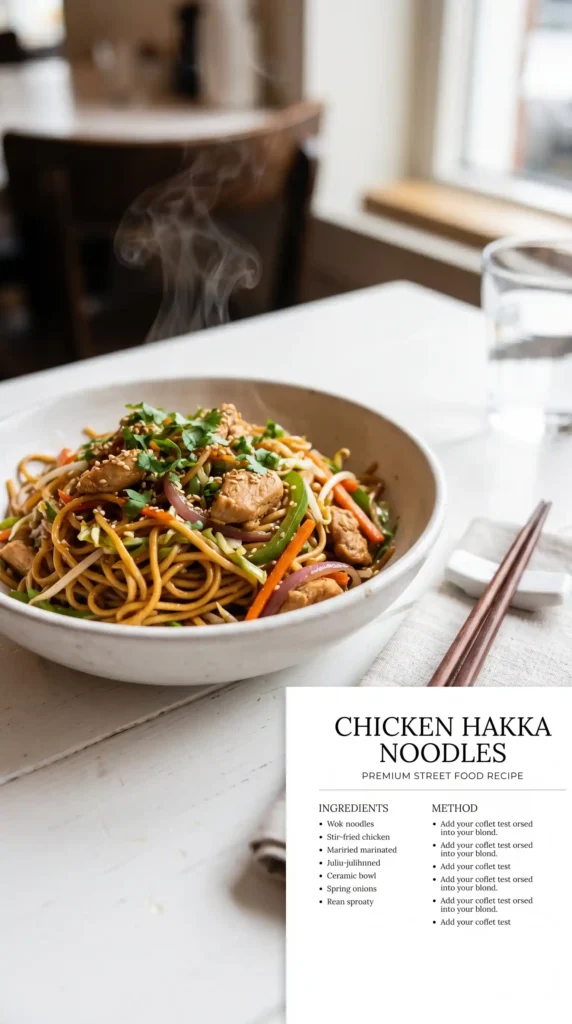
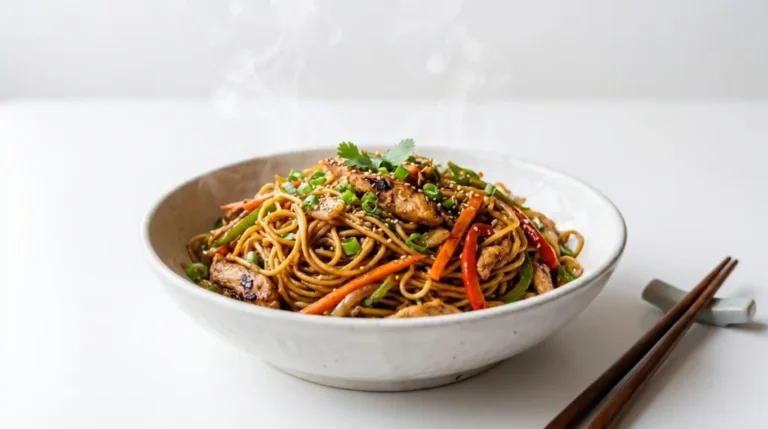
The finished Chicken Hakka Noodles should look glossy, evenly sauced, and deeply brown-golden in colour. The noodles should be separate strands rather than a clump, the vegetables should look bright and tender-crisp, and the chicken pieces should be evenly distributed throughout every portion. Serve immediately while hot and at peak texture.
Variations Worth Making
Vegetable Hakka Noodles
Omit the chicken and double the vegetable quantities — add cabbage, spring onions, and bean sprouts alongside the carrot and bell pepper. The vegetarian version cooks slightly faster since there is no chicken to manage and the vegetables require less total pan time. Add a tablespoon of toasted sesame oil at the very end of cooking for a nutty depth that the chicken version gets from the rendered chicken fat.
Schezwan Chicken Noodles
Replace the chilli sauce with 2 tablespoons of Schezwan sauce — a bold, fiery, slightly numbing condiment made from Sichuan peppercorns and dried red chillies that dramatically changes the character of the dish. Schezwan noodles are spicier, more complex, and more assertive than standard Hakka noodles. Add a teaspoon of Schezwan sauce alongside the standard sauce mixture first and increase based on your heat tolerance.
Egg Hakka Noodles
Push all the ingredients to the sides of the wok after adding the sauce and noodles. Add two beaten eggs to the centre of the cleared wok and scramble briefly until just set, then immediately toss into the noodles before the eggs fully solidify. The egg coats the noodles, adds richness, and gives the dish a slightly creamier texture profile that makes the sauce cling more evenly to every noodle strand.
Storage and Reheating Tips
Store leftover Chicken Hakka Noodles in an airtight container in the refrigerator for up to 3 days. The noodles will absorb any remaining sauce during storage and the vegetables will soften slightly from the residual heat. Reheat in a hot wok or skillet with a tablespoon of oil and a splash of water — toss constantly over high heat for 2–3 minutes until hot throughout. The reheated version loses some of the wok hei character but still tastes excellent.
Hakka noodles do not freeze well — the noodle texture changes significantly after freezing and thawing, becoming soft and mushy rather than springy. Make them fresh whenever possible since the total time from start to finish is only 30 minutes. IMO, this is genuinely one of the fastest genuinely satisfying dinners available in the noodle category.
Frequently Asked Questions
Can I use any type of noodles if hakka noodles are unavailable?
Yes. Thin egg noodles labelled for stir-frying or chow mein noodles work as the closest substitutes and produce an essentially identical result. Ramen noodles work but are slightly softer. Rice noodles produce a gluten-free version with a different but pleasant texture. Spaghetti can work in a genuine pinch — cook it very al dente (30 seconds less than packet instructions), toss with oil, and use it in the same way. The sauce and technique work regardless of noodle variety as long as the noodle holds texture under high heat.
Why do my hakka noodles clump together?
Clumping almost always results from either insufficient cold-water rinsing after cooking, insufficient oiling of the drained noodles, or allowing the noodles to sit for too long before adding them to the wok. Rinse with cold water immediately after draining, toss the drained noodles with a teaspoon of neutral oil immediately, separate any stuck strands with your fingers or tongs, and add to the hot wok within 15–20 minutes while still at room temperature. Cold or under-oiled noodles that have sat too long will re-clump in the wok.
Can I marinate the chicken before cooking?
Yes — and it improves the flavour significantly. Mix the sliced chicken with 1 teaspoon of soy sauce, 1/2 teaspoon of white pepper, 1/2 teaspoon of cornstarch, and a splash of vinegar. Let it sit for 15–30 minutes in the refrigerator. The cornstarch creates a very light coating that helps the chicken brown quickly in the hot wok and seals the surface so the juices remain inside the pieces rather than running into the pan. Marinated chicken Hakka noodles taste noticeably more developed and restaurant-quality compared to the unmarinated version.
What vegetables work best in hakka noodles?
The traditional combination of bell pepper, carrot, and onion works because each provides a different colour and a different texture after stir-frying. Other excellent additions include shredded cabbage (adds crunch and absorbs sauce beautifully), spring onions (added at the very end for freshness), bean sprouts (added in the final 30 seconds to maintain maximum crunch), mushrooms (adds earthy depth), and baby corn (provides a sweet crunch). Avoid soft vegetables like zucchini or tomato, which release too much liquid into the hot wok and dilute the sauce.
How do I get the restaurant-style smoky flavour in hakka noodles at home?
The smoky flavour — called wok hei — comes from food making brief direct contact with an extremely hot wok surface above temperatures most home stovetops cannot match. Three approaches approximate wok hei at home: use the highest heat setting your stove produces without reservation; cook in small batches rather than overloading the wok, which drops the temperature dramatically; and use a carbon steel or cast iron pan rather than a non-stick, which cannot be heated to the required temperatures safely. A screaming-hot pan with ingredients added in reasonable quantities produces noticeably more smoky flavour than a moderately heated pan with everything added at once.
Final Thoughts
These Chicken Hakka Noodles deliver the authentic Indo-Chinese noodle flavour that street stalls and restaurant woks have been producing for decades — now achievable in your own kitchen with 30 minutes, a hot wok, and the confidence to use genuinely high heat. The three-sauce formula, the proper noodle preparation, and the high-heat stir-fry technique together produce a result that tastes considerably more complex and skilled than the ingredient list suggests.
Make the sauce ahead, prep the vegetables before you start cooking, and keep the heat high from the moment oil enters the wok until the noodles are plated. That sequence produces Hakka noodles worth making every single week — which, based on experience, is exactly how often they will disappear from your table once you make them correctly for the first time.
Heat that wok until it smokes. Add the oil. Start tossing. And eat immediately while everything is at peak temperature, because Hakka noodles that have been sitting for ten minutes are excellent and Hakka noodles straight from the wok are genuinely extraordinary. The difference is worth the two minutes of logistics it takes to get everyone to the table before the wok comes off the heat.
Chicken Hakka Noodles
Ingredients
Method
- Bring a large pot of water to a rolling boil. Add 1 teaspoon of salt and the hakka noodles. Cook according to packet instructions, typically 4-6 minutes.
- Drain the cooked noodles and rinse with cold water for 30 seconds to stop the cooking process. Toss with a teaspoon of neutral oil to prevent sticking.
- Mix the soy sauce, vinegar, and chili sauce in a bowl.
- Heat a wok over high flame, add the tablespoon of oil, and when it shimmers, add the thinly sliced chicken in a single layer.
- Let the chicken sear for 60-90 seconds before stirring, then cook until no pink remains. Remove from the wok and set aside.
- Heat the wok again on high heat and add more oil if necessary. Add minced garlic, stir for 20 seconds until golden.
- Add sliced onion and stir for 90 seconds until slightly softened.
- Add julienned carrot and bell pepper, stir-frying for 2 minutes until tender-crisp.
- Return chicken to the wok, add the oil-coated noodles, and pour the sauce over everything.
- Toss aggressively for 2-3 minutes until everything is evenly combined and hot. Adjust seasoning as needed.