Servings: 4–6 | Prep Time: 15 minutes | Cook Time: 30 minutes | Total Time: 45 minutes
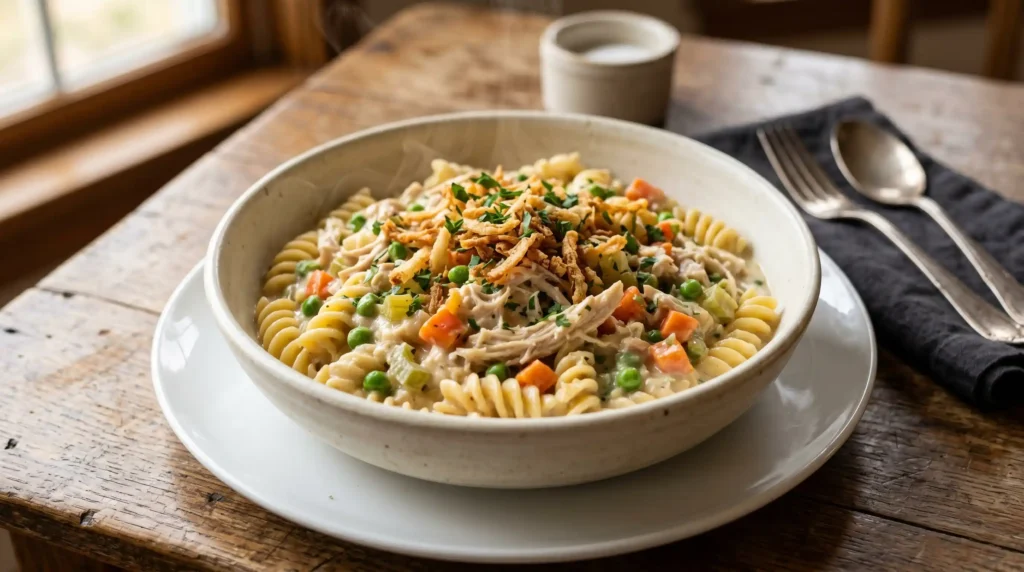
Chicken pot pie is one of those meals that feels like a warm hug on a cold evening. But let’s be honest — making a full pot pie from scratch on a Tuesday night is not always realistic. Enter Classic Chicken Pot Pie Pasta, which delivers every bit of that cozy, creamy goodness in half the time and zero pie-crust stress.
I stumbled onto this idea during a particularly uninspired weeknight when I had pasta, rotisserie chicken, and frozen peas staring back at me. One improvised sauce later, my family declared it better than the actual pot pie. High praise from a tough crowd.
Why Chicken Pot Pie Pasta Works So Well
The classic chicken pot pie flavor profile — creamy sauce, tender chicken, sweet vegetables, savory herbs — translates beautifully to pasta. The noodles absorb the sauce in a way pie crust never could, making every single bite rich and flavorful.
It’s also genuinely faster and more forgiving than traditional pot pie. No dough, no blind baking, no hoping the crust doesn’t turn soggy on the bottom. Just a deeply satisfying one-pan pasta that comes together in under an hour. What’s not to love?
Ingredients You’ll Need
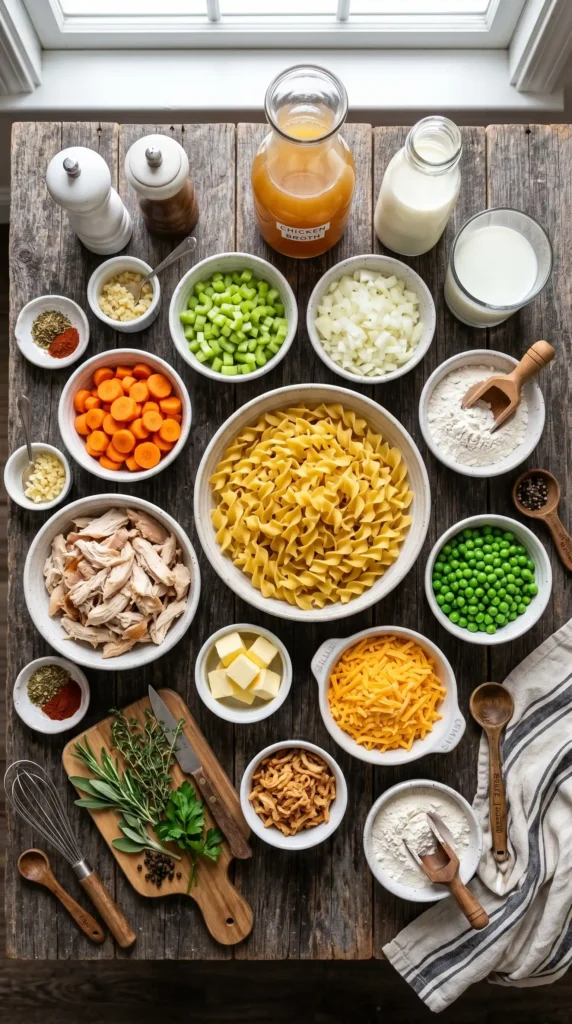
Get everything measured and prepped before you start cooking. This recipe moves at a good pace once the sauce begins, and having ingredients ready keeps things smooth.
For the Pasta:
- 12 oz egg noodles (wide egg noodles work best, but penne or rotini are great too)
- 1 tbsp salt (for the pasta water)
For the Chicken Pot Pie Sauce:
- 3 tbsp unsalted butter
- 1 medium yellow onion, finely diced (about 1 cup)
- 3 garlic cloves, minced
- 3 medium carrots, peeled and diced (about 1 cup)
- 2 celery stalks, diced (about 3/4 cup)
- 1/3 cup all-purpose flour
- 3 cups low-sodium chicken broth
- 1 cup whole milk
- 1/2 cup heavy cream
- 2.5 cups cooked chicken, shredded or chopped (rotisserie works perfectly)
- 1 cup frozen peas, thawed
- 1 tsp dried thyme
- 1/2 tsp dried sage
- 1/2 tsp onion powder
- 1/2 tsp garlic powder
- Salt and black pepper to taste
Optional Toppings:
- Fresh parsley, chopped
- Crispy fried onions or crushed butter crackers for crunch
- Shredded Parmesan cheese
How to Make Classic Chicken Pot Pie Pasta
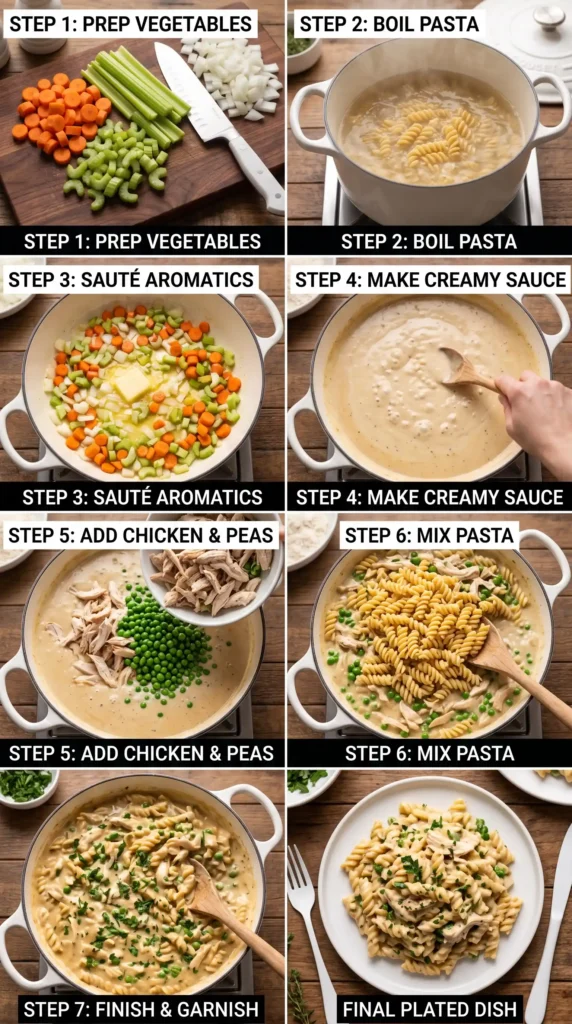
This recipe has two parallel tracks: cooking the pasta and building the sauce. Time them right and everything comes together beautifully at the end.
Step 1: Cook the Pasta
Bring a large pot of water to a rolling boil. Add 1 tablespoon of salt — salted pasta water is non-negotiable, and yes, it genuinely makes a difference in flavor. Cook your egg noodles or pasta according to the package directions until just al dente.
Do not overcook the pasta. It will continue cooking slightly when you combine it with the hot sauce. If you cook it all the way to soft before that, it’ll turn mushy in the final dish. Pull it about a minute earlier than the package says, drain it, and toss with a tiny drizzle of olive oil to prevent sticking. Set aside.
Step 2: Sauté the Vegetables
Melt the butter in a large, deep skillet or Dutch oven over medium heat. Once the butter foams and settles, add the diced onion, carrots, and celery. Stir to coat everything in the butter evenly.
Cook the vegetables for about 7–8 minutes, stirring occasionally, until they’ve softened noticeably. The onion should turn translucent and the carrots should feel tender when you press one with the back of a spoon. Don’t rush this step by cranking up the heat — low and slow softening builds a sweeter, deeper flavor base than quick high-heat cooking.
Add the minced garlic and cook for another 60 seconds, stirring constantly. Garlic burns fast and bitter, so watch it closely. You’ll smell it become fragrant almost immediately — that’s your signal it’s ready to move on.
Step 3: Build the Roux
Sprinkle the flour evenly over the softened vegetables. Stir everything together immediately and thoroughly, making sure the flour coats all the vegetables and absorbs the butter in the pan. Cook this mixture for about 2 minutes, stirring constantly.
This step creates your roux — the thickening base for the sauce. Cooking the flour for those 2 minutes removes the raw, chalky taste that would otherwise come through in the finished dish. The mixture should look slightly paste-like and smell faintly nutty when it’s ready.
Step 4: Add the Broth Gradually
Pour in the chicken broth slowly, about 1/2 cup at a time, stirring vigorously after each addition before pouring the next. This gradual approach prevents lumps from forming. If you dump all the broth in at once, the flour clumps up and you spend the next ten minutes chasing lumps around the pan.
Once all the broth is incorporated, bring the mixture to a gentle simmer over medium heat. It should start thickening noticeably within 3–4 minutes as the roux does its job. Stir occasionally and scrape the bottom of the pan to prevent sticking.
Step 5: Add the Milk and Cream
Reduce the heat to medium-low. Pour in the whole milk and heavy cream, stirring to combine fully. Add the dried thyme, dried sage, onion powder, and garlic powder at this point as well. Stir everything together and let the sauce simmer gently for about 5 minutes.
The sauce should thicken to a consistency that coats the back of a spoon — not watery, not gloppy, just a smooth, creamy coating. FYI, if it looks thinner than you’d like, give it another 2–3 minutes of gentle simmering and it’ll come together. Don’t crank the heat to rush it, or the cream may separate.
Step 6: Add the Chicken and Peas
Add the shredded cooked chicken to the sauce and stir to distribute it evenly. Let the chicken warm through in the sauce for about 2–3 minutes. Rotisserie chicken works brilliantly here because it’s already well-seasoned and adds extra depth to the sauce.
Add the thawed frozen peas and stir them in. Peas need only 1–2 minutes to heat through — they don’t need actual cooking. Taste the sauce at this point and adjust seasoning with salt and black pepper. This tasting step matters. A well-seasoned sauce turns this from good to genuinely great.
Step 7: Combine Pasta and Sauce
Add the drained pasta directly to the sauce in the skillet. Toss everything together gently but thoroughly, making sure every noodle gets coated in the creamy chicken pot pie sauce.
If the sauce looks thicker than you’d like after adding the pasta, add a splash of the reserved pasta water or a little extra chicken broth to loosen it up. Pasta absorbs sauce as it sits, so err slightly on the saucier side when you first combine — it’ll thicken further as it rests before serving.
Step 8: Taste, Adjust, and Serve
Give the finished dish one final taste. Does it need a pinch more salt? A bit more black pepper? A touch more thyme? Adjust now, not after it’s on the plate.
Serve the Classic Chicken Pot Pie Pasta immediately while it’s hot and creamy. Top individual bowls with fresh chopped parsley for color, and if you really want to lean into the pot pie vibe, scatter some crushed butter crackers or crispy fried onions on top for crunch. That textural contrast is IMO the best finishing touch this dish can get.
Best Pasta Shapes for This Recipe
The sauce is thick and creamy, so pasta shape matters more than you’d think. Here’s how the main options compare:
- Wide egg noodles: The classic choice. Their flat, broad shape holds the creamy sauce beautifully and keeps the pot pie vibe fully intact.
- Penne or rigatoni: The ridges and tubes trap sauce inside, making every bite extra flavorful. Great option if egg noodles aren’t on hand.
- Rotini or fusilli: The spirals grab and hold the sauce well. A solid choice for meal prep since the texture holds up longer.
- Spaghetti or linguine: These technically work but don’t carry the sauce as well. Save the long pasta for other recipes.
Make It Your Own: Easy Variations
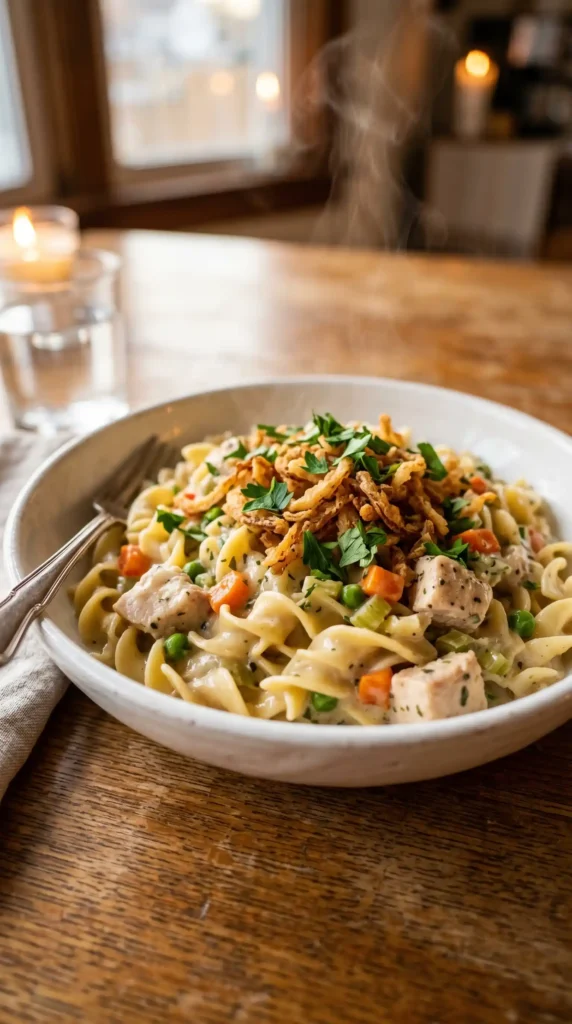
Classic Chicken Pot Pie Pasta is a flexible recipe that adapts well to what you have on hand.
- Add mushrooms: Sauté 8 oz of sliced cremini mushrooms with the vegetables in Step 2 for an earthy, savory boost.
- Use turkey: Swap chicken for leftover roast turkey. This becomes a fantastic post-Thanksgiving dinner.
- Make it lighter: Replace the heavy cream with more whole milk and reduce the butter by 1 tablespoon. The sauce will be slightly thinner but still delicious.
- Add corn: Stir in 1/2 cup frozen corn kernels alongside the peas for extra sweetness and color.
- Make it vegetarian: Skip the chicken, use vegetable broth, and double up on vegetables like mushrooms, potatoes, and green beans.
Storage and Reheating Tips
Store leftovers in an airtight container in the fridge for up to 3 days. The pasta will absorb sauce as it sits, so the leftovers will be noticeably thicker than when freshly made.
To reheat: Warm it in a saucepan over medium-low heat with a splash of chicken broth or milk to loosen the sauce back up. Stir gently until heated through. The microwave works fine for single portions — just add a splash of liquid and cover loosely before heating.
FAQs About Classic Chicken Pot Pie Pasta
Q: Can I use raw chicken instead of pre-cooked? Yes. Cut 1.5 lbs of boneless chicken breast or thighs into bite-sized pieces and cook them in the butter before adding the vegetables. Season with salt and pepper, cook until no pink remains, then remove and set aside. Add the cooked chicken back in during Step 6 just as you would rotisserie chicken.
Q: Can I make this recipe ahead of time? You can make the sauce up to 2 days ahead and refrigerate it. Cook and add the pasta fresh when you’re ready to serve, since pasta stored in sauce overnight tends to over-absorb and turn soft. Reheat the sauce gently on the stovetop, thin with a splash of broth, then stir in freshly cooked pasta.
Q: How do I keep the sauce from getting too thick? The sauce thickens as it cools and as the pasta absorbs it. Keep a cup of warm chicken broth nearby when serving. Stir in a splash as needed to bring it back to the right consistency. A little extra broth won’t dilute the flavor — it just brings the creaminess back.
Q: Can I freeze Chicken Pot Pie Pasta? The sauce freezes well but pasta does not — it becomes mushy after freezing and thawing. If you want to freeze this, make the sauce only, freeze it in an airtight container for up to 2 months, and cook fresh pasta when you’re ready to serve.
Q: What can I serve alongside this dish? This pasta is hearty enough to stand alone as a complete meal. If you want something on the side, a simple green salad with light vinaigrette balances the richness nicely. Crusty bread for mopping up extra sauce also works brilliantly — never waste a good creamy sauce.
Final Thoughts
Classic Chicken Pot Pie Pasta takes one of the most beloved comfort food recipes and makes it faster, simpler, and honestly just as satisfying. The creamy sauce, tender chicken, soft vegetables, and perfectly coated pasta hit every note that a traditional pot pie does — without the two-hour commitment.
Make this the next time you want something genuinely comforting on the table without a mountain of dishes in the sink afterward. Your family will ask for it again. And again. And probably the week after that too.
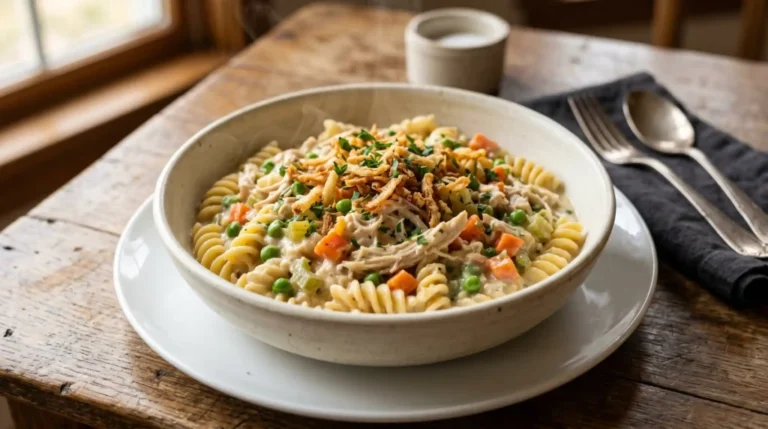
Classic Chicken Pot Pie Pasta
Ingredients
Method
- Bring a large pot of water to a rolling boil. Add 1 tablespoon of salt.
- Cook your egg noodles or pasta according to the package directions until just al dente.
- Do not overcook the pasta; pull it about a minute earlier than the package says, drain it, and toss with a tiny drizzle of olive oil.
- Set aside.
- Melt the butter in a large skillet over medium heat.
- Add the diced onion, carrots, and celery, cooking for about 7–8 minutes until softened.
- Add the minced garlic and cook for another 60 seconds.
- Sprinkle the flour over the softened vegetables and stir immediately.
- Cook this mixture for about 2 minutes, stirring constantly.
- Pour in the chicken broth slowly, about 1/2 cup at a time, stirring vigorously after each addition.
- Bring the mixture to a gentle simmer over medium heat.
- Reduce the heat to medium-low and pour in the whole milk and heavy cream.
- Add the dried thyme, dried sage, onion powder, and garlic powder.
- Add the shredded cooked chicken to the sauce and let it warm through.
- Add the thawed frozen peas and stir them in.
- Add the drained pasta directly to the sauce in the skillet.
- Toss everything together gently but thoroughly.
- Give the finished dish a final taste and adjust seasoning as needed.
- Serve immediately while hot and creamy.