Servings: 4 bowls | Prep Time: 15 minutes | Marinate: 30 minutes | Cook Time: 20 minutes | Total Time: ~1 hour 5 minutes
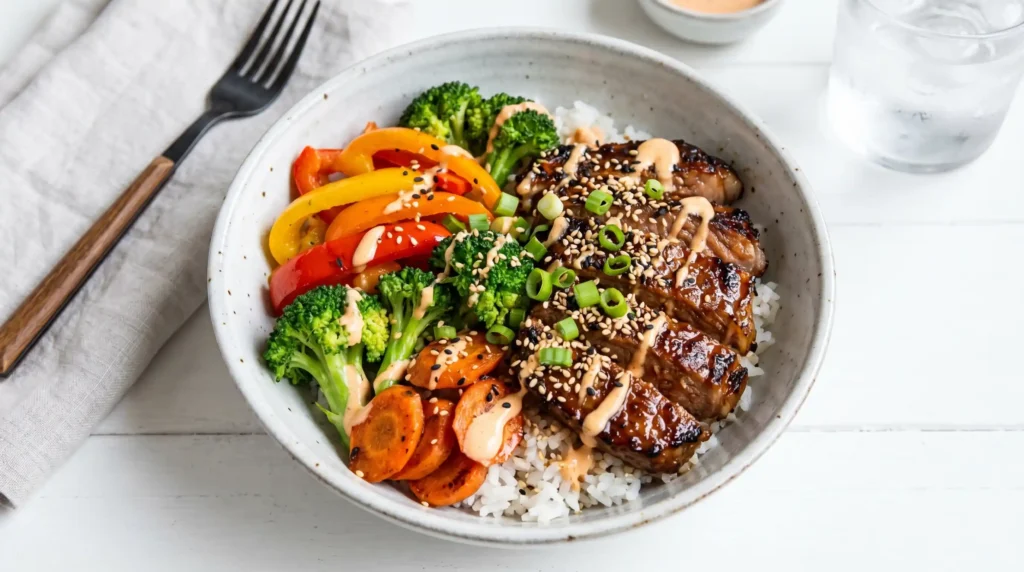
Some meals just hit different. Korean BBQ Steak Rice Bowls are one of those meals. Tender, marinated steak over fluffy rice, loaded with crisp vegetables and finished with a creamy sriracha sauce. Every single bite earns its place.
I remember making these for the first time on a random Tuesday night, mostly because I had a ribeye sitting in the fridge and zero interest in a plain steak dinner. One bowl later, I had found a new obsession.
These Korean BBQ Steak Rice Bowls deliver bold, layered flavor without requiring any special equipment or chef-level skills. If you can slice a steak and stir a sauce, you can absolutely make this happen tonight.
Ingredients You Will Need
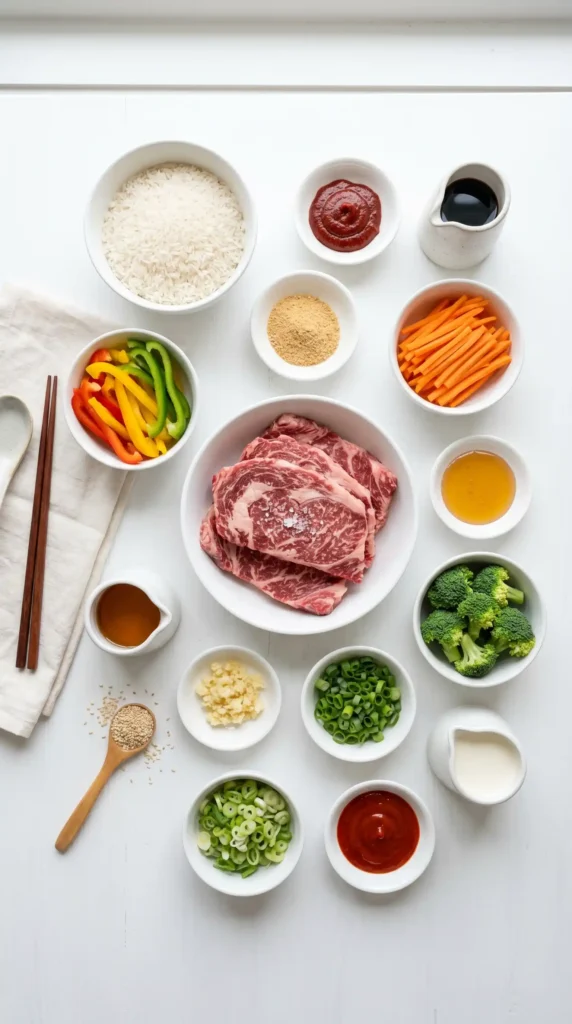
Let us get everything laid out before we start cooking. Having all your ingredients measured and prepped makes the whole process smooth and stress-free.
Base
- 2 cups cooked jasmine or short-grain rice (acts as the comforting, sticky base for your bowl)
- 1 pound ribeye or sirloin steak (both cuts are tender and juicy; ribeye has more marbling, sirloin is leaner)
Marinade
- 1 tablespoon soy sauce
- 1 tablespoon sesame oil
- 1 tablespoon gochujang (Korean chili paste that adds deep, smoky heat)
- 1 tablespoon honey (balances the spiciness and helps create caramelization)
Vegetables
- 1 cup mixed vegetables such as bell pepper, carrot, and broccoli (add crunch, color, and nutrition)
Creamy Sauce
- 1/2 cup heavy cream
- 1 tablespoon sriracha (adjust to your heat preference)
Garnishes
- Chopped green onions, to taste
- Sesame seeds, to taste
Why Korean BBQ Steak Rice Bowls Work So Well
Ever wonder why Korean BBQ flavors just work so incredibly well together? It comes down to the balance of sweet, salty, spicy, and umami hitting your taste buds at the same time.
Gochujang is the real MVP here. It is not just hot sauce. It carries a deep, fermented, slightly sweet heat that regular chili paste simply cannot replicate. Combined with soy sauce and sesame oil, it creates a marinade that tastes like it took hours to develop.
The honey does two important jobs. It rounds off the sharpness of the gochujang and, when it hits the hot pan, it caramelizes beautifully on the outside of the steak. That caramelized crust is what gives each slice that irresistible color and texture.
And then there is the creamy sriracha sauce. IMO, this is what separates a good bowl from a great one. It cools down the heat slightly while adding a rich, silky element that ties everything together.
How to Make Korean BBQ Steak Rice Bowls
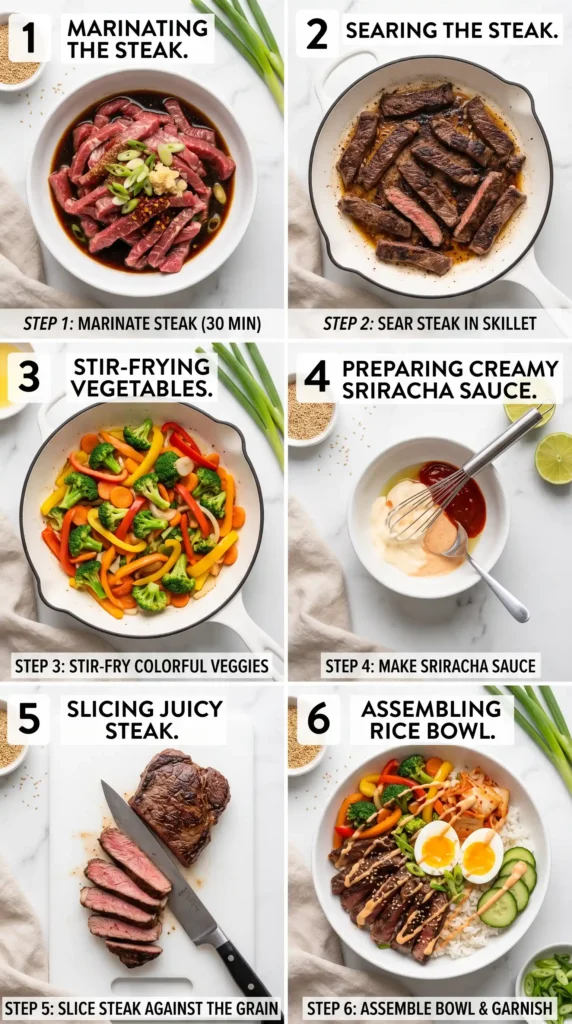
Step 1: Make the Marinade
Grab a medium bowl and combine the soy sauce, sesame oil, gochujang, and honey. Whisk everything together until fully blended. The mixture should look glossy, dark, and slightly thick from the gochujang and honey working together.
Take a second to smell this marinade. That deep, toasty, faintly spicy aroma is your preview of what the steak is going to taste like. Do not skip whisking it well; you want everything evenly distributed before the steak goes in.
If your gochujang is particularly thick, add a teaspoon of warm water to loosen it slightly. This helps it coat the steak more evenly rather than clumping in spots.
Step 2: Marinate the Steak
Place your ribeye or sirloin in the bowl with the marinade. Use your hands or a spoon to turn the steak and make sure every surface gets coated. Do not leave any dry spots; the marinade is where all the flavor lives.
Cover the bowl with plastic wrap or transfer the steak to a zip-lock bag, pressing out the air before sealing. Place it in the refrigerator for at least 30 minutes.
For deeper flavor, marinate for 2 to 4 hours. If you have the luxury of time, overnight marinating gives you a steak that is incredibly flavorful all the way through, not just on the surface.
Take the steak out of the fridge about 10 to 15 minutes before you plan to cook it. Letting it come closer to room temperature means it will cook more evenly in the pan, without a cold center while the outside overcooks.
Step 3: Cook the Steak
Heat a cast iron skillet or heavy-bottomed pan over medium-high heat. You want the pan genuinely hot before the steak goes in. A hot pan is what creates that beautiful sear and caramelized crust, not a lukewarm one.
Add a thin film of neutral oil to the pan, just enough to prevent sticking. Carefully lay the steak flat in the pan. You should hear a confident sizzle the moment it makes contact. If you do not, the pan needs more time to heat up.
Cook for 3 to 4 minutes on the first side without moving it. This is critical. Moving the steak around breaks the sear and prevents that gorgeous caramelized exterior from forming. Just let it sit and do its thing.
Flip the steak once and cook the second side for another 3 to 4 minutes. For a medium doneness, you are aiming for an internal temperature of around 135 to 140 degrees Fahrenheit. Use a meat thermometer if you want to be precise.
Once the steak reaches your preferred doneness, transfer it to a cutting board and let it rest for at least 5 minutes. Resting is non-negotiable. FYI, cutting into steak too soon sends all the juices running out onto the board, leaving you with dry, sad meat.
Step 4: Stir-Fry the Vegetables
While the steak rests, work quickly in the same skillet. Leave the pan on medium-high heat; all those browned bits and leftover marinade at the bottom of the pan add tremendous flavor to the vegetables.
Toss in your mixed vegetables. Bell peppers, carrots, and broccoli all work beautifully here. Spread them into a single layer and let them sit for about 1 minute before stirring. This gives them time to pick up some color rather than just steaming.
Stir-fry the vegetables for 3 to 4 minutes total, until they are tender but still have a slight bite to them. Overcooked vegetables turn soft and lose both their crunch and their vibrant color, which makes the bowl look and feel less exciting.
Season lightly with a small pinch of salt if needed, but taste first. The residual marinade in the pan already carries a lot of seasoning, and you want to be careful not to overdo it.
Step 5: Make the Creamy Sriracha Sauce
Pour the heavy cream into a small saucepan and set it over low heat. You do not want it to boil; just a gentle, steady warmth is enough. Stir it occasionally as it heats up.
Once the cream is warm and beginning to steam lightly, slowly stir in the sriracha. Start with 1 tablespoon and taste as you go. The cream will gradually absorb the heat and take on a beautiful pinkish-orange color.
Keep stirring over low heat until the sauce thickens enough to coat the back of a spoon. This usually takes about 3 to 4 minutes. Do not rush it with high heat or the cream may separate and turn grainy.
If you want more heat, add an extra half tablespoon of sriracha. If you prefer it milder, a small splash of extra cream will dial it back. This sauce is forgiving and easy to adjust to your liking.
Step 6: Slice the Steak
After the steak has rested for 5 minutes, slice it against the grain into thin, bite-sized strips. Cutting against the grain shortens the muscle fibers and makes each piece noticeably more tender in your mouth.
Look at the steak surface and identify which direction the lines of the muscle run. Then cut perpendicular to those lines. This one simple technique makes a significant difference, especially with sirloin, which can feel chewy if sliced with the grain.
Step 7: Assemble Your Bowls
Scoop the cooked rice evenly between four bowls. Use warm, freshly cooked rice for the best texture. Pack it loosely so there is room for all the toppings without everything tumbling over the edges.
Arrange the sliced steak over the rice in a neat fan or pile, whichever you prefer. Then add a generous scoop of the stir-fried vegetables alongside the steak. Variety in each bite is what makes this bowl so satisfying.
Drizzle the warm creamy sriracha sauce generously over everything. Do not be shy here. The sauce is the finishing touch that pulls every element of the bowl together into one cohesive, flavor-packed bite.
Finish with a scatter of chopped green onions and a sprinkle of sesame seeds. The green onions add a fresh, mild sharpness that cuts through the richness of the sauce and the steak. The sesame seeds add a subtle nuttiness and a pleasant little crunch.
Tips to Make These Bowls Even Better
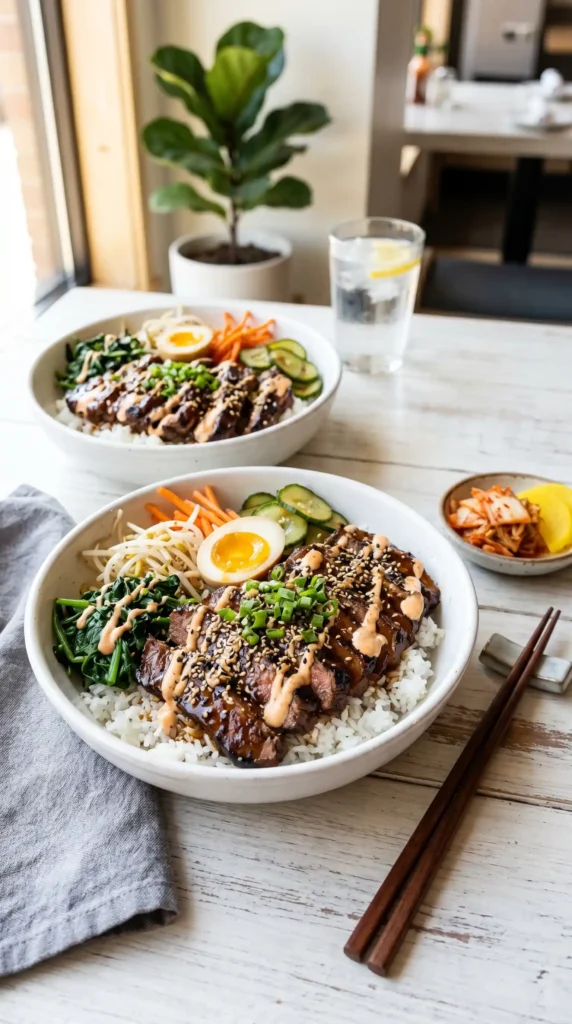
Want to level up your Korean BBQ Steak Rice Bowls without adding extra work? These small adjustments make a real difference.
- Use short-grain rice: Short-grain rice is stickier and holds up better under toppings and sauce than long-grain. Jasmine works well too, but short-grain gives the most authentic texture.
- Ribeye over sirloin for max flavor: Ribeye has more fat marbling, which makes it richer and more forgiving on high heat. Sirloin works great but benefits even more from a longer marinade time.
- Do not crowd the pan: Cook the steak in a single layer with nothing else in the pan. Crowding drops the temperature and turns your sear into a steam, which you absolutely do not want.
- Taste the sauce as you build it: Sriracha brands vary in heat level. Always taste and adjust before serving rather than following the quantity blindly.
- Prep ahead for easy weeknight meals: The marinade takes 5 minutes to make. You can marinate the steak the night before so weeknight assembly becomes fast and effortless
Frequently Asked Questions
Can I use a different cut of steak for this recipe?
Yes, absolutely. Ribeye and sirloin are the top choices for Korean BBQ Steak Rice Bowls, but flank steak and skirt steak also work well. Both are thinner, which means faster cooking times, and they absorb marinades deeply. Just make sure to slice them thinly against the grain after resting.
Can I make Korean BBQ Steak Rice Bowls ahead of time?
Yes, and meal prepping this recipe is genuinely smart. Marinate and cook the steak, stir-fry the vegetables, and store everything in separate containers in the fridge for up to 3 days. Reheat the steak gently in a skillet and warm the sauce over low heat before assembling. Cook fresh rice or reheat stored rice with a splash of water.
What can I substitute for gochujang if I cannot find it?
If you cannot find gochujang at your local store, try a mix of 1 teaspoon of regular chili paste and half a teaspoon of miso paste. This combination roughly mimics the fermented, spicy, and slightly sweet quality of gochujang. It is not identical, but it gets you much closer than plain hot sauce.
How do I make this recipe less spicy?
Reduce the gochujang in the marinade to half a tablespoon and scale back the sriracha in the cream sauce to 1 teaspoon. You can also add a little extra honey to the marinade, which softens the heat. The dish will still carry all its Korean BBQ flavor without the strong kick.
Can I cook the steak on an outdoor grill instead of a skillet?
Yes, and grilling adds a fantastic smoky char that works beautifully with this marinade. Preheat your grill to medium-high and cook the steak for 3 to 4 minutes per side. Let it rest before slicing, just as you would with the skillet method. The caramelization from the honey and gochujang on the grill grates is next level.
Final Thoughts
Korean BBQ Steak Rice Bowls bring together everything a great meal needs: bold flavor, satisfying texture, vibrant color, and a sauce that makes you want to lick the bowl. And you can make all of it in just over an hour.
The marinade does the heavy lifting. The steak just needs a hot pan and a little patience. The creamy sriracha sauce ties it all together in the most delicious way possible.
Whether you make this on a weeknight for yourself or serve it to guests who think you have suddenly become a serious cook, these bowls deliver every single time. Go ahead and make them tonight. You will not regret it.
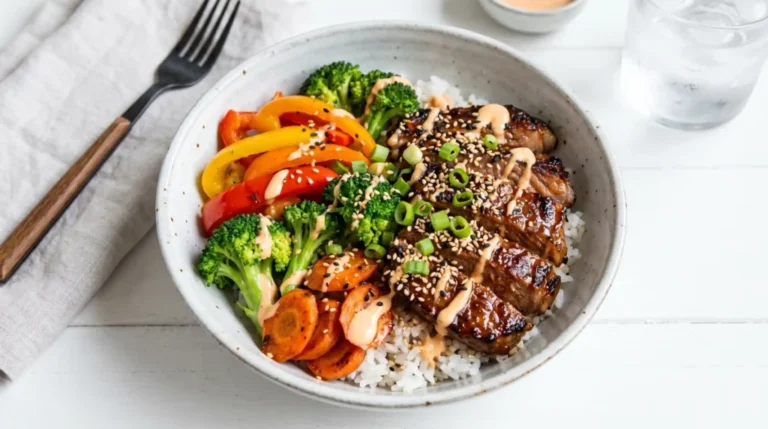
Korean BBQ Steak Rice Bowls
Ingredients
Method
- Make the marinade by combining soy sauce, sesame oil, gochujang, and honey in a bowl. Whisk until fully blended.
- Marinate the steak for at least 30 minutes, or up to 4 hours for deeper flavor.
- Heat a skillet over medium-high heat and add a thin film of oil.
- Cook the steak for 3 to 4 minutes on each side, aiming for an internal temperature of 135-140°F for medium doneness.
- Allow the steak to rest for at least 5 minutes before slicing.
- Stir-fry the mixed vegetables in the same skillet until they are tender but still crunchy.
- Make the creamy sriracha sauce by heating heavy cream and stirring in sriracha.
- Slice the steak against the grain into thin strips.
- Assemble the bowls by layering rice, sliced steak, stir-fried vegetables, and drizzling with creamy sriracha sauce.
- Garnish with green onions and sesame seeds.