Prep Time: 10 minutes | Freeze Time: 2-3 hours | Total Time: About 3 hours | Servings: 10-12 pieces
A snack that takes 10 minutes to make, costs almost nothing, tastes like dessert, and still counts as healthy? That’s peanut butter yogurt bark, and yes, it’s every bit as good as the internet keeps saying it is.
I made my first batch on a random Tuesday afternoon when I needed something sweet but didn’t want to commit to actual baking. Fifteen minutes of prep, a few hours in the freezer, and I had something genuinely impressive sitting on my counter. It became a weekly staple almost immediately.
Whether you’re looking for a high-protein snack, a lighter dessert option, or something fun to make with the kids, this recipe delivers every time. Let’s walk through exactly how to make it right.
What Is Peanut Butter Yogurt Bark?
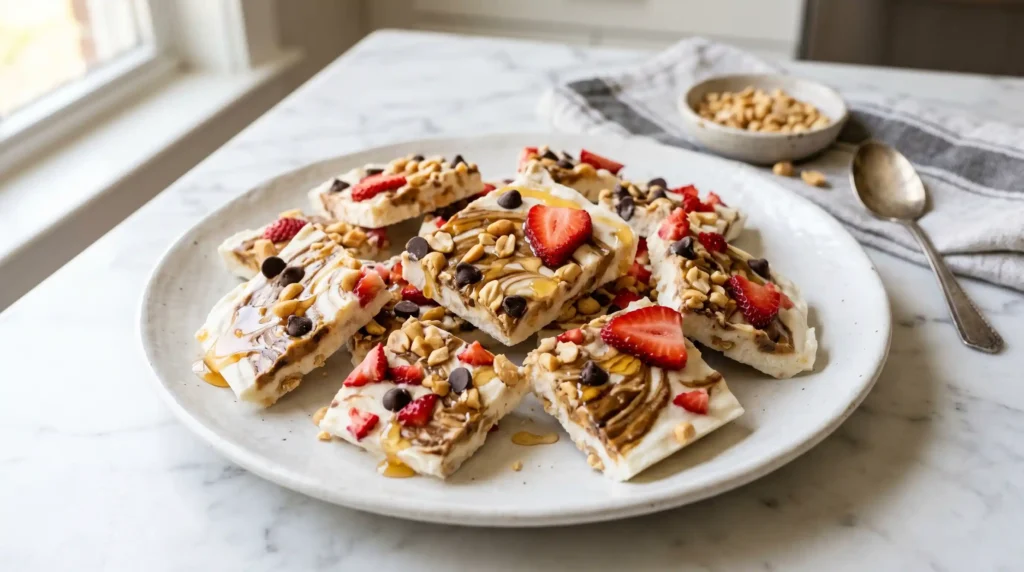
Yogurt bark is essentially a frozen yogurt sheet loaded with toppings, broken into pieces after freezing. Think of it as a lighter, protein-packed alternative to chocolate bark. The peanut butter version adds richness, creaminess, and a satisfying savory-sweet balance that plain yogurt bark simply doesn’t have.
The base is Greek yogurt mixed with peanut butter and a sweetener, spread thin on a lined baking sheet, topped with your choice of mix-ins, and frozen until solid. Once frozen, you break it into irregular pieces just like you would with chocolate bark.
The texture is cold, creamy, and slightly chewy from the freezing process. It’s somewhere between frozen yogurt and ice cream, but with way more protein and far less guilt. IMO, it might be the most underrated freezer snack in existence.
Why Peanut Butter Yogurt Bark Deserves a Permanent Spot in Your Freezer
This recipe checks every box most snacks fail to hit simultaneously. It’s genuinely quick to make, uses pantry staples, requires zero cooking skills, and produces results that feel indulgent even though they’re reasonably nutritious.
Greek yogurt brings protein, calcium, and probiotics to the table. Peanut butter adds healthy fats and extra protein. Together they create a base that keeps you full and satisfied in a way that most sweet snacks completely fail to do.
And honestly, the visual appeal is hard to beat. A tray of colorful yogurt bark with fruit, granola, and drizzled chocolate looks like something from a cafe display case. It tastes even better than it looks.
Ingredients for Peanut Butter Yogurt Bark
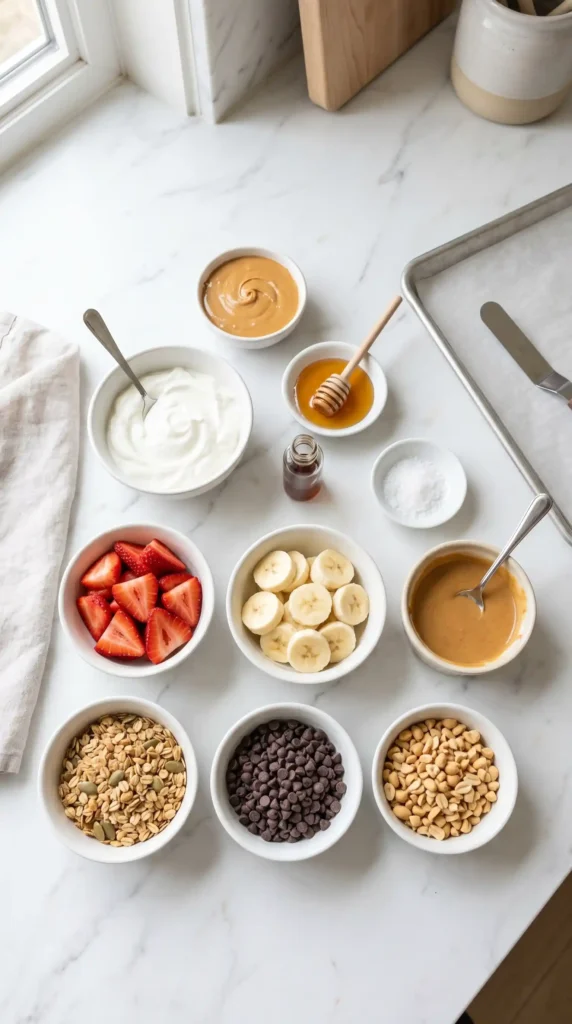
The ingredient list is refreshingly short. You need a handful of things, most of which are probably already in your kitchen. Here’s exactly what you need for 10-12 pieces:
For the Base
- 2 cups (480g) plain full-fat Greek yogurt
- 1/3 cup (85g) creamy peanut butter
- 3 tablespoons honey or pure maple syrup
- 1 teaspoon pure vanilla extract
- 1 pinch of fine sea salt
For the Toppings
- 1/4 cup (40g) mini chocolate chips or chopped dark chocolate
- 1/4 cup (30g) granola
- 1/4 cup (40g) sliced fresh strawberries or banana slices
- 2 tablespoons chopped roasted peanuts
- 1 tablespoon honey for drizzling
Optional Add-Ins for the Base
- 1 tablespoon cocoa powder for a chocolate peanut butter base
- 1/2 teaspoon cinnamon for warmth
- 1 tablespoon chia seeds for extra fiber and texture
FYI, full-fat Greek yogurt works best here. Low-fat versions have a higher water content, which makes the bark icier and less creamy after freezing. The fat content in full-fat yogurt creates a smoother, more satisfying frozen texture that’s much closer to ice cream.
How to Make Peanut Butter Yogurt Bark From Start to Finish
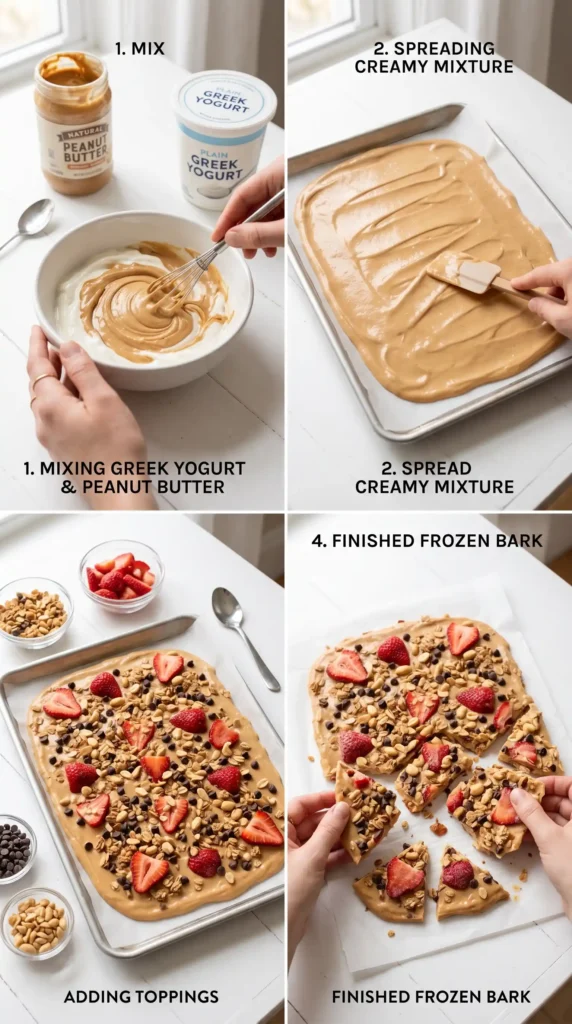
This recipe involves almost no cooking. The process is mostly about mixing, spreading, and waiting. But the details within each step genuinely affect the final result, so pay attention to the specifics.
Step 1: Line Your Baking Sheet
Start with a standard rimmed baking sheet, roughly 9×13 inches or larger. Line it completely with parchment paper, making sure the paper extends slightly up the sides of the pan. This extension matters because it gives you something to grip when you lift the frozen bark off the sheet later.
Smooth the parchment paper as flat as possible against the surface of the pan. Creases and wrinkles in the paper transfer to the underside of the bark and can cause it to crack unevenly when you break it apart. A flat surface means cleaner breaks and better-looking pieces.
If your parchment keeps lifting at the corners, place a small dab of yogurt under each corner to anchor it in place before you spread the full mixture. This trick saves a lot of frustration during the spreading step.
Step 2: Mix the Yogurt Base
Add the 2 cups of plain Greek yogurt to a medium mixing bowl. Spoon in the 1/3 cup of creamy peanut butter, 3 tablespoons of honey or maple syrup, 1 teaspoon of vanilla extract, and a pinch of fine sea salt.
Use a rubber spatula or a spoon to stir everything together until completely smooth and well combined. The peanut butter can be stubborn at first and resist blending into the yogurt evenly. Keep stirring in circular motions, scraping the bottom and sides of the bowl, until you see no streaks of plain yogurt or unmixed peanut butter.
Taste the base at this stage and adjust the sweetness if needed. Different brands of Greek yogurt vary in natural tartness, and different peanut butters vary in saltiness. If it tastes too tart, add another teaspoon of honey. If it needs more peanut butter flavor, stir in an extra tablespoon.
The finished base should taste slightly sweeter than you’d want the final product to taste. Freezing dulls sweetness slightly, so a base that tastes just right at room temperature often comes out tasting slightly under-sweetened after a few hours in the freezer.
Step 3: Spread the Base Onto the Baking Sheet
Pour the entire yogurt base onto the center of the lined baking sheet. Use the rubber spatula to spread it outward in an even layer. Aim for a thickness of about 1/4 to 1/3 of an inch throughout.
Consistency in thickness is important. Areas that are thicker than the rest take longer to freeze solid, while thinner areas freeze faster and become brittle. Uneven thickness means some pieces end up with a perfect creamy texture while others turn icy and hard.
Work quickly during this step. Greek yogurt starts firming up slightly at room temperature as you spread it, and if you take too long, the surface becomes difficult to smooth out cleanly. The entire spreading process should take about 2 to 3 minutes at most.
Once spread, pick up the baking sheet and tilt it gently in a few directions to help the yogurt settle into any thin spots. This levels out the surface much more effectively than trying to fix uneven areas with the spatula after the fact.
Step 4: Add the Toppings
Now comes the fun part. Scatter your toppings across the surface of the yogurt base immediately while it’s still soft and sticky enough to hold them in place. Start with the heavier toppings first, like the granola and chopped peanuts, pressing them gently into the surface with your fingertips.
Add the sliced strawberries or banana pieces next, distributing them across the bark so every piece gets at least one or two pieces of fruit when you break it apart. Press the fruit down lightly as well so it adheres to the yogurt surface.
Scatter the mini chocolate chips or chopped dark chocolate across the top. Then drizzle the tablespoon of honey over the entire surface in a thin stream, moving your wrist back and forth to create a zigzag pattern. This final drizzle adds visual appeal and a little extra sweetness in every bite.
Stand back and look at the whole sheet from above before you put it in the freezer. Make sure the toppings look evenly distributed. Bark that has all its toppings clustered in one corner looks sloppy and means half the pieces are boring. Take 30 extra seconds to redistribute anything that looks uneven.
Step 5: Freeze the Bark
Slide the baking sheet carefully into your freezer on a flat, level surface. An uneven surface causes the yogurt to shift and pool to one side before it freezes solid, which ruins the uniform thickness you worked to achieve in the spreading step.
Freeze the bark for a minimum of 2 to 3 hours. The surface may look frozen and firm after just 1 hour, but the center of the bark needs more time to freeze completely through. Pulling it too early gives you bark that’s hard on the outside but still soft and sticky in the middle.
For the cleanest breaks, freeze the bark overnight. A fully frozen bark snaps crisply and produces sharp, clean edges when you break it. A partially frozen bark tears and squashes instead of snapping, which damages the toppings and makes the pieces look messy.
Step 6: Break and Serve
When the bark is fully frozen, remove the baking sheet from the freezer and let it sit at room temperature for just 2 to 3 minutes. This brief rest makes the parchment paper easier to peel away from the bottom of the bark without sticking.
Lift the bark off the sheet by gripping the parchment paper extensions on the sides. Peel the paper away from the underside and place the bark on a clean cutting board or flat surface. Use your hands to break it into irregular pieces of any size you like.
Serve immediately and enjoy the satisfying snap. Any pieces you don’t eat right away should go straight back into the freezer in an airtight container or zip-lock bag. Peanut butter yogurt bark melts quickly at room temperature, especially in a warm kitchen.
Tips for the Best Peanut Butter Yogurt Bark Every Time
- Use creamy peanut butter: Natural peanut butter with oil separation can make the base grainy. Stick with well-mixed creamy peanut butter for the smoothest texture.
- Don’t skip the salt: That pinch of sea salt in the base is not optional. It brings out the peanut butter flavor and balances the sweetness in a way that makes the whole bark taste more complex.
- Add toppings fast: Greek yogurt firms up quickly once spread. Get your toppings ready in small bowls before you start spreading so you can add them immediately.
- Freeze on a level surface: Even a slightly tilted freezer shelf causes the yogurt to pool unevenly before it sets. Check that your shelf is level before placing the tray inside.
- Store between parchment layers: When storing multiple pieces in a container, separate layers with parchment paper to prevent them from freezing together into one solid block.
Tasty Variations to Try
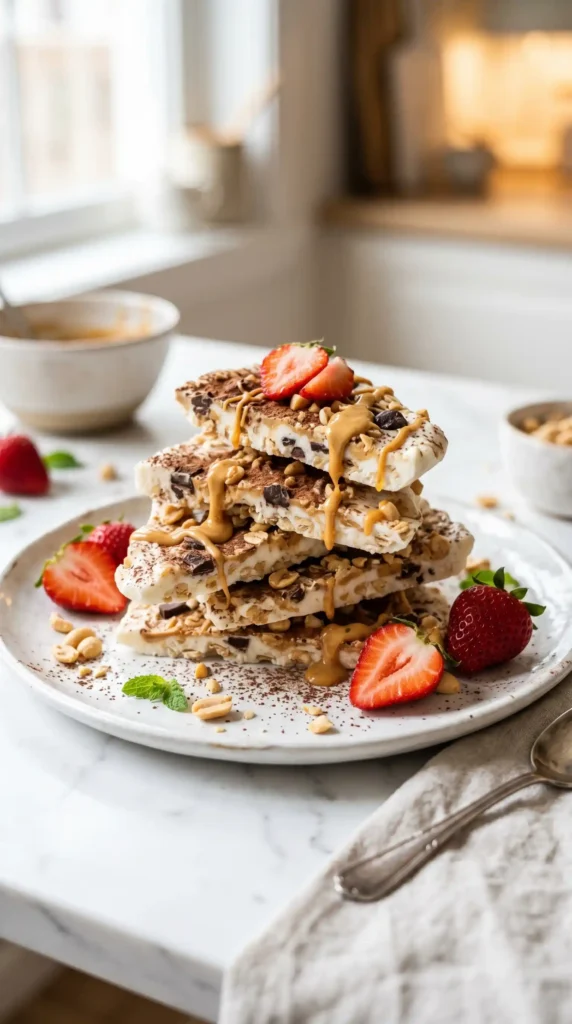
Chocolate Peanut Butter Yogurt Bark
Add 2 tablespoons of unsweetened cocoa powder to the yogurt base and stir until fully combined. The cocoa creates a chocolate peanut butter base that tastes like a frozen Reese’s cup. Top with extra peanut butter chips and a drizzle of melted dark chocolate for maximum effect.
PB and Jelly Yogurt Bark
Drop small spoonfuls of strawberry or raspberry jam across the surface of the spread yogurt base. Use a toothpick to swirl the jam lightly into the yogurt before adding toppings. The swirled jam creates a gorgeous marbled pattern and adds a fruity contrast to the peanut butter base.
Banana Peanut Butter Yogurt Bark
Mash one ripe banana into the yogurt base before spreading. The banana adds natural sweetness, which means you can reduce the honey to just 1 tablespoon. Top with banana slices, walnuts, and a drizzle of peanut butter thinned with a little warm water for easy drizzling.
Frequently Asked Questions About Peanut Butter Yogurt Bark
1. How long does peanut butter yogurt bark last in the freezer?
Stored in an airtight container or freezer bag, peanut butter yogurt bark keeps well for up to 2 weeks. After that, the texture starts to degrade and ice crystals can form on the surface. For best flavor and texture, make a fresh batch every week or two rather than making one giant batch to last a month.
2. Can I use regular yogurt instead of Greek yogurt?
You can, but the result will be icier and less creamy. Regular yogurt has a much higher water content than Greek yogurt, which means it freezes harder and develops more ice crystals. If regular yogurt is all you have, strain it through a cheesecloth for a few hours first to remove excess liquid before using it.
3. Can I make peanut butter yogurt bark dairy-free?
Yes, coconut milk yogurt or almond milk yogurt both work well as substitutes. Choose a thick, full-fat coconut yogurt for the best texture because thin plant-based yogurts freeze icy just like regular low-fat yogurt does. The flavor will be slightly different but still delicious.
4. Why does my yogurt bark crack when I try to break it?
Cracking before breaking usually means the bark froze too quickly in a very cold freezer, or it sat out at room temperature too long before you tried to break it. Let it rest for just 2 to 3 minutes after pulling from the freezer, then break it while it’s still firmly frozen but not brittle from extreme cold.
5. Can I add protein powder to the yogurt base?
Absolutely. Stir 1 to 2 tablespoons of vanilla or unflavored protein powder into the yogurt base along with the other ingredients. Start with 1 tablespoon and taste before adding more because some protein powders can make the base taste chalky in large amounts. Vanilla-flavored powder works best here.
6. Do I have to use parchment paper?
Technically you can use a silicone baking mat as an alternative, but avoid going without any liner at all. Frozen yogurt sticks powerfully to an unlined metal baking sheet, and removing it without tearing the bark apart is nearly impossible. Parchment paper is the easiest, most reliable option every single time.
Make Your First Batch of Peanut Butter Yogurt Bark This Week
Peanut butter yogurt bark earns every bit of its popularity. It requires minimal effort, uses simple ingredients, and produces a snack that genuinely satisfies sweet cravings without leaving you feeling like you overdid it.
The 10-minute prep time and nearly infinite topping combinations mean you can make a different version every week without ever getting bored. That’s a rare quality in a recipe.
Pull out a baking sheet, grab your Greek yogurt and peanut butter, and make a batch tonight. Three hours from now, you’ll have a freezer full of something that actually deserves the hype.
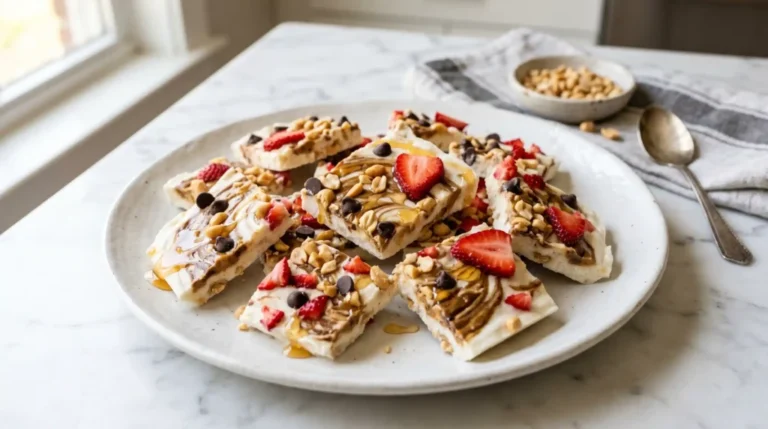
Peanut Butter Yogurt Bark
Ingredients
Method
- Line a standard rimmed baking sheet (9x13 inches or larger) with parchment paper.
- In a medium mixing bowl, add Greek yogurt, peanut butter, honey or maple syrup, vanilla extract, and sea salt. Stir until smooth.
- Adjust the sweetness of the base as needed by adding more honey or peanut butter.
- Spread the yogurt base onto the lined baking sheet to a thickness of 1/4 to 1/3 inch.
- Immediately add toppings while the yogurt base is still soft.
- Freeze the bark for 2 to 3 hours until solid.
- Remove from the freezer and let sit for 2 to 3 minutes before breaking into pieces.