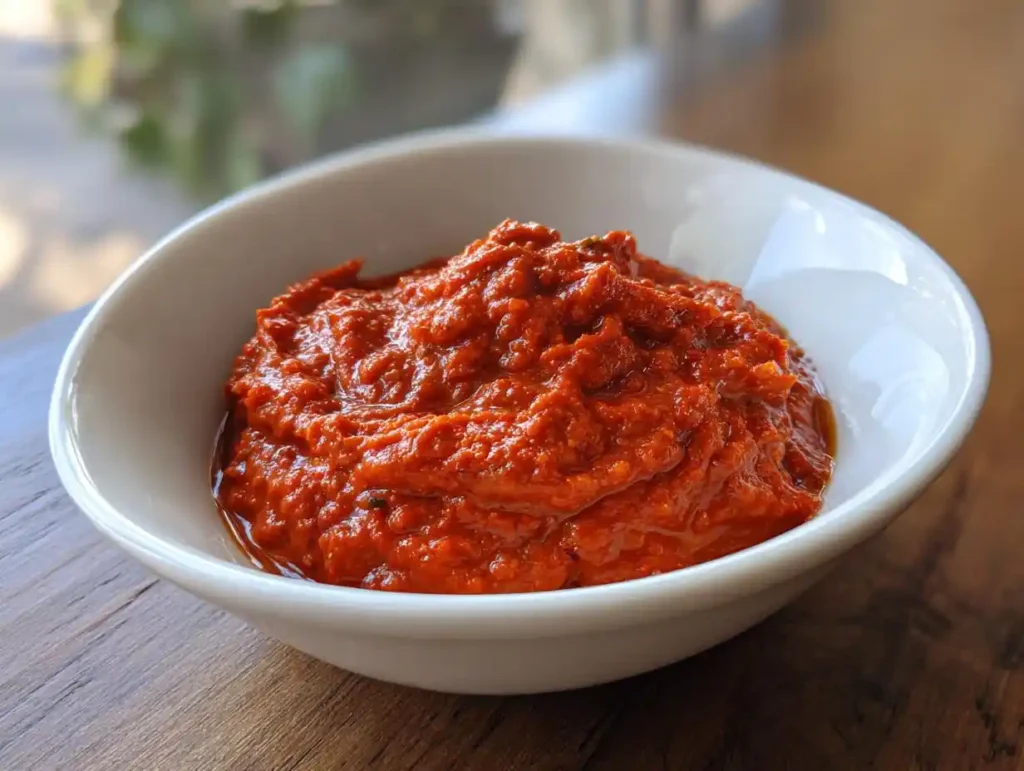
Tired of the same three sauces on rotation in your kitchen? Smoky Romesco Sauce is about to become the one you reach for constantly, and it takes less time than ordering delivery.
Servings: about 1½ cups (6 servings) | Prep time: 10 minutes | Cook time: 15 minutes | Total time: 25 minutes
I first tried romesco at a tiny restaurant and spent weeks afterward trying to recreate it at home. This version nails that smoky, nutty balance without demanding a trip to a specialty grocery store.
Why Smoky Romesco Sauce Deserves a Spot in Your Fridge
Romesco started as a Spanish fisherman’s sauce, but honestly, it works on almost anything you put in front of it. Roasted peppers, toasted almonds, and smoked paprika combine into something richer than the sum of its parts.
Have you ever had a sauce that makes plain vegetables taste like a restaurant side dish? That’s romesco’s whole job, and it does it well.
It’s also low-effort for how impressive it looks. IMO, that’s the kind of recipe worth keeping on repeat.
Ingredients You’ll Need
Nothing obscure here. Every ingredient is easy to find at a regular grocery store.
- 2 large roasted red peppers, peeled and roughly chopped
- ½ cup raw almonds
- 2 cloves garlic
- 1 slice rustic bread, toasted
- 2 tablespoons red wine vinegar
- ½ teaspoon smoked paprika
- ¼ cup extra-virgin olive oil
- ½ teaspoon salt, plus more to taste
Jarred roasted peppers work fine if you’re short on time. Just drain them well and pat them dry before using.
How to Make Smoky Romesco Sauce
This sauce comes together fast, but a little care in each step makes a noticeable difference in the final texture and flavor. Let’s walk through it slowly.
Step 1: Roast and Peel the Peppers
If you’re starting with fresh peppers, place them under a broiler set to high or directly over a gas flame. Char the skins until they’re blackened on all sides, turning every minute or two, which usually takes about 5 to 7 minutes total.
Transfer the charred peppers to a bowl and cover it tightly with plastic wrap or a plate. Let them steam for about 10 minutes; this loosens the skin so it practically slides off with your fingers.
Once cool enough to handle, peel away the blackened skin, remove the seeds and stem, and roughly chop the flesh. If you’re using jarred peppers instead, just drain and pat them dry before moving to the next step.
Step 2: Toast the Bread and Almonds
While the peppers cool, heat a dry skillet over medium heat with no oil. Toast the slice of bread for about 30 seconds per side until it turns golden and slightly crisp on the surface.
Using the same skillet, add the almonds and toast them for 2 to 3 minutes, shaking the pan often so they don’t burn. You’ll know they’re ready when they smell noticeably nutty and toasted.
Let both the bread and almonds cool for a few minutes before adding them to the blender. Warm ingredients can sometimes mess with how smoothly everything blends together.
Step 3: Blend the Base Ingredients
Add the roasted peppers, toasted almonds, garlic, toasted bread, red wine vinegar, and smoked paprika into a blender or food processor. Pulse a few times first to break everything down before moving to a continuous blend.
Blend on high for about a minute, stopping once to scrape down the sides so nothing gets left behind unblended. You want the mixture mostly smooth at this stage, with just a little texture remaining.
Step 4: Stream in the Olive Oil
With the blender still running on low or medium speed, slowly pour in the olive oil in a thin, steady stream. This gradual addition helps the sauce emulsify into a creamy, cohesive texture instead of separating.
Rushing this step usually means an oilier, less unified sauce. Take the extra thirty seconds; it genuinely makes a difference in how the final texture turns out.
Step 5: Season and Finish
Stop the blender and taste your sauce directly off a spoon. Add the salt gradually, tasting as you go, since the exact amount you need depends on how salty your roasted peppers already were.
If the sauce feels too thick, blend in warm water one tablespoon at a time until it loosens up. If it tastes too tangy from the vinegar, a small pinch of sugar smooths that edge right out.
Tips for the Best Romesco Sauce
A few small adjustments turn a good batch into a genuinely great one.
- Char peppers thoroughly for maximum smoky depth
- Add warm water gradually if the sauce turns out too thick
- Balance sharp vinegar with a pinch of sugar or honey if needed
- Let the sauce sit at room temperature for 30 minutes before serving
- Store with plastic wrap pressed on top to keep the color vibrant
Ways to Use Smoky Romesco Sauce
This sauce shows up almost anywhere you’d normally reach for something more boring. Here’s where it earns its keep.
- Dip: Serve with crusty bread or a raw vegetable platter
- Grilled proteins: Spoon over grilled chicken, shrimp, or salmon
- Roasted vegetables: Toss with potatoes or drizzle over asparagus
- Sandwiches: Spread it in place of mayo for extra flavor
- Pasta: Thin with pasta water and toss with hot noodles
Variations to Try
Once you’ve made the classic version, these tweaks are worth exploring.
- Nut swap: Use hazelnuts or walnuts instead of almonds for a different depth
- Spicy version: Add a pinch of chili flakes or a roasted chili pepper
- Extra umami: Blend in one or two sun-dried tomatoes
- Herbaceous twist: Stir in fresh parsley or basil at the end
Storing Smoky Romesco Sauce
Store leftover sauce in an airtight glass container in the fridge for up to a week. Press plastic wrap directly against the surface before sealing to slow down oxidation and keep the color bright.
If the oil separates slightly after chilling, just stir it back together before serving. Freezing isn’t recommended, since the almonds tend to turn gritty once thawed.
FAQs About Smoky Romesco Sauce
Can I use jarred roasted peppers instead of fresh? Yes, and it’s a common shortcut even among people who make this often. Just drain them thoroughly and pat dry, since extra liquid can water down the finished sauce.
Is romesco sauce gluten-free? Almost, with the bread being the only exception. Swap in a gluten-free bread slice, or skip the bread entirely for a slightly thinner but still delicious sauce.
Why does my romesco taste bitter? Under-charred pepper skins are usually the culprit, along with raw garlic that hasn’t mellowed. Roasting the garlic alongside the peppers softens its sharpness considerably.
How do I make this sauce spicier? Add crushed red pepper flakes directly into the blender, or toss in a roasted jalapeño with the seeds removed. Start small since the heat builds quickly.
Can I freeze romesco sauce? Technically yes, but the texture turns grainy after thawing since almonds don’t freeze particularly well. It’s fast enough to make fresh, so freezing rarely feels worth the tradeoff.
Final Thoughts
Smoky Romesco Sauce takes charred peppers, toasted nuts, and a handful of pantry staples and turns them into something that upgrades nearly everything on your plate. It’s smoky, nutty, and endlessly useful once you start making it a habit.
Give this one a try on your next batch of roasted vegetables or grilled chicken. Once you taste it, you’ll be finding new excuses to put it on everything