
Okay, real talk — have you ever taken one bite of a cake and immediately wanted to call your mom? That is exactly what this Lemon 7UP Pound Cake does to people. It is dense, buttery, and loaded with fresh lemon flavor, and the secret ingredient is a whole cup of cold 7UP soda. Yes, really.
I stumbled onto this recipe at a backyard cookout years ago. Someone’s grandma brought it on a foil-covered plate, and by the time I got to the table, half of it was gone. FYI — that is the universal sign of a crowd-pleaser. I tracked down the recipe, tweaked it a little, and now it lives permanently in my baking rotation.
The 7UP soda in this recipe is not just a gimmick. The carbonation loosens the batter, making it lighter than a typical pound cake, while the lemon-lime flavor layers right on top of the fresh lemon juice and zest. The result? A cake that is moist for days and hits every single flavor note you want.
What You Need: Ingredients
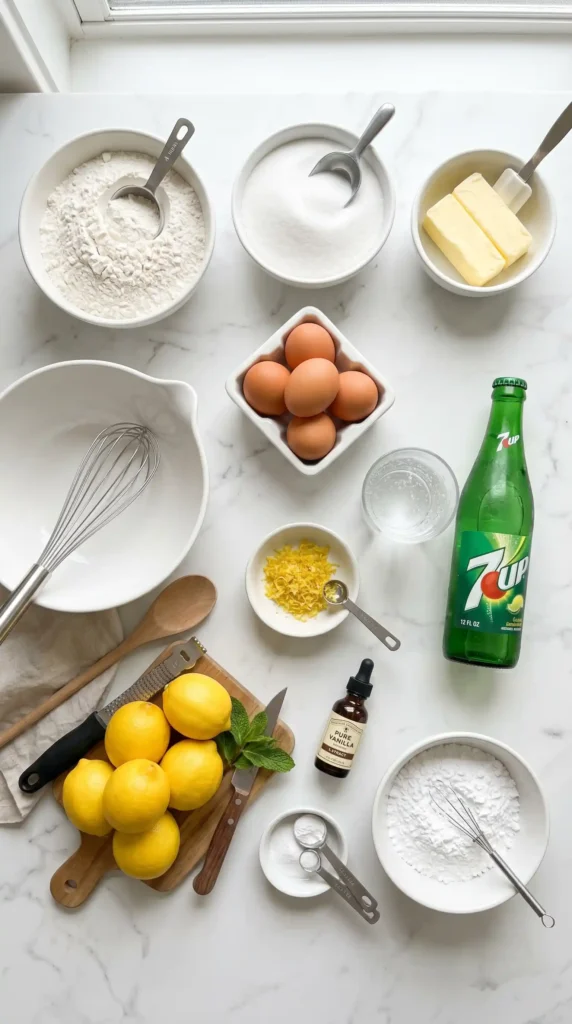
Nothing fancy or hard-to-find here. Most of this is probably already sitting in your kitchen right now. Let me break it down by section so it stays organized.
For the Pound Cake
- 1 1/2 cups (3 sticks) unsalted butter, softened to room temperature
- 3 cups granulated white sugar
- 5 large eggs, at room temperature
- 3 cups all-purpose flour, spooned and leveled
- 1/2 tsp salt
- 1 cup lemon-lime 7UP soda, at room temperature
- 2 tbsp fresh lemon juice (about 1 large lemon)
- 1 tbsp fresh lemon zest (packed, from 1–2 lemons)
- 1 tsp pure vanilla extract
For the Lemon Glaze
- 1 1/2 cups powdered sugar, sifted
- 2–3 tbsp fresh lemon juice (adjust for thickness)
- 1 tbsp 7UP soda
- 1/2 tsp vanilla extract
Optional Decorations
- Thin lemon slices, arranged on top
- A light dusting of powdered sugar
- Candied lemon peel for a fancy finish
Baker’s Note on Ingredients
Room temperature butter and eggs are not optional — they are the difference between a silky batter and a lumpy mess. Pull them out 45 minutes before you start. Also use fresh lemon juice, not the bottled stuff. You will taste the difference, I promise.
Why 7UP Makes This Cake Special
You might be wondering — does the soda flavor actually come through? Yes and no. The 7UP does not taste like a soda pop in the finished cake. Instead, it adds a subtle lemon-lime backbone that makes the whole thing taste brighter and more complex.
The carbonation in the soda does something clever during baking. Those tiny bubbles create micro-pockets in the batter that the heat expands, giving you a lighter, more tender crumb than a traditional pound cake. Think of it as a natural leavening boost. No extra baking powder needed.
Fresh lemon juice and zest are doing the heavy lifting on flavor. The zest brings the oils from the lemon skin — that punchy, aromatic burst — while the juice adds tartness and moisture. Together with the 7UP, you get a citrus flavor that is layered and bright, not one-dimensional.
How to Make Lemon 7UP Pound Cake: Step-by-Step
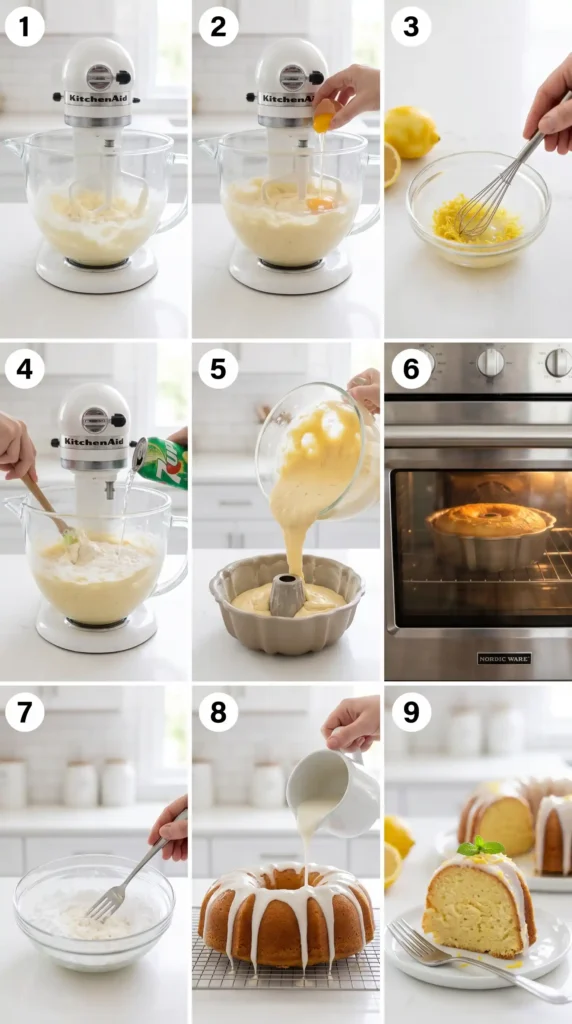
IMO, the key to a great pound cake is patience. Do not rush the creaming step, do not slam the oven door, and do not cut into it the second it comes out. Let me walk you through every step in plain language.
Step 1: Get Your Setup Right
Preheat your oven to 325°F (165°C). This lower-than-usual temperature is intentional. Pound cakes are thick and dense, and a slow, steady bake ensures the center cooks through before the outside burns. While the oven heats up, generously grease your Bundt pan with softened butter, making sure you get into every ridge and curve. Then dust it with flour, tap out the excess, and set it aside. Skipping this step is how you end up with a cake stuck in the pan, which is, to put it gently, heartbreaking.
Step 2: Cream the Butter and Sugar
Add the 1 1/2 cups softened butter and 3 cups sugar to a large mixing bowl or your stand mixer. Beat them together on medium-high speed for a full 4 to 5 minutes. Do not rush this. You want the mixture to turn pale, almost white, and become very fluffy. This process — called creaming — is what creates the structure of your cake. The sugar crystals cut into the butter and create tiny air pockets that help the cake rise evenly. When it looks like a cloud of pale yellow fluff, you are ready for the next step.
Step 3: Add Eggs One at a Time
Crack your 5 eggs in one by one, mixing well after each addition. This step matters a lot. Adding all the eggs at once can break the emulsion you just built with the butter and sugar, leaving you with a curdled, separated batter. After each egg, let the mixer run for about 30 seconds before adding the next one. Once all the eggs are in, the batter should look smooth, glossy, and silky. If it looks a little curdled, do not panic — it will come together once the flour goes in.
Step 4: Add the Lemon Flavor
Now for the good stuff. Add the 1 tbsp lemon zest, 2 tbsp fresh lemon juice, and 1 tsp vanilla extract directly to the batter and mix until just combined. The zest will smell absolutely incredible at this point — that bright, floral lemon aroma is a good sign you are on the right track. Scrape down the sides of the bowl with a spatula to make sure everything is evenly incorporated. Do not skip the zest; it carries more citrus flavor than the juice alone.
Step 5: Alternate Flour and 7UP
Here is where you need to slow down and be methodical. Add the 3 cups flour and 1/2 tsp salt in three parts, alternating with the 1 cup 7UP soda in two additions. Start and end with the flour. So the order goes: flour, 7UP, flour, 7UP, flour. Mix on low speed after each addition and stop the moment you no longer see streaks of dry flour. Over-mixing at this stage develops gluten, which turns your lovely pound cake into something that chews like a rubber gym mat. Nobody wants that :/ Mix gently and stop early.
Step 6: Pour and Bake
Pour the batter evenly into your prepared Bundt pan. Give the pan a few gentle taps on the counter to release any air bubbles hiding in the batter. Smooth the top with a spatula so it is level. Slide it into the center rack of your preheated oven and set your timer for 70 minutes. At the 70-minute mark, open the oven slowly — no sudden gusts of cold air — and test the center with a wooden toothpick. If it comes out clean or with just a few dry crumbs, the cake is done. If you see wet batter, give it another 5 to 10 minutes and check again.
Step 7: Cool It Down the Right Way
Let the cake cool in the Bundt pan on a wire rack for exactly 15 minutes. Not 5 minutes, not 30. Fifteen minutes gives the cake enough time to firm up so it will hold its shape when you unmold it, but it is still warm enough to release cleanly from the pan. Run a thin spatula or butter knife gently around the outer edge and the center column, then invert the pan onto the wire rack in a single smooth motion. If it does not come out immediately, give the pan a gentle tap or two. Let the cake cool completely before glazing — at least 1 more hour.
Step 8: Make the Lemon Glaze
While the cake finishes cooling, whisk together the 1 1/2 cups powdered sugar, 2–3 tbsp lemon juice, 1 tbsp 7UP, and 1/2 tsp vanilla in a bowl until you get a smooth, pourable glaze. Start with 2 tablespoons of lemon juice and add more until you reach a consistency that drizzles slowly off the whisk in a steady ribbon — not too runny, not too thick. Once the cake is completely cool, drizzle the glaze all over the top and let it cascade down the ridges. It will set in about 15–20 minutes. Then add your optional decorations if using.
Serving and Storage Tips

This cake is excellent at room temperature or slightly chilled. If you are serving it in summer, popping it in the fridge for 30 minutes before slicing makes it even more refreshing. A scoop of vanilla ice cream or a handful of fresh raspberries alongside each slice makes it feel like a proper dessert.
- Room temperature: Best served at room temp or slightly chilled
- Pairings: Fresh berries, whipped cream, or vanilla ice cream
- Storage: Cover tightly with plastic wrap or store in an airtight container — it keeps well for up to 5 days at room temperature
- Freezing: Freeze unglazed slices individually wrapped in plastic, then foil, for up to 3 months. Thaw at room temperature and glaze before serving
- Make-ahead: Bake the cake one day ahead and glaze just before serving
Frequently Asked Questions
Can I use a regular loaf pan instead of a Bundt pan?
Yes, but you will likely need two standard 9×5-inch loaf pans for this amount of batter. Start checking for doneness around the 60-minute mark, since loaf pans bake faster than a deep Bundt. The crumb structure stays the same — only the shape changes.
What if I cannot find lemon-lime 7UP? Can I use regular Sprite or club soda?
Sprite works as a direct substitute since the flavor profile is nearly identical. Club soda will give you the lift without any citrus flavor, which means your lemon taste will come entirely from the fresh juice and zest. Both work fine — use what you have on hand.
Why did my Lemon 7UP Pound Cake crack on top?
A crack on top of a pound cake is actually completely normal and expected. As the dense batter bakes, steam escapes through the surface and creates that signature split down the center. It is not a mistake — it is a sign your cake rose properly. The Bundt pan hides the crack anyway once you flip it.
My cake stuck to the Bundt pan. What went wrong?
The most common cause is not greasing the pan thoroughly enough. Every crevice needs to be coated. A combination of softened butter followed by a flour dusting is the most reliable method. Baking sprays with flour built in (like Baker’s Joy or Pam Baking) also work very well for Bundt pans specifically.
Can I make this recipe into cupcakes or a layer cake?
You can turn the batter into cupcakes — fill each liner about two-thirds full and bake at 325°F for 22 to 26 minutes. For a layer cake, use two 9-inch round pans and check at 45 minutes. The texture will be slightly denser than a standard layer cake, but the flavor is outstanding either way. Top with the same lemon glaze or a lemon cream cheese frosting.
How do I know when the pound cake is fully baked?
The toothpick test is your best friend here. Insert a wooden toothpick into the thickest part of the cake — usually the center — and pull it straight out. If it comes out clean or with just a few dry crumbs clinging to it, you are done. Wet batter on the toothpick means it needs more time. The top of the cake should also feel firm to a gentle touch and the edges will just begin to pull away from the pan.
Go Bake This Cake Right Now
The Lemon 7UP Pound Cake is one of those recipes that earns its permanent spot in your collection after the very first try. It is simple enough for a weeknight and impressive enough for a celebration. The soda makes it effortlessly tender, the lemon glaze makes it irresistible, and the whole thing comes together without any fancy equipment or complicated techniques.
So close this tab, check your pantry for that stick of butter, and go make something that people will actually remember. You can thank me — or your grandmother — later

Lemon 7UP Pound Cake
Ingredients
Method
- Preheat your oven to 325°F (165°C). Grease your Bundt pan with softened butter and dust with flour.
- In a large mixing bowl, cream together the softened butter and sugar until pale and fluffy.
- Add eggs one at a time, mixing well after each addition.
- Add lemon zest, lemon juice, and vanilla extract, mixing until just combined.
- Alternately add flour and 7UP soda in three parts, beginning and ending with flour. Mix until just combined.
- Pour the batter into the prepared Bundt pan and tap the pan to release air bubbles.
- Bake for 70 minutes, checking for doneness with a toothpick.
- Cool the cake in the pan for 15 minutes, then invert onto a wire rack to cool completely.
- While cooling, whisk together glaze ingredients until smooth, then drizzle over the cooled cake.