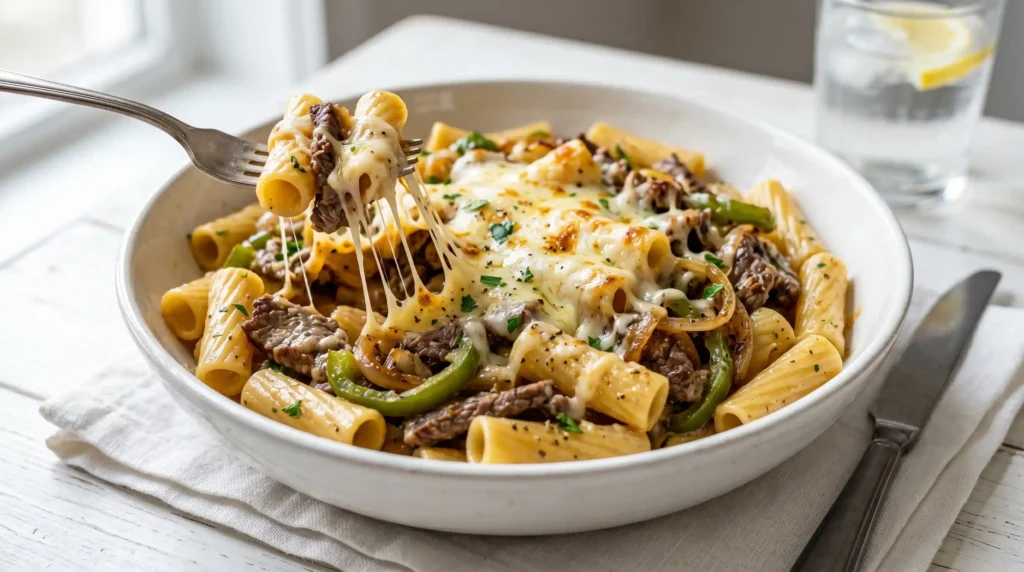
Philadelphia invented the cheesesteak. Italy invented pasta. At some point, someone with excellent priorities realised these two things belonged in the same skillet, and the result is exactly as good as that sentence makes it sound. Philly Cheesesteak Pasta takes everything you love about the sandwich — the beef, the peppers, the onion, the molten cheese — and delivers it in a format that actually constitutes a complete dinner without requiring a hoagie roll the size of a forearm.
I made this on a Tuesday evening when the sandwich craving was real but the bread situation was not. The result was a skillet of pasta that captured every flavour note of a proper Philly cheesesteak — the slightly caramelised peppers and onion, the savoury beef, the rich creamy cheese sauce — in a format that feeds six people from one pan. It has appeared on my weekly menu regularly ever since and generates zero complaints from anyone who eats it.
Have you ever combined two comfort food categories and ended up with something better than either original? This is exactly that outcome. Let us make it properly.
Why Philly Cheesesteak and Pasta Work Perfectly Together
The classic Philly cheesesteak works because of three flavour relationships: savoury, well-seasoned beef against sweet caramelised peppers and onion, and rich melted cheese tying both together. These three relationships transfer perfectly to a pasta format — the beef and vegetables produce the same flavour complexity regardless of what carbohydrate surrounds them, and pasta actually distributes the cheese sauce more effectively than a sandwich roll does.
The cream cheese sauce in this recipe serves a specific purpose beyond just adding creaminess. It provides the emulsified base that lets the beef broth and rendered beef fat combine into a cohesive, glossy sauce that coats every pasta piece rather than separating into a greasy pool at the bottom of the pan. Cream cheese is a better sauce stabiliser than butter or heavy cream alone, and it adds a mild tanginess that mimics the slightly tangy quality of good provolone or Cheez Whiz.
The provolone on top finishes the connection to the original sandwich. Provolone melts beautifully under a broiler, developing light golden spots and a stretchy pull that sharp cheddar or mozzarella alone does not replicate. It pulls the whole dish back to its cheesesteak origins in a single visual and flavour element. IMO, provolone is non-negotiable here.
What You Need
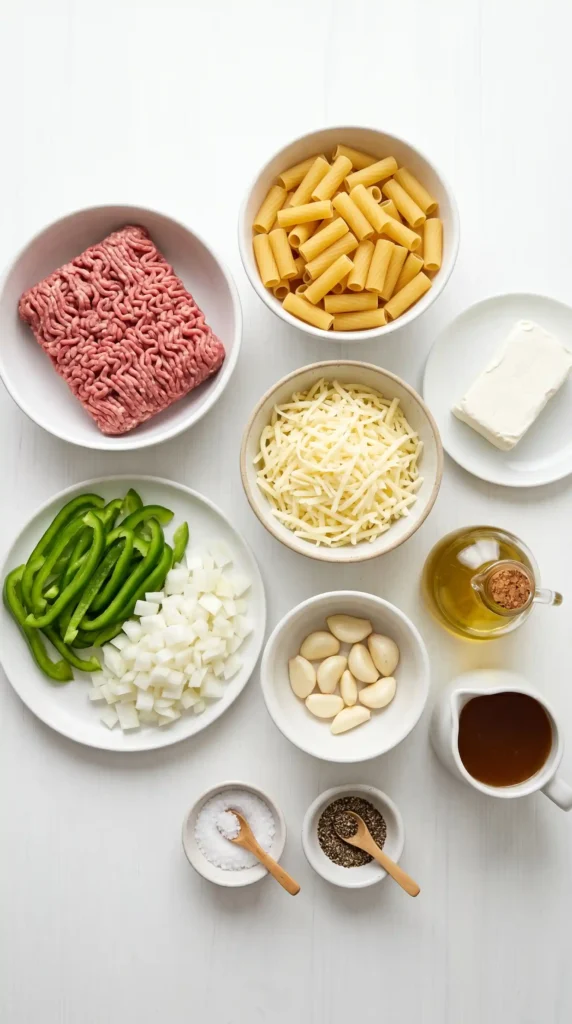
Ten ingredients. The beef choice is where the most variation exists and where the most argument tends to occur — ground beef is significantly faster and easier than steak strips and produces a more uniform distribution through the pasta. Thinly sliced ribeye or sirloin steak strips more authentically replicate the cheesesteak experience and produce a more textural, restaurant-quality result. Both are excellent; the choice depends on your available time and budget.
Main Ingredients (Serves 4–6)
- 1 pound (450g) ground beef (80/20 fat ratio for best flavour) or thinly sliced ribeye or sirloin steak strips about 5mm wide
- 12 ounces (340g) penne or rigatoni pasta — tubular pasta holds the sauce inside each piece; avoid flat pasta shapes that let the sauce pool
- 1 large green bell pepper, diced into 1–1.5cm pieces
- 1 medium onion, diced into 1–1.5cm pieces
- 2 garlic cloves, finely minced
- 225g (8oz) full-fat cream cheese, softened to room temperature
- 1 cup (240ml) beef broth — low-sodium preferred so you can control salt levels in the finished dish
- 1 cup (100g) shredded provolone cheese — for the broiled topping
- 1 tablespoon olive oil
- Salt and black pepper to taste
Thin-Sliced Steak vs Ground Beef — Which to Use and WhyGround beef cooks faster, distributes more evenly through the pasta, and costs less. Thin steak strips (ribeye is ideal, sirloin is excellent, flank works) produce a more identifiable, textural beef element that references the original sandwich more directly — you see and feel the beef in each forkful rather than having it blend into the sauce. For weeknight speed, use ground beef. For a more special result or when you want the dish to feel more like its namesake, use steak strips. Both approaches produce genuinely good pasta. The choice is about what you want from the eating experience.
The Cheese Decision That Changes This Dish
Authentic Philly cheesesteaks use one of three cheeses — Cheez Whiz, American cheese, or provolone. This pasta recipe uses cream cheese in the sauce (for stability and creaminess) and provolone on top (for the signature stretch and flavour). But you have genuine options in both positions, and each produces a different result worth understanding.
Cream Cheese in Sauce
Produces a thick, stable, mildly tangy sauce. The most reliable emulsifier and the easiest to work with. Mild enough to not compete with the beef and pepper flavours.
American Cheese in Sauce
Melts smoothly into a glossy, silky sauce with a more processed-cheese flavour. Produces a result that tastes closest to Cheez Whiz-style cheesesteaks. Use 6–8 slices, torn.
Provolone on Top
Traditional cheesesteak cheese. Melts under the broiler with golden spots and a mild, slightly tangy flavour. The best topping choice for flavour and visual appeal.
Mozzarella on Top
Melts extremely well and provides a dramatic stretch but has a more neutral flavour than provolone. Use it as a substitute if provolone is unavailable — combine with a sprinkle of Parmesan for more flavour.
How to Make Philly Cheesesteak Pasta Step by Step
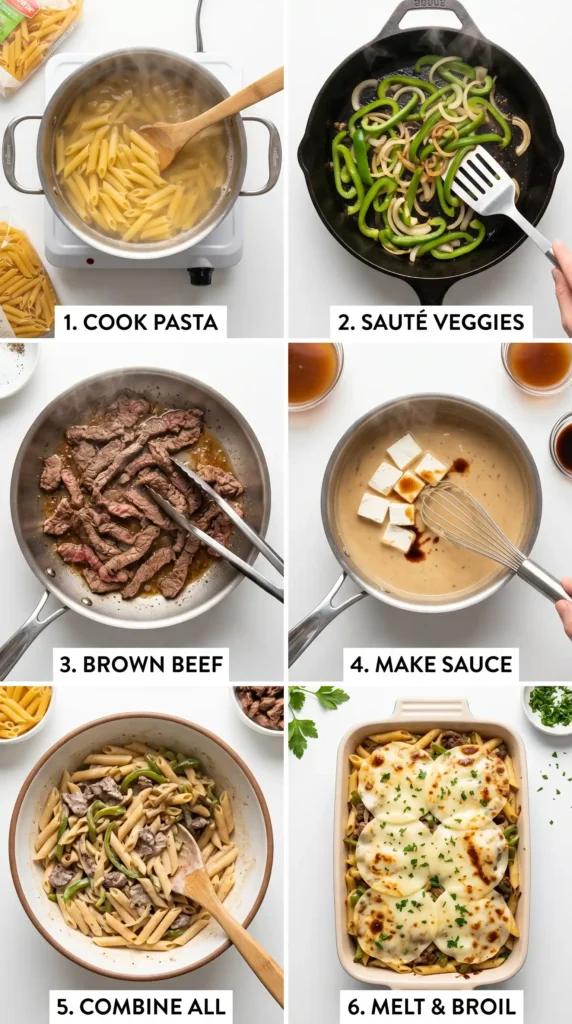
Three stages running simultaneously: boil the pasta, cook the beef and vegetables, and build the sauce. Everything happens in the right sequence so the pasta finishes cooking at roughly the same time the sauce is ready, allowing you to combine them immediately while everything is hot. Read through the full sequence once before starting.
Step 1: Cook the Pasta
Bring a large pot of well-salted water to a full rolling boil. Add the pasta and cook according to the packet directions for al dente — firm to the bite with the faintest resistance at the centre. Cook it 1–2 minutes under the suggested al dente time because the pasta will spend 3–5 additional minutes under the broiler in the final stage, and overcooked pasta that goes into a broiled dish becomes soft and mushy by the time it reaches the table.
Reserve 1/4 cup of the pasta cooking water before draining — this starchy water is useful for loosening the sauce if it becomes too thick when the pasta is added. Drain the pasta and toss briefly with a very small drizzle of olive oil to prevent sticking while you finish the sauce. Do not rinse the pasta — the surface starch on the drained pasta helps the sauce cling to each piece.
Step 2: Sauté the Vegetables
Heat the tablespoon of olive oil in a large oven-safe skillet over medium-high heat. Add the diced green bell pepper and onion to the hot oil and cook, stirring occasionally, for 4–5 minutes until the vegetables soften and develop some light caramelisation at the edges. The caramelisation is where the sweetness in the dish develops — do not rush this step by cooking on too low a heat, which steams rather than sautés the vegetables.
Add the minced garlic to the softened vegetables and stir constantly for about 60 seconds until fragrant and just beginning to turn golden at the edges. The garlic goes in after the peppers and onion rather than at the start because it burns quickly at high heat — adding it after the other vegetables are partially softened means the moisture in those vegetables protects the garlic from the direct heat of the pan.
Step 3: Brown the Beef
If using ground beef: push the vegetables to the sides of the skillet and add the ground beef to the centre. Break the beef into small pieces using a wooden spoon or spatula as it cooks — work it into the smallest crumble possible for even distribution through the pasta. Cook over medium-high heat for 6–8 minutes until the beef shows no pink and develops some browning on the smaller pieces.
If using steak strips: season them generously with salt and pepper before adding to the pan. Cook over high heat without stirring for 2 minutes to develop a sear on one side — then stir and cook for another 1–2 minutes until cooked through but still slightly tender. Steak strips overcook quickly; pull them from the heat while they still look slightly pink at the very centre — residual heat and time in the sauce will finish them. Season the ground beef or steak generously with salt and black pepper at this stage.
Step 4: Build the Sauce
Add the softened cream cheese to the skillet with the browned beef and vegetables. Stir immediately and continuously — cream cheese needs constant movement to melt evenly into the fat and moisture in the pan rather than sitting in lumps. If the cream cheese was at true room temperature, it will melt almost immediately. If it was too cold, it will take 1–2 additional minutes and resist full incorporation. This is the primary reason room-temperature cream cheese matters in this recipe.
Once the cream cheese has mostly melted into the beef mixture, add the beef broth. Stir everything together vigorously until the cream cheese fully incorporates into the broth, producing a thick, creamy, brown-tinted sauce. Reduce the heat to medium and allow the sauce to simmer for 2–3 minutes, stirring occasionally, until it thickens slightly and looks glossy rather than thin and watery. Taste and adjust salt and pepper at this point — the sauce should taste savoury, slightly rich, and well-seasoned.
Step 5: Add the Pasta and Broil
Add the cooked, drained pasta to the skillet and toss thoroughly to coat every piece in the sauce. If the sauce looks too thick after adding the pasta, add a splash of the reserved pasta cooking water and toss again — the starchy water loosens the sauce while adding a small additional thickening effect that keeps the sauce coating the pasta rather than thinning it to a pool. Every pasta piece should look evenly coated and glossy.
Switch the oven to broil — high setting. Scatter the shredded provolone cheese evenly across the entire top surface of the pasta in the skillet. Make sure the skillet is oven-safe — cast iron, stainless steel, or an oven-safe non-stick all work; standard non-stick with plastic handles does not. If your skillet is not oven-safe, transfer the pasta to a shallow baking dish before adding the cheese.
Place the skillet under the broiler on the centre or upper-centre rack. Broil for 3–5 minutes, watching closely — broilers vary significantly in intensity. The provolone is done when it looks fully melted, shows light golden-brown spots across the surface, and bubbles gently around the edges of the pan. Remove from the oven and allow the finished Philly Cheesesteak Pasta to rest for 2 minutes before serving directly from the skillet.
Variations Worth Making
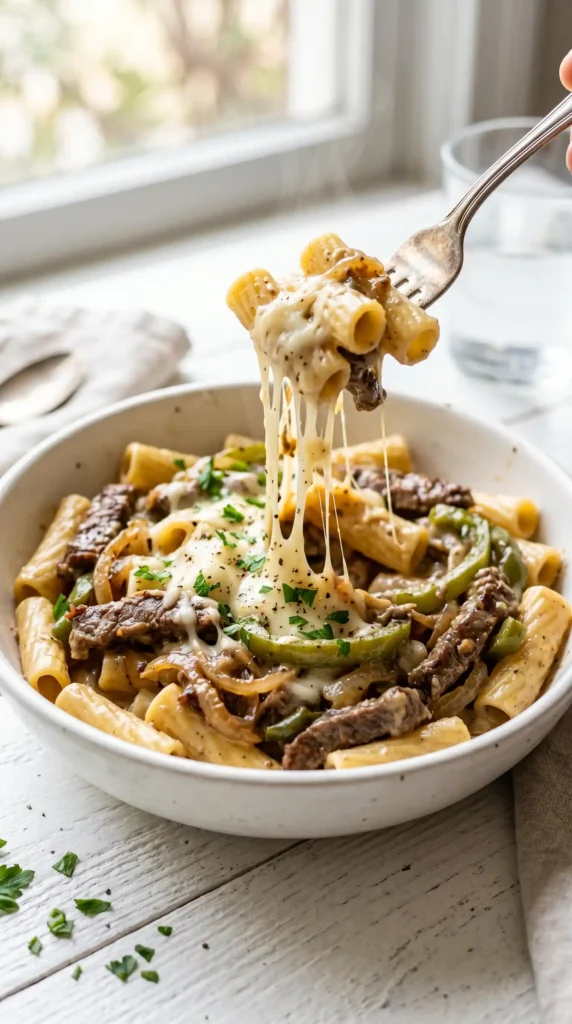
Mushroom and Onion Version
Add 1 cup of thinly sliced cremini mushrooms to the skillet alongside the bell pepper and onion. The mushrooms add an earthy, umami-rich note that some Philly purists insist belongs in the original sandwich and that makes the pasta version noticeably more complex. Reduce the beef broth by 2 tablespoons since the mushrooms release additional moisture during cooking.
Spicy Philly Cheesesteak Pasta
Add 1/4 teaspoon of red pepper flakes to the garlic stage and replace half the green bell pepper with diced jalapeño. Use pepper jack cheese instead of provolone for the broiled topping. The heat builds gradually through the cream cheese sauce and the spicy cheese finish, producing a version that suits anyone who finds the original slightly tame.
Storage and Reheating Tips
Store leftover Philly Cheesesteak Pasta in an airtight container in the refrigerator for up to 4 days. The pasta absorbs the sauce during storage — add a splash of beef broth or water when reheating to restore the sauce consistency. Reheat in a skillet over medium heat for 4–5 minutes, stirring frequently, until hot throughout. The microwave works in a pinch — reheat in 90-second intervals, stirring between each, until evenly heated.
This recipe does not freeze particularly well — the cream cheese sauce can separate and become grainy after thawing rather than restoring to its original smooth consistency. Make it fresh whenever possible since the 35-minute total time makes this entirely practical for even the busiest weeknights.
Frequently Asked Questions
Can I use other cuts of beef instead of ground beef or ribeye?
Yes. Flank steak, sirloin, and skirt steak all work well when sliced very thinly — about 3–5mm — against the grain. Thinly sliced beef cooked at high heat for a short time stays tender; thick pieces or cuts not sliced against the grain produce chewy, tough beef that does not eat pleasantly in a pasta dish. Partially freezing the steak for 20–30 minutes before slicing makes thin, even cuts significantly easier. Ground beef remains the most practical option for weeknight convenience.
Can I substitute the cream cheese with something else?
Yes. American cheese (6–8 slices, torn) melts into a similarly smooth sauce and produces a flavour closer to traditional Cheez Whiz-style cheesesteaks. Heavy cream (1/2 cup) combined with 1/4 cup of cream cheese produces a lighter, less thick sauce. Philadelphia-style cream cheese spread works identically to block cream cheese. Avoid low-fat cream cheese, which contains more water and produces a looser sauce that may separate during cooking rather than forming a stable, glossy emulsion.
Do I need an oven-safe skillet for the broiling step?
Yes — or a transfer to an oven-safe vessel. Cast iron skillets, stainless steel pans, and oven-safe non-stick pans all go under the broiler without issue. Standard non-stick pans with plastic or silicone handles are not broiler-safe. If your skillet is not oven-safe, transfer the fully sauced pasta to a shallow baking dish, scatter the provolone over the top, and broil in the dish. The result is identical. A 9×13-inch baking dish accommodates the full recipe easily.
Can I add mushrooms to this recipe?
Yes — and many people consider mushrooms essential to a complete Philly cheesesteak flavour profile. Add 1 cup of thinly sliced cremini or button mushrooms to the skillet alongside the bell pepper and onion. The mushrooms need the same 4–5 minutes of sautéing to soften and caramelise properly. They release moisture during cooking which slightly loosens the sauce — if the sauce looks thinner than you would like after adding the pasta, allow it to simmer for an additional 2 minutes to reduce the additional liquid.
Can I make this recipe gluten-free?
Yes. Substitute the regular pasta with your preferred gluten-free pasta variety — corn and rice pasta both work well. Check that your beef broth is certified gluten-free since some commercial beef broths contain gluten from added flavourings or thickeners. All other ingredients in this recipe — beef, cream cheese, vegetables, provolone — are naturally gluten-free. The technique and timing remain identical with gluten-free pasta, though gluten-free pasta can become gummy if overcooked — be especially careful to cook it to firm al dente rather than soft.
Final Thoughts
This Philly Cheesesteak Pasta earns the right to appear on any weeknight dinner table by delivering everything the original sandwich promises — the savoury beef, the sweet caramelised vegetables, the creamy cheese sauce — in a format that feeds six people in 35 minutes from one skillet. It tastes genuinely indulgent without requiring any technique more complex than sautéing vegetables and stirring cream cheese into a pan.
Soften the cream cheese fully before adding it. Cook the vegetables until genuinely caramelised at the edges. Use provolone for the broiled topping. Undercook the pasta slightly before broiling. These four decisions produce the best possible version of an already excellent weeknight dinner.
Make it this week. Make it next week. Accept that it will become a household staple faster than you expected and plan accordingly. Keep the cream cheese softened and the provolone stocked. IMO, those two items in the fridge are the difference between a regular Tuesday evening and a very good one.
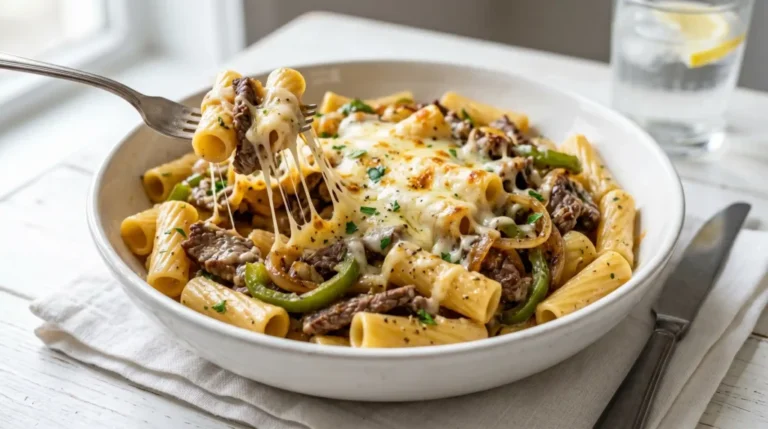
Philly Cheesesteak Pasta
Ingredients
Method
- Bring a large pot of well-salted water to a full rolling boil.
- Add the pasta and cook according to the packet directions for al dente, but 1–2 minutes under the suggested time.
- Reserve 1/4 cup of pasta water before draining, then toss briefly with olive oil.
- Heat olive oil in a large oven-safe skillet over medium-high heat.
- Add diced bell pepper and onion, sauté for 4–5 minutes until softened and caramelized.
- Add minced garlic and stir constantly for about 60 seconds until fragrant.
- For ground beef: push veggies aside, add beef to center, breaking into small pieces. Cook for 6–8 minutes until no longer pink.
- For steak strips: season and cook over high heat for 2 minutes, then stir and cook until done but slightly pink.
- Add softened cream cheese, stirring constantly until melted, then add beef broth and simmer for 2–3 minutes.
- Add drained pasta to skillet, tossing to coat. If too thick, add reserved pasta water.
- Preheat oven to broil, scatter provolone cheese on top of pasta.
- Broil for 3–5 minutes until cheese is melted and golden. Let rest for 2 minutes before serving.