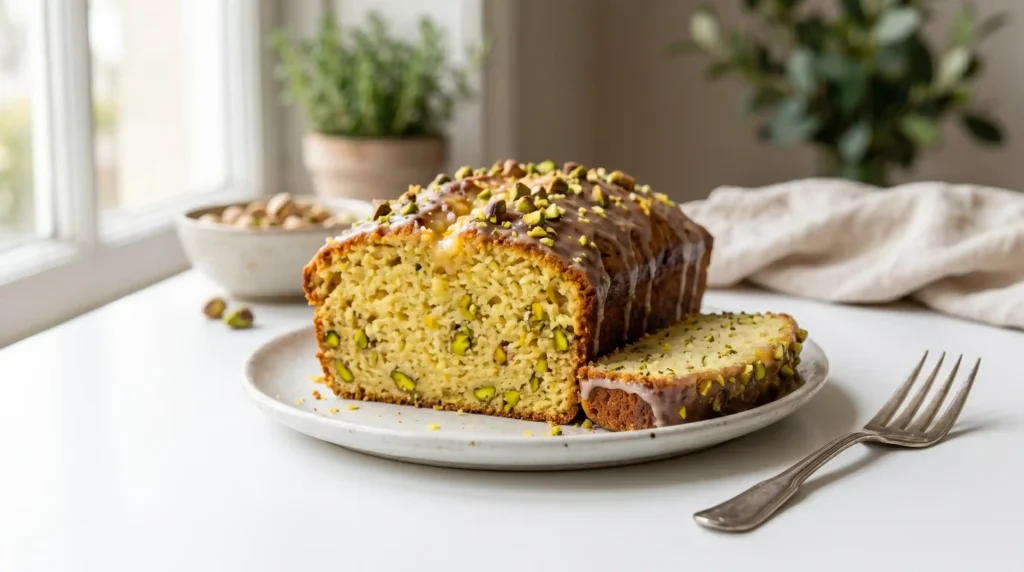
Servings: 10 slices | Prep Time: 20 minutes | Bake Time: 55 minutes | Cool Time: 20 minutes | Total Time: ~1 hour 35 minutes
Most breakfast breads play it safe. Banana bread, blueberry loaf, standard zucchini. All fine, all forgettable. Then Pistachio Lemon Breakfast Bread walks into the room and everyone forgets those other loaves ever existed. That’s the kind of recipe this is, and I speak from very personal experience.
The first time I pulled this loaf out of the oven, the kitchen smelled like a bakery in the south of France. Bright lemon zest, warm toasty pistachios, and that golden-baked butter smell all hit at once. I sliced it before it fully cooled, which I technically knew was a mistake. Worth it.
This recipe works for leisurely weekend mornings, brunch with friends, afternoon tea, or gifting to someone you want to impress without spending an entire day baking. The technique is straightforward, the ingredients are accessible, and the results look like you tried much harder than you actually did.
Why Pistachio Lemon Breakfast Bread Deserves a Spot in Your Rotation
Have you ever noticed how the best flavor combinations always involve contrast? Pistachio brings a rich, buttery, slightly savory nuttiness. Lemon brings bright, sharp, citrusy acidity. Together they create a balance that neither ingredient achieves alone, and that balance is exactly what makes this bread so memorable.
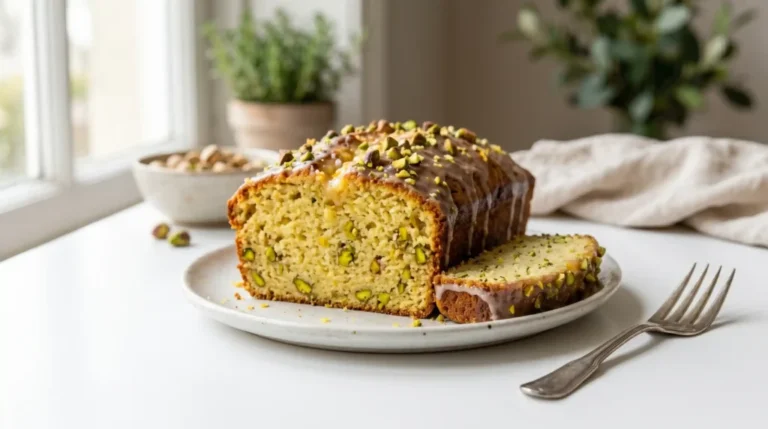
The texture is another win. Chopped pistachios give every slice a satisfying crunch that plain quick breads completely lack. The crumb itself stays moist and tender from the oil and eggs, while the lemon glaze on top adds a thin, crackly sweet-tart layer that takes the whole loaf to another level.
IMO, this bread also photographs beautifully if that matters to you. The green pistachios against the golden crumb and white glaze look striking without any effort. Slice it cleanly, place it on a board with a few loose pistachios and a lemon wedge, and you’ve got a genuinely impressive spread.
Ingredients You Will Need
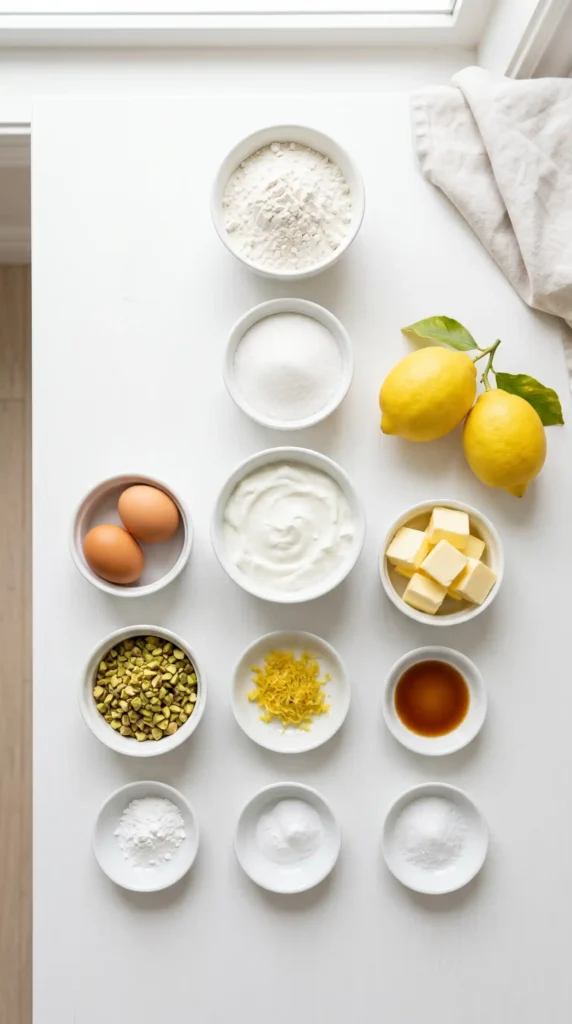
For the Bread
All pantry-friendly, all easy to find:
- 1 and 1/2 cups all-purpose flour
- 1 teaspoon baking powder
- 1/2 teaspoon baking soda
- 1/2 teaspoon fine salt
- 3/4 cup granulated sugar
- 2 large eggs, room temperature
- 1/2 cup plain whole-milk yogurt or sour cream
- 1/3 cup neutral oil (vegetable, canola, or light olive oil)
- 2 tablespoons unsalted butter, melted
- 2 tablespoons fresh lemon juice
- 1 tablespoon lemon zest (from about 2 medium lemons)
- 1 teaspoon pure vanilla extract
- 3/4 cup shelled pistachios, roughly chopped (divided into 1/2 cup for batter and 1/4 cup for topping)
For the Lemon Glaze
- 1 cup powdered sugar, sifted
- 2 to 3 tablespoons fresh lemon juice
- 1 teaspoon lemon zest
- Optional: 1 to 2 tablespoons chopped pistachios for garnish on top of glaze
Equipment You Will Need
- 9 x 5 inch loaf pan
- Two medium mixing bowls
- Whisk and rubber spatula
- Microplane or fine grater (for zesting)
- Parchment paper
- Toothpick or skewer for testing doneness
- Wire cooling rack
- Small bowl for the glaze
How to Make Pistachio Lemon Breakfast Bread Step by Step
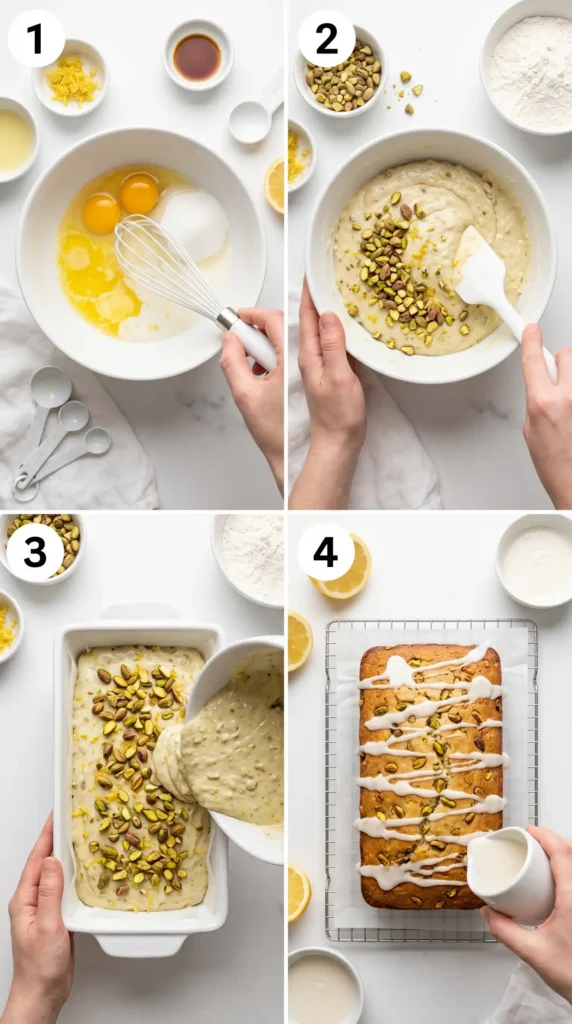
Step 1: Prep Your Pan and Preheat the Oven
Start by preheating your oven to 350 degrees F (175 degrees C). While the oven heats, prepare your loaf pan so it’s ready the moment your batter is mixed. Grease a 9 x 5 inch loaf pan with butter or nonstick spray, then line it with a strip of parchment paper that hangs over the two long sides.
That parchment overhang acts as built-in handles that let you lift the finished loaf out cleanly without flipping or wrestling with the pan. Quick breads can stick stubbornly to the corners of a pan, and parchment completely solves that problem. Grease over the parchment too so nothing catches.
Step 2: Prepare the Lemon and Pistachios
Zest your lemons before you juice them. This is the order that actually works because a whole lemon is easier to zest than a squeezed one. Use a microplane or the fine side of a box grater and apply light, short strokes to collect only the bright yellow outer layer. The white pith underneath tastes bitter and adds nothing you want.
You need 1 tablespoon of lemon zest total, which typically comes from 2 medium lemons. Set aside 1 teaspoon of the zest for the glaze and use the rest in the batter. Then juice your lemons and measure out 2 tablespoons for the batter and keep another 2 to 3 tablespoons handy for the glaze later.
Roughly chop the shelled pistachios into pieces about half their original size. You want chunks large enough to notice in each bite, not pistachio dust. Measure out 1/2 cup for the batter and set aside 1/4 cup to sprinkle over the top of the loaf before baking. That top layer toasts beautifully and looks gorgeous on the finished bread.
Step 3: Mix the Dry Ingredients
In a medium bowl, whisk together 1 and 1/2 cups of all-purpose flour, 1 teaspoon of baking powder, 1/2 teaspoon of baking soda, and 1/2 teaspoon of salt. Whisking the dry ingredients together first ensures the leavening distributes evenly through the flour. Uneven baking powder distribution causes some spots in the loaf to rise more than others.
Set the dry ingredient bowl aside and resist adding anything else to it yet. The wet and dry components stay separate until the very last moment to prevent overmixing, which is the most common reason quick breads come out dense and tough instead of tender.
Step 4: Mix the Wet Ingredients
In your second bowl, whisk together 3/4 cup of granulated sugar and the 2 large eggs until the mixture looks pale yellow and slightly thickened, about 1 minute. This initial whisking dissolves the sugar and creates a slightly aerated base that contributes to the tender crumb structure.
Add the 1/2 cup of yogurt, 1/3 cup of oil, 2 tablespoons of melted butter, 2 tablespoons of lemon juice, 1 tablespoon of lemon zest, and 1 teaspoon of vanilla extract to the egg and sugar mixture. Whisk everything together until completely smooth and uniform. The yogurt adds moisture and a subtle tang that deepens the lemon flavor throughout the bread.
Step 5: Combine Wet and Dry Ingredients
Pour the wet ingredients into the bowl with the dry ingredients. Use a rubber spatula to fold them together with slow, deliberate strokes. Fold from the bottom of the bowl up and over the top, rotating the bowl as you go. Stop the moment you stop seeing streaks of dry flour. This entire mixing step should take about 20 to 25 strokes at most.
Overmixing develops the gluten in the flour and makes the final bread chewy and dense instead of soft and tender. A few small lumps in the batter are completely fine. They bake out. What doesn’t bake out is a tough, rubbery crumb caused by five extra minutes of enthusiastic stirring. Under-mix is always better than over-mix with quick bread.
Fold in the 1/2 cup of chopped pistachios with two or three final strokes of the spatula. Again, don’t overwork it. The pistachios just need to distribute evenly through the batter, not get pulverized by excessive mixing.
Step 6: Fill the Pan and Add the Topping
Pour the batter into your prepared loaf pan and use the spatula to spread it evenly from edge to edge. Give the pan a gentle tap on the counter two or three times to release any large air bubbles trapped in the batter. Then scatter the reserved 1/4 cup of chopped pistachios evenly over the top of the batter.
These surface pistachios toast during baking and develop a deeper, nuttier flavor than the ones embedded in the crumb. They also add visual texture that makes the finished loaf look artisan and intentional. Don’t skip this step. It costs you nothing and pays back significantly in presentation.
Step 7: Bake the Bread
Place the loaf pan in the center of your preheated oven and bake for 50 to 55 minutes. At the 50-minute mark, test for doneness by inserting a toothpick or thin skewer into the center of the loaf. It should come out clean or with just a few moist crumbs attached. Wet batter on the toothpick means the center needs more time.
If the top of the loaf browns too quickly before the center finishes baking, loosely tent a piece of aluminum foil over the pan for the last 10 to 15 minutes. This slows the surface browning while letting the interior continue cooking. Check the color at the 40-minute mark and tent if the pistachios on top look very dark.
Once done, remove the loaf from the oven and let it cool in the pan for 15 minutes before lifting it out by the parchment overhang. Transfer it to a wire cooling rack and let it cool for at least another 20 minutes before glazing. Glazing a hot loaf melts the glaze completely and it runs off the sides rather than sitting on top.
Step 8: Make and Apply the Lemon Glaze
In a small bowl, whisk together 1 cup of sifted powdered sugar, 2 tablespoons of fresh lemon juice, and 1 teaspoon of lemon zest. The glaze should flow off the whisk in a thick, slow ribbon. If it feels too thick, add the third tablespoon of lemon juice a little at a time. If it’s too thin, add a tablespoon more of sifted powdered sugar.
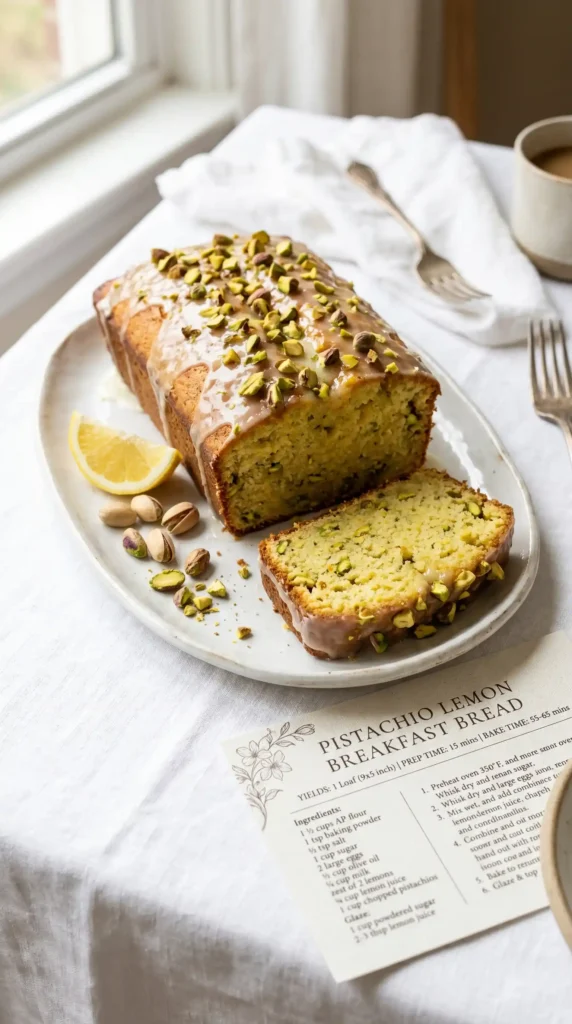
Spoon or pour the glaze over the top of the cooled loaf, letting it run naturally down the sides in a few places. For a cleaner look, keep the glaze on top only. For a more casual, generous finish, pour it all along the center and let it drip freely. Scatter the optional chopped pistachios over the wet glaze immediately so they stick as it sets.
Let the glaze set for 10 to 15 minutes at room temperature before slicing. Once set, it creates a thin, crackly sweet-tart shell over the top of the loaf that contrasts beautifully with the soft crumb underneath.
Tips for Perfect Pistachio Lemon Breakfast Bread
- Use fresh lemon juice only: Bottled lemon juice tastes flat and slightly chemical compared to fresh. Two lemons give you everything you need for both the batter and glaze.
- Room temperature eggs and yogurt: Cold ingredients don’t emulsify as smoothly and can cause the batter to look curdled. Pull them from the fridge 30 minutes before you start.
- Don’t skip the yogurt: It adds moisture, tenderness, and a subtle tang that balances the sweetness. Sour cream works as a direct substitute if that’s what you have.
- Chop pistachios yourself: Pre-chopped pistachios tend to be too fine and dusty. Rough-chop whole shelled pistachios for better texture and more visual impact in the finished loaf.
- Let it cool before slicing: Warm quick bread slices messily and the crumb looks gummy. Give it the full cooling time and you’ll get clean, beautiful slices every time.
Variations Worth Trying
- Orange Pistachio: Swap all the lemon for orange zest and juice. Slightly sweeter, less tart, and just as beautiful.
- Cardamom addition: Add 1/4 teaspoon of ground cardamom to the dry ingredients. It pairs brilliantly with both pistachio and lemon.
- Cream cheese glaze: Beat 2 ounces of softened cream cheese with powdered sugar and lemon juice for a richer, tangier topping.
- Mini loaves: Divide the batter into two mini loaf pans and reduce bake time to 30 to 35 minutes. Perfect for gifting.
Storing and Keeping Fresh
Store Pistachio Lemon Breakfast Bread wrapped tightly at room temperature for up to 3 days. The moisture from the yogurt keeps it tender well beyond the first day. After day three, move it to the refrigerator where it will keep for another 2 to 3 days. Bring slices back to room temperature or warm them briefly before eating.
To freeze, wrap individual slices tightly in plastic wrap, then place them in a freezer bag. They freeze well for up to 2 months. Thaw at room temperature or microwave for 20 seconds. FYI, the glaze can get slightly sticky after freezing and thawing, but the flavor holds up perfectly. Add a fresh sprinkle of chopped pistachios after thawing if you want to refresh the presentation.
Frequently Asked Questions
Can I use salted pistachios instead of unsalted?
You can, but reduce the salt in the batter to 1/4 teaspoon to compensate. Salted pistachios add a nice contrast to the sweet bread, but too much total salt throws off the balance. Unsalted pistachios give you more control, which is why most baking recipes default to them.
Can I make Pistachio Lemon Breakfast Bread without the glaze?
Yes. The bread stands completely on its own without the glaze and still tastes wonderful. The glaze adds sweetness and an extra pop of lemon flavor, but skipping it gives you a less sweet, more breakfast-appropriate loaf that works well toasted with butter. Both versions have their fans.
Why did my bread sink in the middle?
The most common causes are underbaking, opening the oven door too early, or too much liquid in the batter. Make sure the toothpick test comes back clean before pulling the loaf, avoid opening the oven in the first 35 minutes of baking, and measure your liquids carefully. A sunken loaf still tastes fine, but the texture in the center can be slightly gummy.
Can I substitute almond flour for all-purpose flour?
Not as a direct one-to-one swap. Almond flour behaves very differently and produces a much denser, wetter result without significant recipe adjustments. If you want a gluten-free version, use a 1:1 gluten-free baking flour blend instead, which substitutes directly for all-purpose flour with minimal texture change.
How do I get clean slices without the bread crumbling?
Let the bread cool completely before slicing, and use a sharp serrated knife with a gentle sawing motion rather than pressing straight down. Pressing down compresses the crumb and tears the structure. A serrated blade cuts through both the crusty glaze and the tender crumb without disturbing either.
Why You Need to Make This Bread This Weekend
Pistachio Lemon Breakfast Bread checks every box a great quick bread should check. It looks impressive, it smells incredible while it bakes, and every bite delivers something more interesting than standard breakfast bread. The lemon keeps it bright, the pistachios keep it interesting, and the glaze makes it feel special.
It takes about 20 minutes of actual hands-on effort. The oven does the rest. That ratio of effort to result is exactly what a weekend baking project should look like, and this one delivers every single time I make it. So grab some pistachios, zest those lemons, and get this loaf in the oven. Slice it while it’s still faintly warm, pour yourself a coffee, and enjoy the fact that you made something genuinely beautiful this morning. You deserve that kind of start to your day
Pistachio Lemon Breakfast Bread
Ingredients
Method
- Preheat your oven to 350 degrees F (175 degrees C). Prepare a 9 x 5 inch loaf pan by greasing it with butter or nonstick spray and lining it with parchment paper.
- Zest the lemons before juicing and measure out the required lemon juice.
- Roughly chop pistachios, setting aside portions as specified for the batter and topping.
- In a medium bowl, whisk together flour, baking powder, baking soda, and salt. In another bowl, whisk together sugar and eggs until pale yellow.
- Add yogurt, oil, melted butter, lemon juice, lemon zest, and vanilla extract to the egg mixture. Mix until smooth.
- Fold the wet ingredients into the dry ingredients until just combined, then fold in the chopped pistachios.
- Pour batter into the prepared loaf pan and top with reserved pistachios. Bake for 50 to 55 minutes, testing for doneness with a toothpick.
- Cool in the pan for 15 minutes, then transfer to a wire cooling rack to cool completely.
- Whisk together powdered sugar, lemon juice, and lemon zest for the glaze. Adjust consistency with more juice or sugar as needed.
- Once the loaf is cool, drizzle the glaze over the bread and allow it to set.