Servings: 2 | Prep Time: 5 minutes | Blend Time: 2 minutes | Total Time: ~7–10 minutes
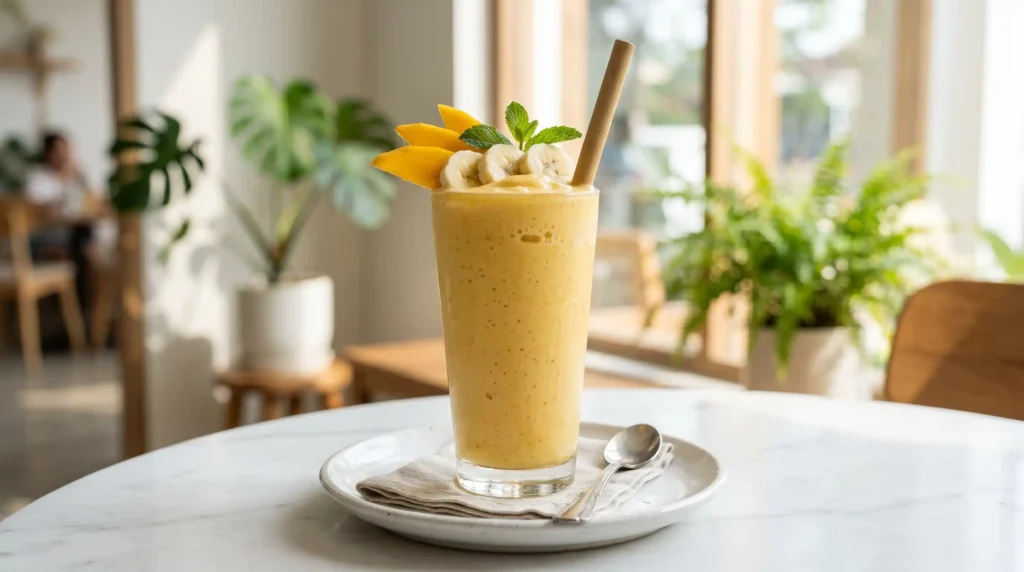
Picture this — it’s a warm morning, you want something cold and satisfying, and you don’t want to spend 30 minutes in the kitchen. The mango and banana smoothie is your answer. Two ingredients that were basically made for each other, blended into one seriously good drink.
I first made this when I had a pile of overripe bananas and a bag of frozen mango sitting in my freezer. What started as a “use up the leftovers” moment turned into my most-made smoothie recipe by a long shot. Turns out the simplest combinations are usually the best ones.
Why Mango and Banana Work So Well Together
Have you ever noticed how some flavor combinations just click instantly? Mango brings tropical sweetness and a slight tang. Banana adds body, creaminess, and a mellow sweetness that softens the mango’s intensity. Together, they create something that’s smooth, thick, and naturally balanced.
The texture this duo produces is genuinely impressive. Frozen mango gives the blend a sorbet-like consistency while banana acts as a natural thickener. You don’t need to add a ton of extras to make this smoothie satisfying — the fruits do the heavy lifting on their own.
What Makes This Combo Nutritionally Smart
Beyond great taste, the mango and banana smoothie delivers solid nutrition without any effort:
- Vitamin C and A from mango support immune health and skin clarity
- Potassium from banana supports heart function and muscle recovery
- Natural fiber from both fruits keeps digestion moving smoothly
- Natural sugars provide fast, clean energy without artificial additives
- Antioxidants in mango help reduce inflammation over time
IMO, that’s a nutritional profile most breakfast options can’t beat — and this one tastes like a tropical vacation.
Ingredients You’ll Need
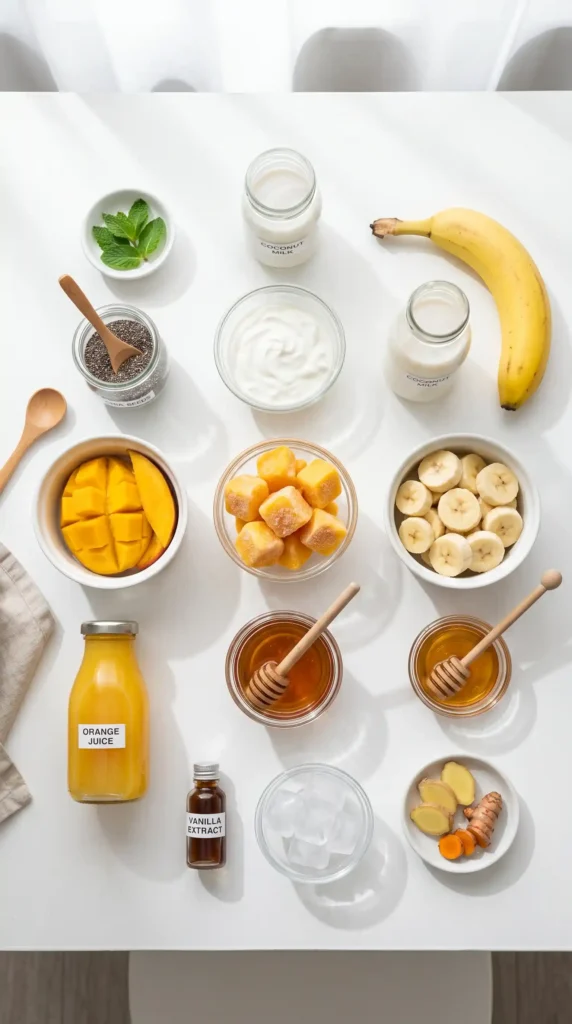
This recipe stays focused on quality ingredients without overcomplicating things. Everything here earns its place in the blend.
Core Ingredients
- 1 cup frozen mango chunks (about 150g)
- 2 medium ripe bananas (frozen or fresh)
- 1/2 cup coconut milk (full fat for creaminess)
- 1/2 cup plain Greek yogurt
- 1/2 cup orange juice (fresh or store-bought)
- 1 tablespoon honey
- 1/2 teaspoon vanilla extract
- 1/2 cup ice cubes (skip if using all frozen fruit)
Optional Add-ins
- 1 tablespoon chia seeds (for omega-3s and extra thickness)
- 1/2 teaspoon fresh ginger, grated (adds warmth and digestion support)
- 1 scoop vanilla protein powder (great for post-workout use)
- 1/4 teaspoon turmeric powder (anti-inflammatory boost)
- A few fresh mint leaves (adds a cool, refreshing finish)
The base recipe alone makes an outstanding smoothie. The add-ins are just bonus upgrades for days when you want to push things further.
How to Make the Mango And Banana Smoothie Step by Step
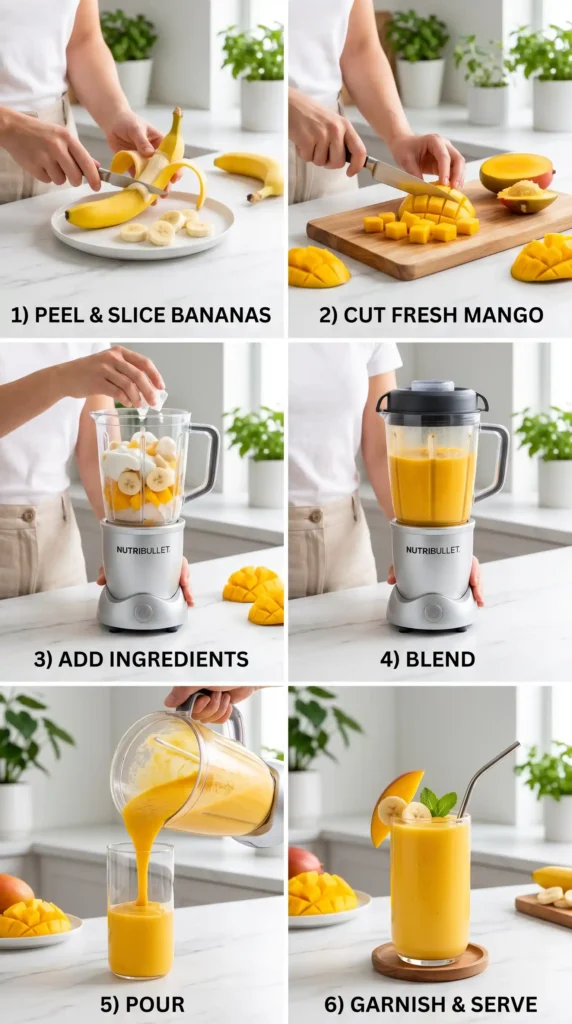
Let’s walk through the full process carefully. Each step builds toward that perfect creamy, thick texture that makes this smoothie genuinely memorable.
Step 1: Get Your Fruit Ready
Start by prepping your bananas. If you’re using fresh bananas, peel both and break each one into 3–4 pieces. Smaller chunks help your blender process everything evenly and quickly without overworking the motor.
If you planned ahead and froze your bananas, even better. Frozen bananas thicken the smoothie significantly and create a creamy, almost ice-cream-like consistency. Ripe bananas with a few brown spots work best — they’re sweeter, softer, and blend much more smoothly than firm, underripe ones.
Your frozen mango chunks go in straight from the freezer — no thawing needed. Keeping the mango fully frozen is what gives this smoothie its thick, frosty texture. If you use fresh mango instead, add an extra 1/2 cup of ice to compensate for the missing chill.
Step 2: Build Your Blender in the Right Order
Layering your blender correctly makes a noticeable difference in how smoothly everything blends. Always start with your liquids at the bottom — this keeps the blades moving freely from the first second.
Pour your 1/2 cup of orange juice into the blender first. This acts as the primary liquid that loosens everything up and gets the blending started on the right foot. Follow it with the 1/2 cup of coconut milk. The coconut milk adds fat and richness that makes the final texture feel luxurious rather than watery.
Now spoon in the 1/2 cup of Greek yogurt. It sits just above the liquids and adds protein, creaminess, and a gentle tang that balances the sweetness of the fruit. Add the 1 tablespoon of honey and 1/2 teaspoon of vanilla extract at this stage too. These two work as flavor enhancers that tie everything together in the background.
Step 3: Add the Fruit and Ice
With your liquid base ready, add the banana pieces next. Drop them in evenly so they distribute well around the blender rather than stacking in one corner. Even distribution means more consistent blending.
Add your 1 cup of frozen mango chunks on top of the banana. Piling the frozen fruit at the top is intentional — it keeps the heavier, denser pieces close to where the blender lid holds them down during blending. Finally, add your 1/2 cup of ice cubes if you’re using fresh fruit. If all your fruit is already frozen, skip the ice — you don’t want to dilute the flavor.
If you’re using any optional add-ins like chia seeds, grated ginger, or protein powder, add them now before closing the lid.
Step 4: Blend in Three Stages
Resist the temptation to just slam the blender to full power immediately. Starting too fast with frozen fruit causes chunks to get stuck and creates air pockets that prevent smooth blending. Instead, work through three stages deliberately.
Start on the low setting for 15 seconds. This initial pulse pulls the liquid upward around the frozen fruit and begins breaking down the larger pieces gradually. You’ll hear the blender working hard at this stage — that’s completely normal.
Move to medium speed for 20–25 seconds. The blend starts coming together here. The mango and banana chunks break down further and the whole mixture starts to look uniform. Listen for the sound to shift from a chunky, irregular noise to a smoother, consistent hum.
Finish on high speed for 30–45 seconds. This final blast creates that perfectly smooth, velvety texture. Keep it running until the sound is completely even and no chunks remain. If the blender struggles, stop it, use a spatula to push fruit away from the walls, and start again from medium.
Step 5: Check the Consistency
Stop the blender and remove the lid carefully. Use a spoon to check the texture. A good mango and banana smoothie should hold its shape slightly on the spoon — not runny like juice, not stiff like frozen yogurt. It should fall slowly and smoothly.
Too thick? Add a splash more orange juice or coconut milk — about 2 tablespoons at a time — and blend on high for 10 more seconds. Too thin? Add half a frozen banana or a small handful of ice and blend again for 20 seconds. Small adjustments make a big difference, so go slowly.
Step 6: Taste, Adjust, and Serve
Before pouring, taste the smoothie. Does it need more sweetness? Add another teaspoon of honey. Want more tropical flavor? A squeeze of fresh lime juice brightens the mango beautifully. More creaminess? A tablespoon of coconut cream stirred in does the job instantly.
Pour your finished mango and banana smoothie into two glasses. For a clean pour with natural froth on top, hold the blender about 6 inches above the glass and pour in a slow, steady stream. Serve cold and fresh. This smoothie tastes best within 10 minutes of blending — the texture and flavor are at their absolute peak right after making it.
Tips for Getting the Best Results Every Time
A few consistent habits keep this smoothie tasting great every single time you make it:
- Freeze your bananas in advance for the thickest, creamiest texture possible
- Use full-fat coconut milk — light versions make the smoothie noticeably thinner
- Layer liquids first every time to protect your blender and get smooth results
- Ripe mangoes — fresh or frozen — deliver significantly better flavor than underripe ones
- Taste before serving and make small adjustments rather than large ones
Best Variations to Try Next
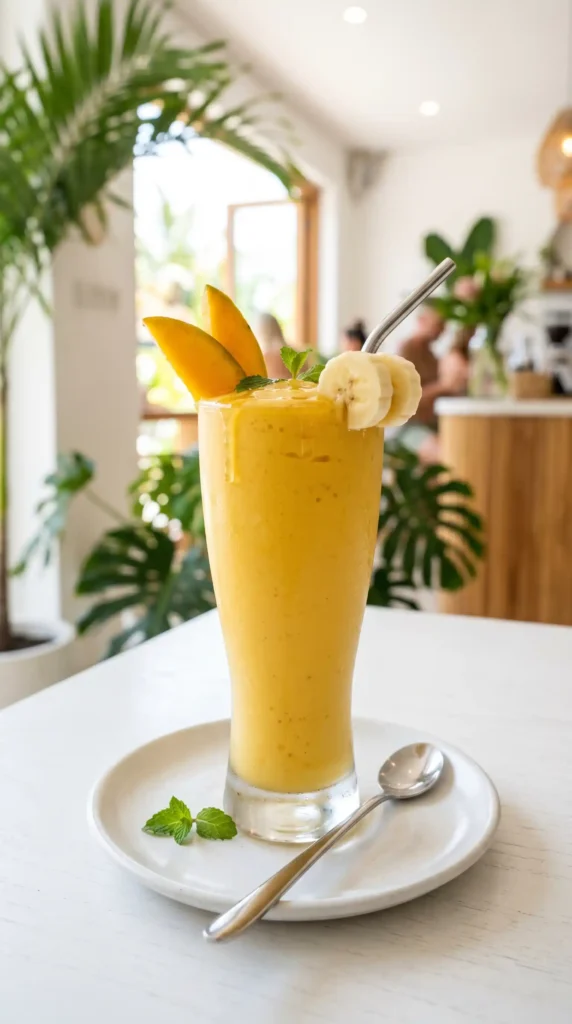
Once the base recipe feels natural, these tweaks are worth exploring:
- Mango banana pineapple: Add 1/4 cup frozen pineapple chunks for extra tropical punch
- Mango banana coconut: Replace orange juice with coconut water for a lighter, more refreshing version
- Green mango banana: Add one large handful of baby spinach — the color changes but the taste stays sweet and tropical
- Creamy mango lassi style: Replace Greek yogurt with full-fat plain yogurt and add a pinch of cardamom
When This Smoothie Fits Best in Your Day
The mango and banana smoothie genuinely works at multiple points throughout your day:
- Morning breakfast — fast, filling, and energizing without a big cleanup
- Pre-workout snack — the natural sugars fuel your session without sitting heavy
- Post-workout recovery — add protein powder and it handles muscle repair effectively
- Hot afternoon refresh — cold, tropical, and infinitely better than another iced coffee
FYI, I’ve been making this as my post-gym drink for months now and it honestly makes the whole workout feel more worth it.
FAQ: Mango And Banana Smoothie Recipe
Q1. Can I use fresh mango instead of frozen? Yes, fresh mango works well. Just add an extra 1/2 cup of ice to make up for the missing chill and thickness that frozen mango provides. Ripe, sweet fresh mango gives excellent flavor — just make sure it’s fully ripe before blending.
Q2. What can I use instead of coconut milk? Any milk works here — whole milk, oat milk, almond milk, or regular yogurt thinned with water. Coconut milk gives the richest flavor and texture, but the smoothie still tastes great with alternatives. Oat milk is my second favorite for its natural creaminess.
Q3. How do I store leftover mango banana smoothie? Pour leftovers into a sealed jar and refrigerate for up to 24 hours. Shake or re-blend briefly before drinking since separation happens naturally overnight. The flavor stays good, though the texture is best fresh.
Q4. Can I make this smoothie without yogurt? Absolutely. Replace the yogurt with an extra 1/4 cup of coconut milk or a few tablespoons of coconut cream. You lose some protein and tang, but the smoothie still blends thick and tastes tropical and satisfying.
Q5. Is the mango and banana smoothie suitable for kids? It’s a fantastic option for kids. It’s naturally sweet, creamy, and contains no added junk. Skip the ginger and turmeric add-ins for younger kids and use mild honey in small quantities. Most kids love the tropical flavor immediately.
Conclusion
The mango and banana smoothie earns its place as a go-to recipe because it consistently delivers on every front — flavor, texture, nutrition, and convenience. Two fruits, one blender, ten minutes, and you’ve made something genuinely impressive.
Start with the base recipe until it feels automatic, then try the variations to keep things interesting. Whether you drink it for breakfast, after a workout, or just because you want something cold and tropical on a warm afternoon, this smoothie always delivers.
Go make one right now. And if the first sip doesn’t make you briefly forget whatever was stressing you out — well, maybe try adding a second tablespoon of honey.
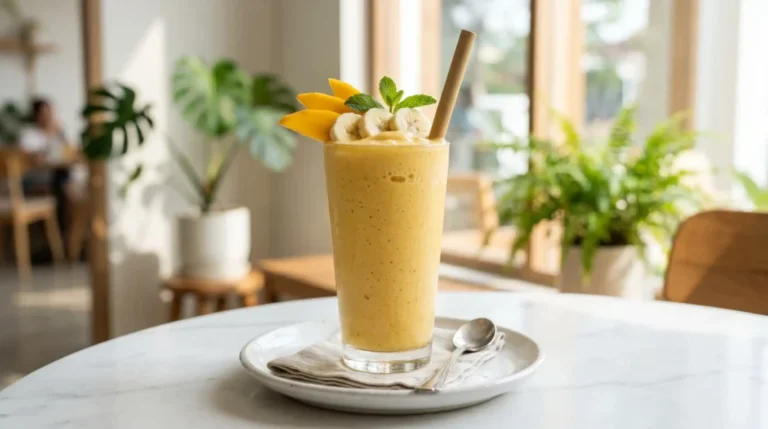
Mango and Banana Smoothie
Ingredients
Method
- Prep your bananas: If using fresh bananas, peel and break each one into 3–4 pieces. If frozen, ensure they are ripe with a few brown spots.
- Add the frozen mango chunks directly from the freezer.
- Layer the ingredients in the blender, starting with the 1/2 cup of orange juice, followed by 1/2 cup of coconut milk, 1/2 cup of Greek yogurt, 1 tablespoon of honey, and 1/2 teaspoon of vanilla extract.
- Add the banana pieces and then the frozen mango chunks. If using fresh fruit, add the 1/2 cup of ice cubes.
- Blend in three stages: Start on low for 15 seconds, then medium for 20–25 seconds, followed by high for 30–45 seconds.
- Check the consistency. Add a splash more orange juice or coconut milk if too thick, or half a frozen banana or a handful of ice if too thin.
- Taste the smoothie. Adjust sweetness with more honey, or add lime juice for a tropical boost.
- Pour into glasses and serve cold. Enjoy fresh within 10 minutes of blending.