If you have never made a carlota, allow me to fix that immediately. A carlota is Mexico’s answer to the icebox cake — Maria cookies layered with a creamy filling, chilled until the cookies soften to a cake-like texture, then unmoulded and served as a sliceable, elegant dessert that requires no oven and frankly very little effort. Pina Colada Carlota takes that already-excellent format and runs it through a tropical filter — pineapple-soaked cookies, coconut cream filling, and a flavour that genuinely makes you feel like you ordered something from a beach menu.
I made this for the first time at a summer gathering when someone suggested something tropical and I had Maria cookies, a can of coconut cream, and an absolute refusal to turn on the oven. The result was a dessert that people asked about before they finished their first slice. It has since become my default summer dessert contribution because it travels beautifully, serves a crowd, and consistently produces that slightly disbelieving response — “You made this yourself?” — that every host deserves to hear.
Have you ever made a dessert that tasted significantly more ambitious than the work it required? This is that dessert, every single time. Let us make it.
What Is a Carlota and Why Is It Such a Great Dessert Format?
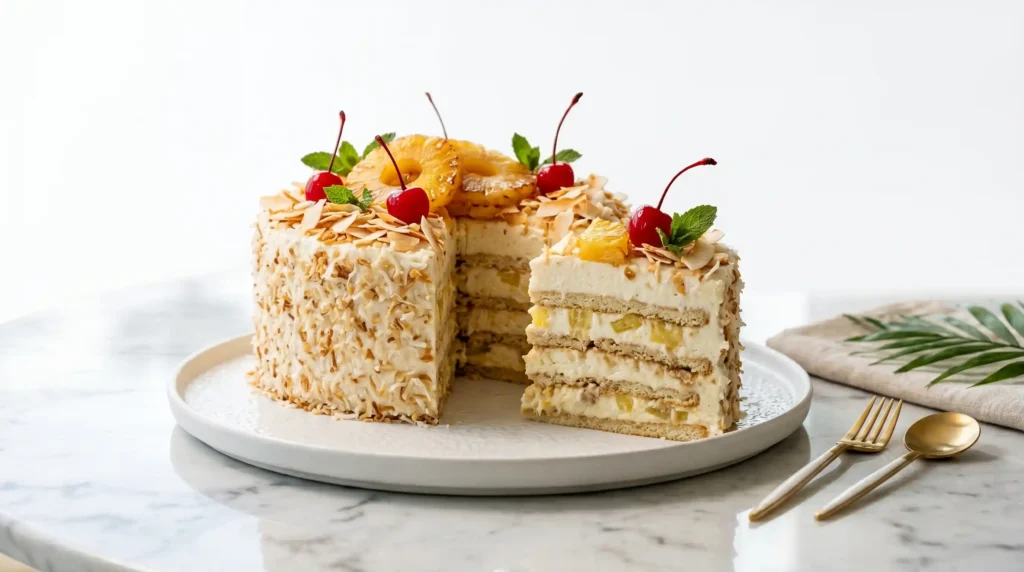
Carlota is a traditional Mexican chilled dessert made by layering Maria cookies with a creamy filling — typically cream cheese, condensed milk, and lime juice in the classic version — in a loaf tin or glass baking dish. The dessert chills for several hours until the cookies absorb moisture from the surrounding cream and transform from crisp to soft, creating a texture very similar to sponge cake layers. The result unmoulds into a sliceable loaf that looks like a layered cake but required no baking.
Maria cookies are the traditional choice — a thin, slightly sweet, unassuming round biscuit that is essentially the Mexican equivalent of a digestive biscuit or a plain cookie. They have enough structure to hold together during the cookie-soaking step but enough porosity to absorb the filling flavours completely during chilling. The plain, lightly sweet flavour means they take on the flavour of whatever liquid and filling surrounds them without fighting it.
The pina colada version expands on this formula by soaking the cookies in pineapple juice and building the cream filling from coconut cream, cream cheese, and crushed pineapple. Every layer tastes of the tropics in a genuinely pleasant way — pineapple-forward, coconut-rich, with the cream cheese providing the tang and structure that stops the whole thing from tasting like a bottle of coconut cocktail. IMO, this is the best carlota variation available and I say that with complete confidence. 🙂
What You Need
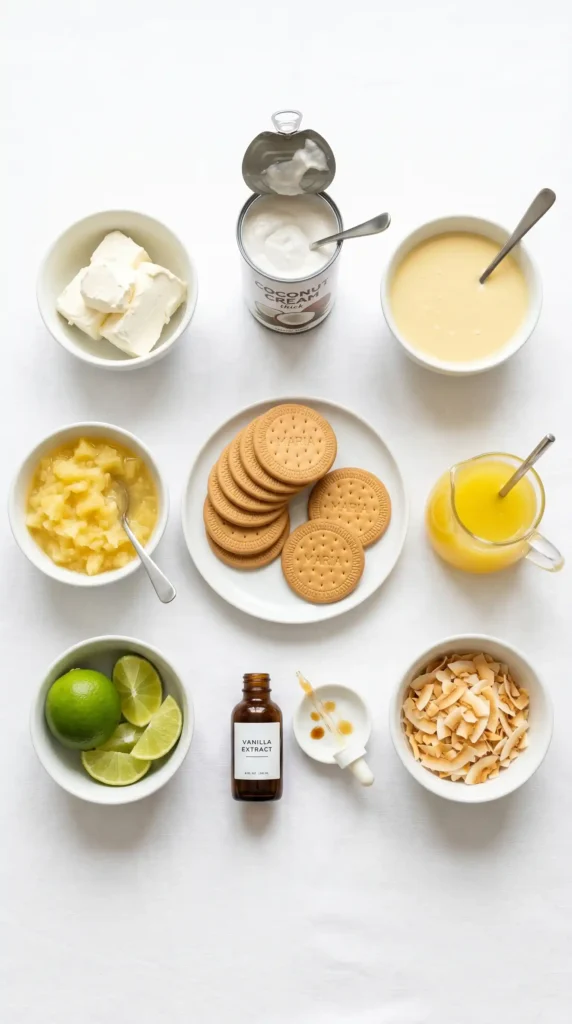
Everything for this dessert is pantry or refrigerator accessible. The Maria cookies are available at most grocery stores in the international or baking aisle — and Latin grocery stores always stock them. The coconut cream should be full-fat from a can rather than coconut milk or a reduced-fat coconut product, which are too thin to provide the thick, rich filling consistency this recipe requires.
For the Pineapple Cookie Soak
- 1 and 1/2 cups (360ml) pineapple juice — canned, fresh, or from the crushed pineapple can
- 2 tablespoons rum (optional — makes the flavour distinctly pina colada rather than just tropical)
- 1 teaspoon coconut extract (optional — deepens the coconut note in the overall dessert)
- 2 packs (about 280g total) Maria cookies — enough for 4 layers in a standard loaf tin
For the Coconut Cream Cheese Filling
- 225g (8oz) full-fat cream cheese, softened to room temperature
- 1 can (400ml) full-fat coconut cream — refrigerated overnight and only the solid cream scooped from the top (this produces the thickest, richest result)
- 1 can (397g / 14oz) sweetened condensed milk
- 1 can (432g / 15oz) crushed pineapple, drained very thoroughly
- 1 teaspoon pure vanilla extract
- 1/2 teaspoon coconut extract (optional)
- Juice of 1 lime (about 2 tablespoons — adds brightness that balances the coconut richness)
Now For the Topping
- 1/2 cup (45g) toasted coconut flakes
- Fresh pineapple slices or rings for decoration
- Maraschino cherries or fresh cherries — for a classic pina colada visual
- Extra crushed pineapple (drained), scattered for texture and colour
Refrigerate the Coconut Cream Can Overnight — It Changes EverythingFull-fat coconut cream separates when chilled — the thick, dense coconut fat rises to the top and the thinner liquid sinks to the bottom. Refrigerating the can overnight means you can scoop the thick solid coconut cream from the top and use only that in the filling, producing a dramatically richer, thicker result than using room-temperature coconut cream mixed together. The liquid left in the bottom can be added to smoothies or discarded. FYI — this single step elevates the filling from good to genuinely exceptional.
How to Make Pina Colada Carlota Step by Step
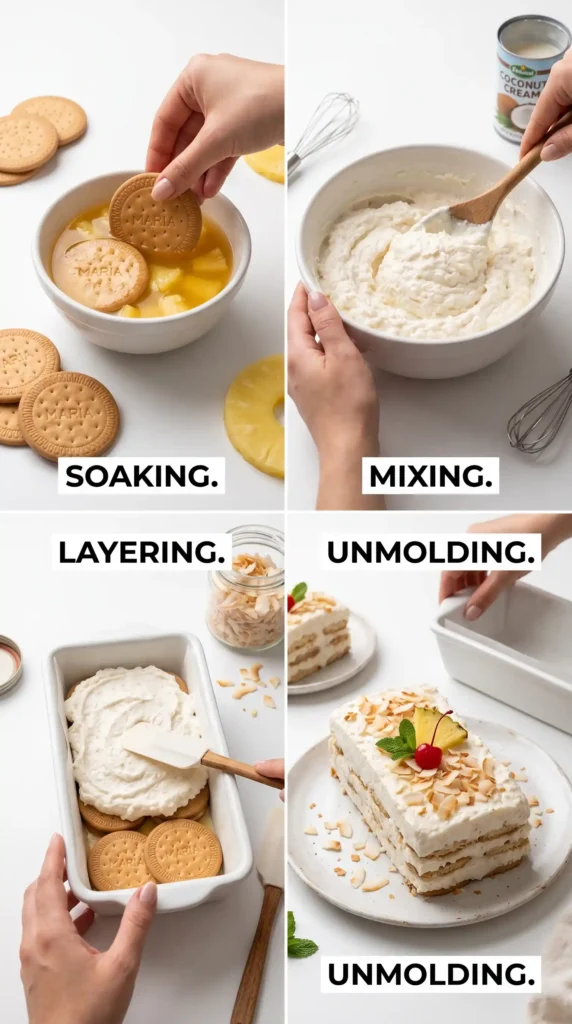
Three stages: prepare the pineapple soak, make the coconut cream cheese filling, then layer and chill. The active work takes 20 minutes. The refrigerator does the remaining heavy lifting over 4–6 hours. The longer you chill, the more completely the cookies soften and the cleaner the slices — overnight chilling consistently produces the best result. Read through everything once before starting so the assembly goes smoothly.
Step 1: Drain the Crushed Pineapple Thoroughly
Open the can of crushed pineapple and pour it into a fine mesh sieve set over a bowl. Press the pineapple firmly with the back of a spoon to remove as much liquid as possible — then let it drain for at least 10 minutes, pressing again every few minutes. This step removes excess water that would make the filling too thin and prevent it from setting properly during chilling. Reserve the drained pineapple juice — you can use it as part of the cookie soaking liquid, which adds flavour compared to using plain canned juice.
Step 2: Prepare the Cookie Soaking Liquid
Combine the pineapple juice, rum if using, and coconut extract if using in a wide, shallow bowl — wide enough to dip the Maria cookies flat-side-down and coat them quickly. Stir briefly to combine. The soaking liquid should taste distinctly of pineapple with the coconut extract providing a background note. If you are using the drained pineapple juice from the pineapple can, combine it with enough additional canned pineapple juice to reach 1 and 1/2 cups total.
Step 3: Make the Coconut Cream Cheese Filling
In a large bowl, beat the room-temperature cream cheese with a hand mixer on medium speed for about 90 seconds until completely smooth and lump-free. Cold cream cheese produces lumps that will not smooth out once the other ingredients are added — take the full 90 minutes to pull it from the fridge before you start, or microwave it in 10-second intervals, stirring between each, until softened.
Add the sweetened condensed milk and beat on medium speed for another 60 seconds until fully incorporated. Add the lime juice and vanilla extract (and coconut extract if using) and mix briefly. The mixture should look smooth, glossy, and slightly yellow from the condensed milk at this stage. Add the scooped-out solid coconut cream and beat for about 60 seconds until the coconut cream is fully incorporated and the filling looks noticeably thicker and more substantial than before the coconut cream was added.
Fold the well-drained crushed pineapple into the filling using a rubber spatula — gentle folding rather than vigorous stirring, which would deflate any air incorporated during mixing. The finished filling should look thick, creamy, and studded with visible pineapple pieces throughout. Taste it — it should taste like a creamy, sweet pina colada with a pleasant lime tartness cutting through the coconut richness. If it needs more lime brightness, squeeze in an additional teaspoon. If it needs more sweetness, add a tablespoon of condensed milk and fold again.
Step 4: Assemble the Carlota
Line a standard 9×5-inch (23x13cm) loaf tin with cling film, leaving generous overhangs on all sides — at least 8cm of overhang. This cling film is what allows you to lift the finished carlota cleanly out of the tin for unmoulding. Alternatively, build the carlota directly in a 9×13-inch glass baking dish for a presentation-style serving format where you scoop rather than slice and unmould.
Work one cookie at a time: dip each Maria cookie into the pineapple soaking liquid for 2–3 seconds per side — not longer. The goal is to moisten the cookie so it will soften during chilling without making it so soggy that it falls apart during assembly. A cookie soaked for 10 seconds before assembling collapses and produces a muddy filling layer. Two or three seconds gives it enough moisture to absorb fully during the long chilling without dissolving during assembly.
Lay the briefly soaked cookies in a single, tight layer across the base of the lined loaf tin — fitting them as closely together as possible and breaking cookies where needed to fill gaps. Spoon approximately one quarter of the coconut cream cheese filling over the first cookie layer and spread it in an even layer from corner to corner using the back of a spoon. Add a second layer of soaked cookies, pressing them gently but firmly onto the filling. Continue building layers — cookies, filling, cookies, filling — until all the cookies and filling are used, finishing with a layer of filling on top.
Step 5: Chill and Unmould
Press a sheet of cling film directly against the surface of the top filling layer — this prevents a skin from forming during the chilling period. Fold the overhanging cling film over the top to cover the entire tin. Refrigerate for a minimum of 4 hours, though overnight chilling consistently produces the cleanest slices and the most fully softened cookie layers. At 4 hours the cookies are mostly softened. At 8 hours or overnight they have completely transformed and the entire Pina Colada Carlota slices as cleanly as a layered cake.
To unmould, unfold the cling film from the top and invert the loaf tin onto a flat serving board in one decisive movement. The carlota should release cleanly, held together by the set filling. Carefully peel the cling film from the exterior. If it does not release immediately, gently press on the tin base — the filling holds the structure firmly enough to support unmoulding without collapsing.
Step 6: Decorate and Serve
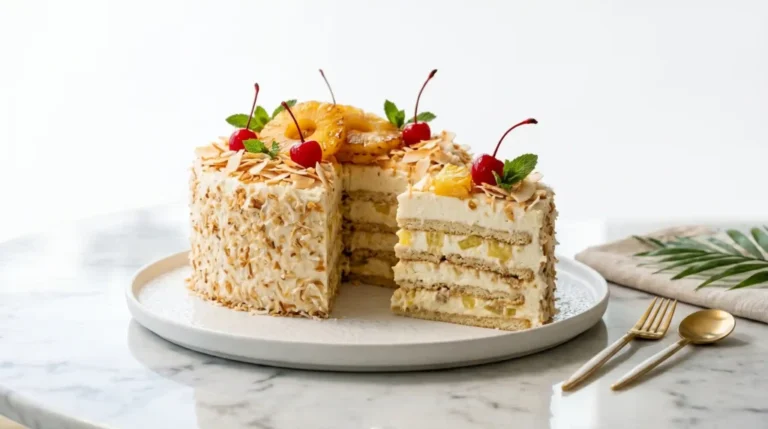
Press the toasted coconut flakes against the sides and across the top of the unmoulded carlota — they will adhere to the slightly tacky filling surface. Arrange fresh pineapple slices and maraschino or fresh cherries across the top in a decorative pattern. Scatter any additional drained crushed pineapple for extra tropical visual impact. Slice with a sharp knife dipped in warm water and wiped clean between each cut. Serve cold directly from the board.
The 2-3 Second Soak Rule — Why Precision Here MattersTwo to three seconds in the pineapple liquid gives each Maria cookie enough surface moisture to soften completely during the 4–6 hour chilling time without becoming fragile during assembly. Any longer and the cookies collapse mid-layer, creating a wet, muddy texture rather than distinct, firm cookie layers that hold their structure. Use a timer for the first few cookies until the timing feels intuitive — it becomes natural very quickly and produces consistent, beautiful results throughout the entire dessert.
Variations Worth Making
Classic Lime Carlota
Replace the pineapple juice soak with fresh lime juice diluted with an equal amount of water. Replace the crushed pineapple in the filling with 1/3 cup of additional fresh lime juice and an extra tablespoon of lime zest. This is the original Mexican carlota flavour — sharp, tangy, and deeply refreshing. The lime version is lighter in flavour than the pina colada version and suits summer gatherings where a more citrus-forward dessert is preferable to a tropical coconut one.
Strawberry Carlota
Replace the pineapple juice soak with strawberry puree thinned with a little water to a pourable consistency. Replace the crushed pineapple in the filling with 1 cup of finely diced fresh strawberries that have been briefly macerating in a tablespoon of sugar. The strawberry version produces a pink-hued filling and a strawberry-forward flavour that suits birthday celebrations and spring gatherings particularly well.
Mango Coconut Carlota
Replace the pineapple juice soak with mango juice or mango nectar. Replace the crushed pineapple with 1 cup of finely diced fresh or frozen mango, thawed and drained. Keep the coconut cream in the filling for a mango-coconut combination that tastes distinctly tropical. Top with fresh mango slices, toasted coconut, and a dusting of chilli powder or Tajin seasoning for a Mexican-inspired sweet-spicy finish that is genuinely extraordinary.
Storage Tips
Store Pina Colada Carlota covered in the refrigerator for up to 4 days. The texture improves through days one to three as the cookies continue softening and the flavours deepen and meld further. Keep it tightly covered to prevent it from absorbing refrigerator odours — the dairy cream in the filling picks up other aromas easily if left uncovered. Unmould and decorate only when ready to serve for the freshest presentation.
This dessert does not freeze well — the cream cheese and coconut cream filling changes texture significantly during freezing and thawing, losing its smooth, rich consistency and becoming somewhat grainy and watery. Make it fresh within 4 days of serving. The good news is that 20 minutes of active work is genuinely easy to repeat, and the chilling time does all the heavy lifting while you attend to other things entirely.
Frequently Asked Questions
Can I use a different type of cookie instead of Maria cookies?
Yes. Graham crackers work well and are the most common Maria cookie substitute — they produce a slightly more honeyed, cinnamon-adjacent flavour that pairs nicely with the pineapple and coconut. Digestive biscuits have a similar texture and mild sweetness that works well. Vanilla wafers produce a sweeter, softer layer. Avoid strongly flavoured cookies like Oreos or chocolate chip cookies, which overpower the delicate tropical filling rather than complementing it. Maria cookies remain the ideal choice for the most authentic result.
Can I make Pina Colada Carlota without cream cheese?
Yes. Replace the cream cheese with an equal amount of full-fat Greek yogurt strained through cheesecloth for 2 hours to produce a thick, concentrated yogurt similar in texture to cream cheese — this dairy-forward but less tangy substitute works well. Alternatively, use mascarpone cheese, which is milder and creamier than cream cheese but lacks the tangy note that cuts through the sweetness of the condensed milk and pineapple. The cream cheese version produces the most balanced, satisfying result overall.
How long does the carlota need to chill before it is ready to serve?
A minimum of 4 hours produces a partially softened cookie layer that is pleasant but still has some biscuit texture remaining. Six hours produces a more uniformly softened result where the cookie layers feel genuinely cake-like throughout. Overnight — 8 hours or more — produces the best possible result: completely softened, unified layers that slice cleanly and feel exactly like a layered chilled cake rather than a dessert with distinct cookie and filling components. If time allows, always aim for overnight chilling.
Can I serve this carlota without unmoulding it?
Yes — and many people prefer this approach for casual gatherings. Build the carlota directly in a 9×13-inch glass baking dish, use no cling film lining, and cover with cling film during chilling. Serve by scooping individual portions with a large spoon rather than slicing. This format is easier for large groups, requires no unmoulding technique, and presents well in a decorative glass dish. Top with toasted coconut flakes and pineapple directly in the dish before serving for an attractive presentation.
Can I make an alcohol-free version of this recipe?
Yes — and it tastes excellent without the rum. Simply omit the rum from the soaking liquid and add an extra tablespoon of pineapple juice plus half a teaspoon of rum extract if you want the flavour note without the alcohol. The coconut extract in the filling already provides a strong coconut aroma that, combined with the pineapple juice soak, makes the non-alcoholic version taste distinctly of a pina colada without the spirit. This makes the dessert suitable for children and non-drinkers without any flavour compromise.
Final Thoughts
This Pina Colada Carlota delivers exactly what its name promises: a tropical, creamy, layered dessert that tastes like the best possible version of a pina colada translated into something you eat rather than drink. No oven. Twenty minutes of active work. A dessert that serves twelve people and makes every one of them feel like they ordered something from a beach resort rather than your kitchen.
It suits every summer occasion, every gathering that needs a crowd-friendly dessert, and every host who wants something genuinely impressive without genuine effort. Make it the evening before, unmould it in the morning, decorate with toasted coconut and pineapple, and accept every compliment with the appropriate calm of someone who had a plan all along.
Refrigerate that coconut cream tonight. Drain that pineapple tomorrow morning. Soak those cookies for exactly two to three seconds each. And then chill everything until it becomes something extraordinary — which, with this recipe, it reliably and consistently does every single time.
Pina Colada Carlota
Ingredients
Method
- Drain the crushed pineapple thoroughly by pouring it into a fine mesh sieve and pressing to remove liquid.
- Prepare the cookie soaking liquid by combining pineapple juice, rum, and coconut extract in a shallow bowl.
- Make the coconut cream cheese filling by beating softened cream cheese until smooth, then adding condensed milk, lime juice, and vanilla.
- Add the solid coconut cream and beat until incorporated, then fold in the thoroughly drained crushed pineapple.
- Line a loaf tin with cling film, leaving overhang.
- Dip each Maria cookie in the soaking liquid for 2-3 seconds and place in the tin.
- Spread a layer of the coconut cream filling over the cookies and repeat layering until all are used, finishing with filling on top.
- Cover with cling film and refrigerate for a minimum of 4 hours, preferably overnight.
- Unmould by inverting the tin and carefully peeling off the cling film.
- Decorate with toasted coconut, fresh pineapple slices, and cherries before serving.